AOIZ Nedim Uysal Private High School / M artı D Mimarlık


© ZM YASA

© ZM YASA


© ZM YASA


© ZM YASA


© ZM YASA


© ZM YASA

  • Architects: M artı D Mimarlık
  • Location: Izmir, İzmir, Turkey
  • Architectural Design: Metin Kılıç, Dürrin Süer
  • Area: 13697.0 sqm
  • Project Year: 2016
  • Photographs: ZM YASA
  • Project Team: Merih Feza Yıldırım, Serdar Uslubaş, Ali Can Helvacıoğlu, Damla Duru, Gizem Yazıcı
  • Consultant : Deniz Güner
  • Statical Project : Cemal Coşak, Mustafa Şahin
  • Mechanical Project: Ekrem Evren
  • Electrical Project : Namık Onmuş
  • Client : Izmir Atatürk Organized Industrial Zone Management

© ZM YASA

© ZM YASA

Technical and Industrial High School building is located on one of typical parcels of grid-planned İzmir Atatürk Organised Industrial Zone.  Rectangular, introverted boxes placed on rectangular parcels define settlement characteristic of organised industrial zone. Monotonuos character on third dimension is the result of introverted and uniform settlement of buildings located on a flat terrain. This industrial layout  provides an introverted and an isolated life. Modern education vision requires interactive and motivating interior spaces. However, social and dynamic experience can’t be provided in this zone.


© ZM YASA

© ZM YASA

As a result of restricted references of topography and urban layout, 2 design strategies are accepted for  building to reflect  its existence by contrasting with urban context. First of all, technical ateliers and social units are distrubuted to 5 blocks located around  an atrium.  Educational block is located at upper floors. Secondly, green topography is continued to differentiate public block and educational block.


© ZM YASA

© ZM YASA

Floor Plan

Floor Plan

© ZM YASA

© ZM YASA

Building mass is composed  of spaces surrounding a large atrium which provide dynamic interiors and continious visual perception. Atrium, defined by permeable wall surface is a public space, reflecting institional identity. Spaces, arrayed on corridor surrounding the gallery are  merged to it by niches containig different programs such as club rooms.


© ZM YASA

© ZM YASA

Niches with different properties between different blocks , enables interaction of exterior space with dynamic interior spaces.  They have different identities due to different programs such as ceremony areas, entrance plazas, recess and sports areas.


© ZM YASA

© ZM YASA

A  new level is created for providing a different contextual perception and for breaking monotonuos layout of the context on third dimension. The new level  where green landscape sustains, not only offers  an alternative interaction spaces  but also, creates a new horizon for  users.


© ZM YASA

© ZM YASA

Building program is distributed to 5 floors. Large areas such as conference hall, sports hall, ateliers and socializing areas like canteen, dining hall are located on ground floor, 1. floor. Classrooms, adminstrative  offices, teacher’s lounges, library are located on 2., 3., 4. floors.


© ZM YASA
© ZM YASA

http://ift.tt/2e8450i

Bricklaying robots create bulging brick facade for Shanghai arts centre

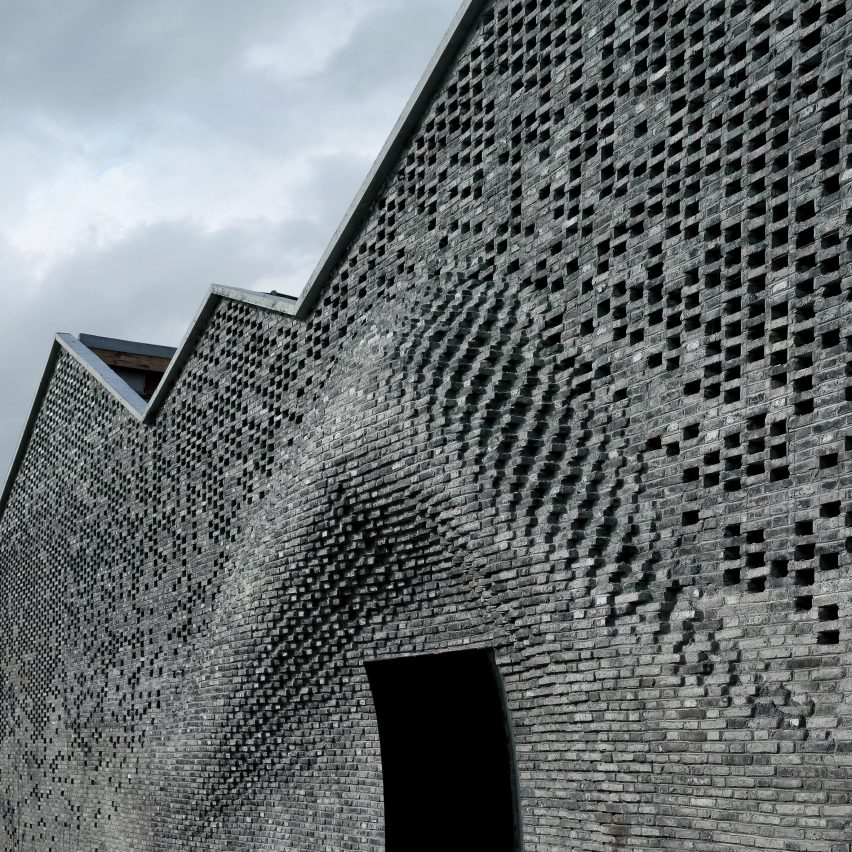
Robotic Brick Fabrication – Archi-Union Architects

Chinese studio Archi-Union Architects programmed robots to construct the undulating brick facade of this art gallery in Shanghai’s West Bund district. Read more

http://ift.tt/2f2XN6D

Carbon-fibre orb marks entrance to Detroit academic building by Morphosis

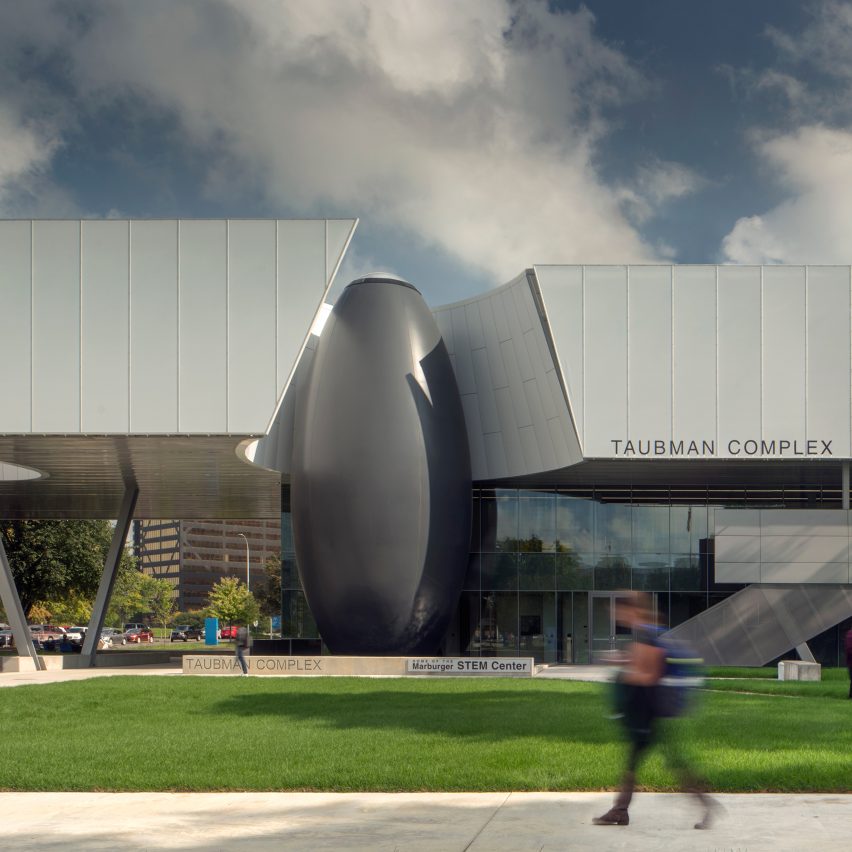
The Taubman Complex by Morphosis

US studio Morphosis has completed a science, design and engineering facility in Michigan, which features a scrim made of ETFE plastic and an entrance stairwell contained within a black orb made of carbon fibre. Read more

http://ift.tt/2faRpXd

SkunkLock bicycle lock causes thieves to vomit

skunklock-bicycles-design-daniel-idzkowski-yves-perrenoud-cycling-accessories_dezeen-sqb

Bicycle thieves will need a stomach of steel to thwart the SkunkLock, which makes anyone who attempts to cut through it throw up. Read more

http://ift.tt/2f6geVq

Castle Town Orthodontic Bruno / TSC Architects


© Masato Kawano / Nacasa & Partners

© Masato Kawano / Nacasa & Partners


© Masato Kawano / Nacasa & Partners


© Masato Kawano / Nacasa & Partners


© Masato Kawano / Nacasa & Partners


© Masato Kawano / Nacasa & Partners

  • Site Area: 674.15 sqm
  • Total Floor Area: 259.05 sqm

© Masato Kawano / Nacasa & Partners

© Masato Kawano / Nacasa & Partners

From the architect. This building is located in Nishio-shi, Aichi where the taste of the castle town remains, Japan.

We provided the open space such as the park to the cityscape on planning a dental clinic on this ground and wanted to contribute to local people.


Plan

Plan

And we read the historic background of the town and planned an adjoining building using a local tile from the open space.

This building leads eyes from the open space to trees and the sky of the Shinto shrine and provides the place of peace to the cityscape. We hope that people feel healing and the history.


© Masato Kawano / Nacasa & Partners

© Masato Kawano / Nacasa & Partners

Sections

Sections

In addition, the tile along with the orderliness images beautiful alignment of teeth. We assume it the symbol of the thought of the dentist to think to want to do the help of the smile by treatment.

In addition, We planned it to locate an inner garden in the waiting room, and to become the extension of the scenery from the outside.


© Masato Kawano / Nacasa & Partners

© Masato Kawano / Nacasa & Partners

http://ift.tt/2f3lc7W

Sinsa-dong Office Complex / JMY architects


© Joonhwan Yoon

© Joonhwan Yoon


© Joonhwan Yoon


© Joonhwan Yoon


© Joonhwan Yoon


© Joonhwan Yoon

  • Architects: JMY architects
  • Location: Sinsa-dong, Gangnam-gu, Seoul, South Korea
  • Architect In Charge: Jaemin Yoon
  • Design Team: Kwangjae Ryu (Team Manager), Hyukhyu Shin, Hyejin PARK, Jinsoo Kim, Seongmin Lee, Yeonjung Lee, Eunji Choi, Wihwan Choi
  • Area: 64.36 sqm
  • Project Year: 2015
  • Photographs: Joonhwan Yoon
  • Collaborator : MOA Structure Engineers, M:HL Consulting, Daewon Pobis
  • Construction: Jarchiv Construction
  • Client: MEDIA EN MESSE

© Joonhwan Yoon

© Joonhwan Yoon

1. Ugly-looking Ground

The trapezoid shaped, irregularly pentagonal ground located in an urban residential district is a commercial lot in a small area (282m2). With road reduction and difficulties of parking and entry due to the restricted diagonal line (Due North Slant Line for Daylight and Diagonal Plane Control by Street Width) and narrow entrance (3m width), its application for any purpose other than a house will be difficult.


Site Plan

Site Plan

Floor Plans

Floor Plans

2. Poor Residential Environment in an Exclusive Residential District

Despite the proliferation of small scale qualitative development of nearby Garosu-gil, which is the leading shopping district in Seoul, the urban development and architectural status of the area is slow and poor. With narrow and irregular road and ground formation, increasing land price and old houses, unclear type of housing, parking difficulty and awkward skyline, the area looks like other decaying old downtown area, and the land is surrounded by houses.


© Joonhwan Yoon

© Joonhwan Yoon

3. Limited Development Potential

– Legal restriction: The ground is restricted by Due North Slant Line for Daylight on two sides and Diagonal Plane Control by Street Width on two sides, and thus it will be difficult to secure road reduction and parking space.

– Limitation of construction cost: Unreasonable demand by the owner, limitation of construction cost and limitation of technology make the development difficult.

– Difficulty of construction: Complaints by nearby households and narrow road of 3m width make construction difficult.


Diagram

Diagram

4. New Alternative Plan as the Composite Residential/Commercial/ Business Space

To resolve the limitations, three factors are suggested as the direction of this project: extremeness, compositeness and connectivity.

Extremeness: Attainment of maximum space with minimum construction cost, maximum opening with minimum opening, simpleness and complexity, roughness and neatness, reversal of legal restriction (attainment of external space on each floor), and deep basement space (6m ceiling height)


© Joonhwan Yoon

© Joonhwan Yoon

Sections

Sections

Complexity: Composite residential, commercial and business plan

Connectivity: Vertical connectivity with sky and horizontal connectivity with surrounding context. Since the main function is the business facility, the concrete double skin will be installed in the low part (up to the third floor) to be horizontally isolated from the neighbor, and the space between the concrete and door/window skin is used for vertical connectivity (light, wind and rain penetration) with sky. The top part (4th ~ 6th floor) without the alternative is opened as much as possible so that it is horizontally connected to the distant view while the external space of the floor side, which becomes narrower due to the slant line restriction as it goes upward, is vertically connected. The programmed connectivity is connected or separated in the order of commercial, business and residential function from bottom to top.


© Joonhwan Yoon

© Joonhwan Yoon

http://ift.tt/2f2TZlQ

Warehouse Renovation / Yabashi architects & associates


© Tohru Yabashi

© Tohru Yabashi


© Tohru Yabashi


© Tohru Yabashi


© Tohru Yabashi


© Tohru Yabashi

Using the Saga Prefecture Karatsu steel frame within the structure of the warehouse, which has been used as a material storage in, primarily space, such as a gallery that allows the exhibitions in conjunction with the display and the Marche in the Marche which is carried out once in two months Guests were asked.


Floor Plan

Floor Plan

So, it envisions a large patio with a gallery in the warehouse, hoping to be the intimate space to the corresponding space, such as the alley born around that in Marche, is composed of a shelf wall, which is arranged in a nested It was proposed a tubular structure.


© Tohru Yabashi

© Tohru Yabashi

Is the inner shelf wall patio is surrounded by a white wall, and has a abstract space by comparison with the presence that was ingrained the existing warehouse. Here exhibition invited writers, workshops, concerts, continue to function as a venue for events to be held in conjunction with the Marche of the extra touches that make such talk events.


© Tohru Yabashi

© Tohru Yabashi

On the other hand, the alley around patio has become an elongated space with intimate scale. Shake the angle to put the distance from the existing exact grid ShelfWall, it has transformed the space of the alley to the richer ones by creating a deep perspective to this place. Other Marche in alley, display shelf of goods belonging to the event in the patio, can be utilized as a bookshelf library space.


© Tohru Yabashi

© Tohru Yabashi

Shelf wall on the border of mutually different space has created a new table / back of the relationship. The contrasting events that location is performed in parallel with each other is complemented each other while repeating the reversal of the front and back like a vortex in the boundary ShelfWall, function as a place of rich regional exchange that lead the way in the various events we hope that they would.

http://ift.tt/2f6C8YF

#5 / Studio Wills + Architects


© Beton Brut

© Beton Brut


© Beton Brut


© Beton Brut


© Beton Brut


© Beton Brut

  • Architects: Studio Wills + Architects
  • Location: 70 Frankel Ave, Freeport, NY 11520, United States
  • Architect In Charge: Ng William
  • Design Team: Ng William, Wu Shan Yat
  • Area: 489.96 sqm
  • Project Year: 2016
  • Photographs: Beton Brut
  • C&S Engineer: Civil and Geotechnical Associates
  • Quantity Surveyor : BKG Consultants Pte Ltd
  • Builder: TIM Contracts Pte Ltd
  • Carpenter: Sin Hiap Chuan Wood Works

© Beton Brut

© Beton Brut

The site faces a major thoroughfare, is flat and non-descript. Maximized to its permissible building volume, this can be a potentially over-sized house for a family of 4 (parents and teenage daughters) and their 2 helpers. The strategy of fragmentation was thus adopted to fragmentize the volume into comprehensible parts.


Floor Plan

Floor Plan

In order to accommodate a sizeable lap pool of 3 meter width along the side garden, the building had to be set-back by an additional 1 meter beyond the 2m building set-back line. This was considered to be undesirable due to the reduced building foot-print. Resolution was found by a shift of 1 meter back to the 2m building set-back line, in the upper levels, to regain the otherwise reduced building footprint.


© Beton Brut

© Beton Brut

This strategy was adopted in the making of the PLANS, SECTIONS and ELEVATIONS resulting in multiple ‘gaps’, between wall and roof planes, for light and ventilation. Roof planes were further tilted away from the western sun in order to shelter the interior spaces from the tropical heat and look to the distant whilst escaping the prying eyes of its immediate neighbors. 


Section

Section

Shades of grey, contrasting materials and textures and lighting quality were appointed across the entire section of the building to accentuate the fragments and heightens one’s experience of the entire house which oscillates between light and shade, open and enclosed, expansive and compressive spatial qualities.


© Beton Brut

© Beton Brut

Diagrams

Diagrams

#5 was a study in the making of tropical living spaces, in a dense urban environment, that is at once open yet private.

Product Brief:
Reinforced concrete (RC) – The roofs constructed in reinforced concrete and finished with a coat of paint, similar to the walls, give expression to a series of ‘shells’ that defines the enclosure and ‘one-ness’ to the entire house.


© Beton Brut

© Beton Brut

http://ift.tt/2eNKp5I

LOT Wins Competition to Transform Flatiron Plaza in New York


Flatiron Sky-Line / LOT. Image Courtesy of Flatiron Public Plaza Holiday Design Competition

Flatiron Sky-Line / LOT. Image Courtesy of Flatiron Public Plaza Holiday Design Competition

LOT has been selected as the winner of the third annual Flatiron Public Plaza design competition in New York, which called for proposals from 5 New York City firms to design a temporary installation to be located at the base of the iconic Flatiron Building.

The winning proposal, titled “Flatiron Sky-Line,” consists of a series of 10 large contiguous arches, constructed out of white powder-coated steel tubes housing LED lights, from which an array of hammocks will be suspended to allow visitors to rest and take in the surrounding landmarks such as the Met Life Tower and Empire State Building.


Radiant Forest / Architensions. Image Courtesy of Flatiron Public Plaza Holiday Design Competition


Flatiron Roc Chair / Büro Koray Duman Architects. Image Courtesy of Flatiron Public Plaza Holiday Design Competition


Vanishing Point / FreelandBuck. Image Courtesy of Flatiron Public Plaza Holiday Design Competition


Silver Shimmer / Young & Ayata. Image Courtesy of Flatiron Public Plaza Holiday Design Competition


Flatiron Sky-Line / LOT. Image Courtesy of Flatiron Public Plaza Holiday Design Competition

Flatiron Sky-Line / LOT. Image Courtesy of Flatiron Public Plaza Holiday Design Competition

“Flatiron Sky-Line is an engaging installation, creating a social space underneath the illuminated arched outline, a structure to walk within and around, gaze through it towards the skyline, and experience Flatiron’s surroundings through a certain lens,” said LOT principal Leonidas Trampoukis. “The simplicity of the installation’s design will draw in audiences, and, we expect, produce significant feelings as they stand in one of our country’s most recognizable intersections.”


Flatiron Sky-Line / LOT. Image Courtesy of Flatiron Public Plaza Holiday Design Competition

Flatiron Sky-Line / LOT. Image Courtesy of Flatiron Public Plaza Holiday Design Competition

Finalists


Radiant Forest / Architensions. Image Courtesy of Flatiron Public Plaza Holiday Design Competition

Radiant Forest / Architensions. Image Courtesy of Flatiron Public Plaza Holiday Design Competition

Radiant Forest / Architensions

Radiant Forest is a pavilion that promotes interaction between people and encourages gathering in a comfortable environment. A composition of movable and stationary vertical slats partially skinned with a mirror film reflects visitors and passersby, highlighting the beautiful differences in our city across changing colors, seasons, days and nights. The forest invites visitors to follow unpredictable paths as they are drawn to an area by fiber optic curtains and radiant heating dishes. A sensor activates the radiant dishes and the fiber optics light up with RGB irradiation map colors, measuring the real-time temperature of the bodies occupying the space. 


Flatiron Roc Chair / Büro Koray Duman Architects. Image Courtesy of Flatiron Public Plaza Holiday Design Competition

Flatiron Roc Chair / Büro Koray Duman Architects. Image Courtesy of Flatiron Public Plaza Holiday Design Competition

Flatiron Roc Chair / Büro Koray Duman Architects

Design has the power to create a sense of belonging, joy, and an ownership of public space. A design that provides a sense of familiarity between strangers in public while being playful is the core of Flatiron Roc Chair. As passersby enter and sit down, the piece rocks up and down, animating the holiday spirit. At night, in a fixed, upright position, the piece transforms into a stage where festive choirs perform. LED lights adhered to framing provide a glow underneath. Fitted polycarbonate panels at the ends offer safety for the kinetic movement of the piece.


Vanishing Point / FreelandBuck. Image Courtesy of Flatiron Public Plaza Holiday Design Competition

Vanishing Point / FreelandBuck. Image Courtesy of Flatiron Public Plaza Holiday Design Competition

Vanishing Point / FreelandBuck

Our visual experience is layered with the dense clouds of imagery and information encountered through digital devices and social networks. Expanding on this new visual capacity, Vanishing Point collects partial, oblique views of the Flatiron Building that are imprinted on layers of translucent fabric and woven into three kaleidoscopic urban objects. Condensing the countless images of the iconic building found online and elsewhere into a three-dimensional structure, the project captures multiple modes of seeing. From a central point within the pavilion, the layered drawings align into a unified image reminiscent of the iconic prow of the building. Vanishing Point further proliferates the building’s image as the subject of new photos during the holiday festival.


Silver Shimmer / Young & Ayata. Image Courtesy of Flatiron Public Plaza Holiday Design Competition

Silver Shimmer / Young & Ayata. Image Courtesy of Flatiron Public Plaza Holiday Design Competition

Silver Shimmer / Young & Ayata

Silver Shimmer appears at first as a field of vibrating light. When visitors approach, views shift through alignments of the chromed steel pipe structure, offering glimpses through the pavilion. Upon entering, one becomes immersed in the reflections of mirror-finished, bell-shaped balloons inflated to nestle within the lattice, reflecting the context and the luminous lines of the pavilion into a specular spectacular. What is not immediately apparent is that the pavilion is entirely constructed out of what already exists in the Flatiron Plaza, the public tables. This humble public amenity is transformed into something otherworldly, a shimmering lattice of light.

“Flatiron Sky-Line” will open to the public on Monday, November 21 on the North Flatiron Public Plaza at Broadway, Fifth Avenue, and 23rd Street, and will remain on view throughout the holiday season.

Now in its third year, the annual competition is organized by the Flatiron/23rd Street Partnership Business Improvement District (BID) and Van Alen Institute to activate Flatiron Public Plaza during the holiday season. Previous winners include SOFTLab’s “Nova” and “New York Light” by INABA.

News via Van Alen Institute.

http://ift.tt/2f2aUEX

Loterie Suisse Romande / CCHE


© Thomas Jantscher

© Thomas Jantscher


© Thomas Jantscher


© Thomas Jantscher


© Thomas Jantscher


© Thomas Jantscher

  • Architects: CCHE
  • Location: Lausanne, Switzerland
  • Area: 11200.0 sqm
  • Project Year: 2015
  • Photographs: Thomas Jantscher
  • Client : La Société de la Loterie Suisse Romande (LORO)Surface (SBP)

© Thomas Jantscher

© Thomas Jantscher

From the architect. The LORO wants to bring together its different entities on one site. The building located avenue de Provence in Lausanne, already hosted some, was transformed internal and external and completed with an extension to regroup them.


© Thomas Jantscher

© Thomas Jantscher

CCHE has developed a structure in the common courtyard to provide a visible single entry with the goal to redistribute the building part through the different lodgers and to connect all levels and services.


Floor Plan / Sections

Floor Plan / Sections

The new site match industrial character of the site thanks to the building envelope, but develops a LORO specific universe inside the building. The extension takes the form of a tree wrapping the existing building as a canopy in which penetrates the surrounding vegetation.


© Thomas Jantscher

© Thomas Jantscher

The LORO indoor environment, with its large levels, is assimilated to boxes looking like disseminated houses in the city: the front houses are closed offices and conference rooms and those inside de levels are dedicated to services.


© Thomas Jantscher

© Thomas Jantscher

http://ift.tt/2fnUIzh