
When you take a vacation, you get to explore a new place and get away from the daily grind. Of course, vacations require a fair amount of prep work, and the super useful tool IFTTT can help with that.
When you take a vacation, you get to explore a new place and get away from the daily grind. Of course, vacations require a fair amount of prep work, and the super useful tool IFTTT can help with that.

We are all trying to live the best life we can, but along the way there will always be bumps and obstacles trying to stop us from that. These can come in any form, whether personal or professional, and it’s the choices we make that dictate the future of our situation. And let’s face it – we don’t always make the best choices. Sometimes we make impulsive decisions without seeing the long term consequences; or take too long to make a decision, which leaves us desperate for an outcome. Whatever it is, we can all agree that there is no rulebook for life.
When we make bad decisions we are suddenly faced with regret (can you think of the last time you had buyer’s regret?), and the ramifications of regret can be extreme, from a few days, up to years of depression and “what- if ” thoughts. No one is an expert on it because we all deal with regret differently. Here are a few suggestions of how we deal it, to become happier people.
Easier said than done! Before or after we make decisions, we put a lot of pressure on ourselves to make the best decisions we can, especially after we’ve already made a bad move. It’s easy to kick yourself, but it’s not helping you get anywhere. Think about all the good things you’ve done in your life and remember how many obstacles you’ve overcome already. After that, you should be able to be a bit more gentle on yourself!
When I’m having a bad day I just remember the last words my grandfather told me – “take it slow.” After living a full life, how could I argue with him. And he’s right. When you are in a state of regret, your mind is overstimulated from “what- if ” situations and your brain is like a Japanese speed train. Take a few deep breaths and remember that life is long, and you can survive this little bump in the way
A great mantra for overcoming a currently unfortunate case of events is to remind yourself constantly that everything is temporary. Whether you like it or not, life is full of ups and downs. Surely it’s not difficult for you to remember the last time you felt great – and likewise the last time you didn’t feel so great. Already you can recognize that all bad times have a happy ending. Eventually, everything will clear up. So just hang in there, positive change is on it’s way!
Although on most days you’ll want to crawl back into bed and watch TV all afternoon, regret does not go away when you’re trapped alone in your house. You need to shower, put some clothes and makeup on, and go see your friends. Don’t be afraid to send out a few texts asking what everyone is up to tonight or on the weekend. You might be feeling down, but your friends are still just that – your friends. They’re even there for you. Imagine! So join a guys/girls night, Share some laughs, forget about the stress, and soon you’ll find the dark clouds clearing the way for sunnier days.
This is so important I cannot stress it enough. At this stage in our life we’ve all had a few slip ups; if you haven’t, please tell us your secret. As hard as we have tried, we have learned that you cannot go back in time. There is no secret but ton to return to a less regrettable time and change our decisions. You must think ahead. Put all your positive energy and strength into improving your current situation, what you are left with after your decision making. You made those decisions for a reason – now it’s time to regroup your pride and energy and focus it onto the brilliant future. We’ve survived before – we’ll do it again!
There’s no better time to remind yourself of how fortunate yo u are, than when you are grieving about regret. No matter how far in you are, you can surely bring a smile to yourself through a little bit of gratitude. Consider the tablet you are using to read this on, the phone you are receiving texts with, the car you’re stuck in traffic in, and the cozy home you have to sleep in at night. We have food, water and shelter. No matter how poor of a choice you made or what kind of regret you are bearing, remember, it’s not so bad! We have a quality life that billions of people in the world dream of having. Let that put a smile on your face; instead of thinking of what you’re missing, say a prayer and be thankful for what you have.
The post 6 Ways To Deal With Regret appeared first on Change your thoughts.

You’re reading 5 Ways to Hack Your Education and Further Your Career, originally posted on Pick the Brain | Motivation and Self Improvement. If you’re enjoying this, please visit our site for more inspirational articles.
Although there are a handful of success stories about people who made it big without any formal learning to back them up, such as Steve Jobs or Richard Branson, for most of us the reality is that education can open doors and help us advance in our career in a way that hard work and talent alone simply can’t.
But what can you do if the typical university route hasn’t worked for you or just isn’t accessible? There are a number of reasons why university might not be right for you, from a lack of time or money to not knowing exactly what direction you want to take your career in.
Whatever the case may be, if you’ve decided that university isn’t a good fit for you at this point in time, but still want to learn and advance in your career, here are a few alternative ways to educate yourself and earn qualifications.
There are many professions you can get into without a university degree, and in many cases, successfully completing a certificate with an accredited education provider is enough to get you off to a good start for far less than a degree would cost. This includes jobs in accounting and finance, real estate, tourism and hospitality, project management, fitness training and others.
Many certificate courses can even be followed fully or partially online, which allows you to plan your studies around your work and other commitments. If you decide to go this route, however, be sure to do your research and choose an online learning institution that is properly accredited and will provide adequate academic assistance.
If in doubt, the National Center for Education Statistics provides a College Navigator tool, which will allow you to verify any school’s accreditation and even check things like graduation and retention rates.
If you don’t have time to take on a degree or even certificate course, taking short courses or attending workshops can be a great way to fill any gaps in your knowledge and show employers that you’re serious about your professional development.
Short courses may cover any area from soft skills such as communication and leadership to industry-specific skills like accounting, web design or photography, so think about what skills you’d like to develop further or the areas you want improve in.
If learning is your primary goal and you aren’t too concerned with qualifications, there are plenty of college-level courses or MOOCs (Massive Open Online Courses) you can take online, and most won’t cost you a thing.
Some of the most popular providers include Coursera, EdX and Khan Academy. While some of these do offer certificates of completion, it’s important to be aware that most employers still tend to be skeptical of such certificates. MOOCs are, however, an excellent way to learn more about a particular topic or skill at no cost, or even find out whether or not a specific area of study actually interests you before you make a monetary commitment.
Even if you’ve been in the workforce for a number of years and feel competent in your field, there’s a good chance you’ll run into problems when changing jobs or looking for a promotion if you don’t have any formal qualifications to back you up.
In this case, recognition of prior learning (RPL) can help you turn the skills and knowledge you’ve gained through informal learning such as work, training courses or volunteering into a recognized qualification, without having to start from scratch.
Alternatively, if you already have a bachelor’s degree but want to enhance your professional prospects by earning a graduate degree, you may be able to fast track your MBA by converting your experience and seeking credit exemptions from a university.
One of the biggest hurdles newly graduated students face is a lack of experience. By volunteering in the field you hope to enter, you’ll be able to learn on the job and gain transferable skills while also making contacts within an industry, which can be invaluable once you start looking for a job.
Another big benefit to volunteering is that it gives you the chance to explore the career you’re interested in and make an informed decision rather than spending a lot of money on a degree or diploma only to discover that it’s not what you want to do after all.
Sites like Volunteer Match or Idealist can help you find volunteer opportunities that match your skills and interests. Just make sure that whatever you end up devoting your time to will be a good fit and help you develop or sharpen your skills in some way.
Marianne Stenger is a writer with Open Colleges. She covers career development, workplace productivity and self-improvement. You can connect with her on Twitter and Google+, or find her latest articles here.
You’ve read 5 Ways to Hack Your Education and Further Your Career, originally posted on Pick the Brain | Motivation and Self Improvement. If you’ve enjoyed this, please visit our site for more inspirational articles.
You’re reading 5 Ways to Hack Your Education and Further Your Career, originally posted on Pick the Brain | Motivation and Self Improvement. If you’re enjoying this, please visit our site for more inspirational articles.
Although there are a handful of success stories about people who made it big without any formal learning to back them up, such as Steve Jobs or Richard Branson, for most of us the reality is that education can open doors and help us advance in our career in a way that hard work and talent alone simply can’t.
But what can you do if the typical university route hasn’t worked for you or just isn’t accessible? There are a number of reasons why university might not be right for you, from a lack of time or money to not knowing exactly what direction you want to take your career in.
Whatever the case may be, if you’ve decided that university isn’t a good fit for you at this point in time, but still want to learn and advance in your career, here are a few alternative ways to educate yourself and earn qualifications.
There are many professions you can get into without a university degree, and in many cases, successfully completing a certificate with an accredited education provider is enough to get you off to a good start for far less than a degree would cost. This includes jobs in accounting and finance, real estate, tourism and hospitality, project management, fitness training and others.
Many certificate courses can even be followed fully or partially online, which allows you to plan your studies around your work and other commitments. If you decide to go this route, however, be sure to do your research and choose an online learning institution that is properly accredited and will provide adequate academic assistance.
If in doubt, the National Center for Education Statistics provides a College Navigator tool, which will allow you to verify any school’s accreditation and even check things like graduation and retention rates.
If you don’t have time to take on a degree or even certificate course, taking short courses or attending workshops can be a great way to fill any gaps in your knowledge and show employers that you’re serious about your professional development.
Short courses may cover any area from soft skills such as communication and leadership to industry-specific skills like accounting, web design or photography, so think about what skills you’d like to develop further or the areas you want improve in.
If learning is your primary goal and you aren’t too concerned with qualifications, there are plenty of college-level courses or MOOCs (Massive Open Online Courses) you can take online, and most won’t cost you a thing.
Some of the most popular providers include Coursera, EdX and Khan Academy. While some of these do offer certificates of completion, it’s important to be aware that most employers still tend to be skeptical of such certificates. MOOCs are, however, an excellent way to learn more about a particular topic or skill at no cost, or even find out whether or not a specific area of study actually interests you before you make a monetary commitment.
Even if you’ve been in the workforce for a number of years and feel competent in your field, there’s a good chance you’ll run into problems when changing jobs or looking for a promotion if you don’t have any formal qualifications to back you up.
In this case, recognition of prior learning (RPL) can help you turn the skills and knowledge you’ve gained through informal learning such as work, training courses or volunteering into a recognized qualification, without having to start from scratch.
Alternatively, if you already have a bachelor’s degree but want to enhance your professional prospects by earning a graduate degree, you may be able to fast track your MBA by converting your experience and seeking credit exemptions from a university.
One of the biggest hurdles newly graduated students face is a lack of experience. By volunteering in the field you hope to enter, you’ll be able to learn on the job and gain transferable skills while also making contacts within an industry, which can be invaluable once you start looking for a job.
Another big benefit to volunteering is that it gives you the chance to explore the career you’re interested in and make an informed decision rather than spending a lot of money on a degree or diploma only to discover that it’s not what you want to do after all.
Sites like Volunteer Match or Idealist can help you find volunteer opportunities that match your skills and interests. Just make sure that whatever you end up devoting your time to will be a good fit and help you develop or sharpen your skills in some way.
Marianne Stenger is a writer with Open Colleges. She covers career development, workplace productivity and self-improvement. You can connect with her on Twitter and Google+, or find her latest articles here.
You’ve read 5 Ways to Hack Your Education and Further Your Career, originally posted on Pick the Brain | Motivation and Self Improvement. If you’ve enjoyed this, please visit our site for more inspirational articles.

We don’t get nearly enough dual monitor desktops in our desktop showcase, so when we see one—especially one as good looking as this—we have to highlight it. Best of all, there isn’t much to it, and it’s easy to set up if you have two displays of your own. Here’s how.

In the next few years, Microsoft wants Windows 10 running on a billion devices. One way it’s making sure that happens is by tricking users into upgrading in shady ways. But here’s the real problem: Windows 10 is a good operating system, and Microsoft’s tactics are giving it a bad rap.

Keeping your wedding dress clean until you walk down the aisle can be a challenge, especially when you’re all dressed up…and then you need to use the bathroom. Luckily, protecting your wedding dress is easy: all you need is a large garbage bag.
Microsoft is scaling back its smartphone business, acquiescing that you probably won’t be buying a Microsoft phone any time soon, if ever. Lumia, we hardly knew ye. That and more in today’s leftover news.

When it comes to most daily tasks, a to-do list or app will help you remember everything. For other, less-urgent tasks that don’t make it on your list, however, a recent study suggests some solid visual cues will help you out quite a bit.
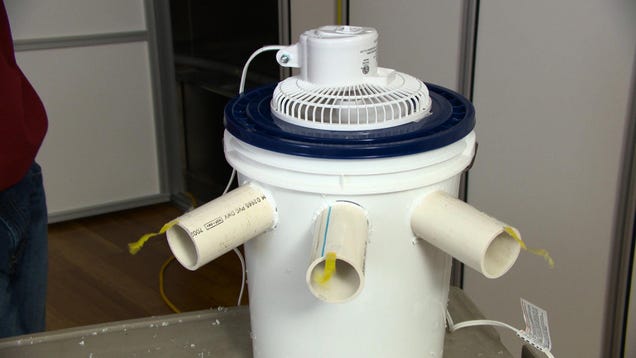
DIY air conditioners may seem like a cheap way to beat the heat, but they aren’t perfect. This video puts two homemade versions to the test and compares them to real AC units.

