How To Be More In Control Of Your Stressors And Keep Your Cool

Can you recall the last time you got “triggered?”

Perhaps it was a throwaway line by a colleague, the sudden changed reaction of someone you were in a conversation with or the family member who appears to be forever taking a swipe?

From being your calm even self, within seconds your physiology had been activated almost as if there was a sabre-tooth tiger in the room!

The neutrality of the conversation gone, thinking powers subdued and red lights flashing, a full throttle fight or flight had now taken over command.

angryAnd this you did with great flair, style and aplomb!

The only thing was that there was NO tiger present and you realized afterwards that you had over-reacted.

Needless to say, that particular conversation took a dive and the relationship now needs tending to.

Well – the good news is that you are not alone here.

We have all done this, haven’t we and realized afterwards that our interpretation of what happened was quite off-mark.

Simply put – we got triggered.

Triggers are Our Ammunition

Here’s the thing though – whenever we get triggered and hijacked by our strong, unexpected reaction  – it is a giveaway sign that there is a hidden barrier waiting for us to breakthrough with!

Our triggers are our ammunition for where we need to move beyond any earlier conditioning or beliefs about how we view certain things.

Unless we become more conscious of our triggers, we are more likely to do this:

1) Be on Automatic Pilot

We immediately become reactive when our ‘triggers’ get activated.  Carl Jung – the gifted grandfather of psychology referred to these as our ‘complexes.’  Typically, our reactions will be way beyond proportion to any intended message.

2) Emotional Eruption

We then get upset, angry, accusatory of the other person of how they have done “x,y,z”.  Even if the other party’s intent was not one to provoke you, being at the receiving end of your eruption, they may also get provoked.

3) Combat Zone

Now you are both in the boxing ring and the conversation has veered off where neither of you started. You are both in a combative mode with blows flying willy-nilly.

But it no longer needs to be this way!

Here are seven things you can do

The following actions will not only help you recognize, and understand your trigger but it will help you to keep your cool when you do get triggered.

It will give you a breather to respond in a better way and even save your relationship!

1) Know what and who your triggers are

We all have some things or certain people who trigger us more often than others.  Be mindful of these before you enter a situation with them.

For example, it could that family member who has a certain way of saying things, which just gets under your skin.  Or it could be when a staff member or colleague continues to do something that you have already had a discussion about.

Knowing this enables you to be forearmed and not being surprised each time, every time.

2) Become aware when you get triggered

This step is not too hard to miss, as you will notice changes in your body, mind and mood.  For example, you will notice the heart starts beating faster, you are sweating, your feel tension in the mind or body and suddenly your mood has changed from neutral to anger, flatness, or hurt.

Being self aware in this way then enables you to self manage better both of which are important skills of emotional intelligence.

3) Name your thoughts, feelings and reaction without making the other person the cause

Too often we go straight for the jugular and hold the other person responsible along the lines of, “Look what you have done now/or made me feel.”  Getting angry, shouting, screaming, calling names, snarling, make biting comments or other passive aggressive behaviours

Notice and own your feelings as your reaction. Take ownership – it gives you more power and options to come out on top.

Self-control is another dimension of being emotionally intelligent.

4) Breathe

A good way of keeping your cool is to become aware of your breath.  Focusing on your breath for the next few seconds will help your calm yourself and regain your composure.

It is a good way of buying time so you will be able to better respond, not react.  As Steven Covey has said, it is creating that gap between stimulus and response, which enables us to not be reactive.

5) Look at the context/bigger picture you are in

Remind yourself of the bigger picture of whatever situation you are in.

For example, in a project team, the inappropriate response of another colleague could perhaps be forgiven considering they are normally pretty on to it but are super stretched this time or a family member who has perhaps lost a job recently.

This allows us to have a bit more compassion and be kinder than our own ‘triggered’ first response taking precedence.

6) Take time out

In conflict situations, one thing we don’t do enough of is to remove ourselves and take time out.

Likewise, in situations we get triggered, it is not always easy to control our feelings and the best thing you can do is to say that you need some time out and take leave.

You can re-engage once you have gathered yourself.

Remember, our triggers may be a conditioned response to an earlier beliefs or situation which may no longer be appropriate or relevant.  Be prepared to challenge yourself on this as growth is just on the other side!

7) Reflect afterwards noting what you might do differently

Whatever you have done, review afterwards and identify what went well, what didn’t go so well and what you might do differently next time.

And remember to congratulate yourself for taking a step back, managing an old trigger and coming out on top!

Bringing it all together

As neuroscience has found, our neuronal pathways respond
in known ways.  The brain loves to take short cuts with the least amount of expenditure of energy.

Changing behavior patterns require a whole lot of
intention, attention and repetition.  But this can be done.

New neuronal pathways can be created. As has been said, “neurons that wire together, fire together”

So over to you now!

What has been your key takeout from this article, which you could put into practice next time you are triggered?

The post How To Be More In Control Of Your Stressors And Keep Your Cool appeared first on Change your thoughts.

http://ift.tt/1XeCJZ2

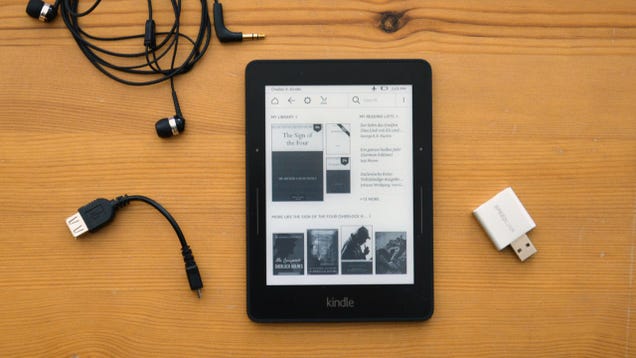
Build Your Own Kindle Audio Adapter For Less Than $10

Amazon currently sells audio adapters that enable visually impaired Kindle owners can have their audiobooks read aloud to them. Normally, this adapter costs around $20, but you can make your own for as little as half that.

Read more…

http://ift.tt/1TVk9Cx

Trees and Plants that Grow Fruit All Year Round

If you have a little space for a garden, you’re probably growing seasonal vegetables—but there’s never a bad time of year to grow fruit, either. This graphic shows you all of the fruit you can grow at any time of year, including some year-round options that’ll feed you in the warm and cool months alike.

Read more…

http://ift.tt/1Ovizby

Jobs You Probably Never Considered, the Health Benefits of Yoga, and a Billboard that Kills Zika Mosquitoes

Some Monday morning inspiration, career options your guidance counselor probably never suggested, the real health benefits of yoga (that don’t require pricey pants), and more, all in this week’s Lifehacker Brain Buffet!

Read more…

http://ift.tt/1TRM8Ad

6 Ways To Tell If You Are Addicted To Your Partner

Addiction comes in many forms, not just chemicals and alcohol but we can also become addicted to people too. This may sound ridiculous to some but unfortunately, it’s a sad and real truth. Co dependency is a very serious and toxic behaviour but if you know someone who shows signs of this, understand that they may not be aware of their addiction or they are and feel that can’t help themselves.

Contrary to what we all think, not all addictions are bad.  Being addicted to the smell of fresh brewing coffee or flowers is a fun and wonderful addiction. However, keep in mind that the majority of addictions definitely are toxic, and being addicted to your partner is no different or less toxic. It is still an addiction that should be and can be helped. So how can we tell if we or someone close to us is addicted their partners? Here are a few signs; see if you recognize any of them.

addiction_love1. Separation anxiety.

If they have to go out of town for a day, weekend or heaven forbid longer than a week and you feel a very sickening feeling of anxiety, you could be addicted to your partner. Many of us don’t like to be away from our partners, obviously because we love them and we would miss them but when the feeling is much more than that and it borderlines on physical illness, then something is not right. Could be you are addicted and the feeling of not being around them causes great separation anxiety.

2. Joined at the hip.

You need to be with them every minute and every hour of the day when they are at home.  There is a sense of security for you knowing that they are right there beside you. It’s almost like a blanket for you. A comfort blanket. But it’s more than that. You need to have that blanket around you all the time.  You feel lost, empty and naked without it.

3. You start picking up all their habits and traits.

I get that it’s pretty common to pick up some of your partner’s traits and habits the longer we have been with them, but there is a fine line between picking them up without even realizing it and picking them up because you want to be like them. You may adore them and the ground they walk on but being like them or wanting to desperately be like them is not a healthy thing. Be like you instead. No body does it better.

4. Spend money on them to keep them around.

Yes, you are buying their love. Many people do this. actually so many people that it’s more common than not. When we start spending all our money on them to keep them around, you are now paying for an addiction, for love, for company. If someone wants to be with you, you shouldn’t have to be paying for their attention or love. For some, doing this is their attempt at buying companionship so they aren’t alone.

5. Constantly seeking approval from them.

You need their approval for everything. Suddenly it seems you can’t make a decision without their approval or their final say. You have slipped into a zone where your self confidence has plummeted to an all time low and need constant approval and reassurance from your partner for everything. You lack enough confidence in yourself and feel that if you have their approval for everything that they will love you more, respect you more or want to be with you more. All of that couldn’t be farther from the truth.

6. You’ll do anything to keep them.

Anything. Lie, cheat, borrow, beg, steal, pay, whatever. You are so fearful of losing them that you will even jeopardize your values, integrity and self worth to keep them. It’s that whole being alone is a scary thing that has you doing just about anything so as to not be alone. Too often, many of us do this, just about anything, to keep a partner. That is partner addiction and not a good one at all.

Being addicted to your partner is never a good thing. so many of us lack self worth so we seek it in others. You must find it and grow it in yourself first.  Having someone to love and love us back is a beautiful thing but not at the expense of your self. Take the time necessary to find out who you are and love yourself first. The rest will fall into place nicely.

The post 6 Ways To Tell If You Are Addicted To Your Partner appeared first on Change your thoughts.
http://ift.tt/1OvkIPl

The Ultimate Guide To Sleeping Less and Living More

You’re reading The Ultimate Guide To Sleeping Less and Living More, originally posted on Pick the Brain | Motivation and Self Improvement. If you’re enjoying this, please visit our site for more inspirational articles.

The Ultimate Guide To Sleeping Less & Living More

sleep and depression

I think I’ve cracked this sleep thing.

For months now I’ve been waking up feeling great after only being in the sack for a few hours.

The revelation came after years of obsessing with getting the recommended 8 hours in. As a night owl who loves coffee, it rarely happened, but even when it did, I often rose feeling worse.

After eventually realizing that something wasn’t right, I did some digging and found out not everyone thinks 8 is the magic number. In fact, some believe there isn’t one at all.

Another number that’s thrown around by the media is 7—the average number of hours we sleep. This is more likely an effect of society not biology, regulated by television schedules and working hours. Looking back on the sleep patterns of pre-industrial societies supports this as you can see back then we slept between 5.7 and 7.1 hours a night.

So the jury is still out on how many hours we need, but one thing is clear: getting too much sleep is worse than getting too little.

Less is Always More

In an analysis of 16 studies that looked at the sleeping habits of over one million people, Prof Franco Cappuccio, Professor of Cardiovascular Medicine and Epidemiology at the University of Warwick, found surprisingly that long sleepers tended to die earlier than short sleepers.

It’s difficult to measure the impact of too much or too little sleep on our health as they can often be symptoms of underlying diseases and illnesses. For example, sleeping too much being correlated with depression, and sleeping too little with stress. But when Professor Shawn Youngstedt of Arizona State University, understanding the problems with mass sample groups, conducted a small study with 14 young adults, he saw similar results that supported those of Cappuccino.

Participants of his study were instructed to spend an extra two hours in bed for three weeks. At the end of the study Youngstedt found there was an increase across the board in stiffness, back pain, inflammation, and depressed moods.

His results, although limited, make the long term effects of long sleeps sound similar to the effects of prolonged periods of inactivity. Could it be that lying down barely conscious for hours and hours every night is actually detrimental to our health, and even threatening to our life span? Well, just as someone can live a long and happy life sitting at a desk for 12 hours a day, while someone else needs to be doing non-stop physical labour, the numbers each of us need in the pit are just as varied.

If you’re between the ages of 18 and 64, it’s said you’ll function on anything between 6 and 11 hours. Though even these figures are only a guideline, and according to the National Sleep Foundation are secondary to your individual requirements. We know Margaret Thatcher could run a country on just 4 hours, whereas some teenagers can’t leave the house on anything less than 10.

So What’s Your Magic Number?

When we’re all tucked up in bed, the sand man begins to work his magic, kicking off our five state sleep cycle. This is made up of four non-rapid-eye-movement or ‘NREM’ stages, and one rapid-eye-movement or ‘REM’ stage.

We quickly pass through the light sleep state of N1, hang around in N2 for a while until our brain waves slow down, fall into the deeper ‘slow wave’ state of N3 and N4, and finally reach the temporarily paralyzed dream state of REM in N5.

It’s commonly believed this cycle occurs over 90 minutes, but in reality, it can range from anything between 70 and 120 minutes. Just like with ‘the magic number’ of hours, the figure we are told is just a population average which overlooks the unique and diverse needs of the individual.

We do know however, according to the science, that we need four to five of these sleep cycles in order to feel at our best—meaning, at least theoretically, Thatcher could have been firing on all cylinders on her 4 hours.

But with the varying cycle times, it’s pretty difficult to predict when you’re in-between your forth and fifth cycle and therefore in the ideal state for waking up.

That’s not all, as the night draws in, the length of our sleep cycle increases.

This should give you an idea of how varied your sleep cycle can be over the course of a night:

  • N1: 1-7 minutes
  • N2: 10-25 minutes (generally)
  • N3: 20-40 minutes (decreasing every cycle)
  • N2: Jump back to N2 for around 5-10 minutes before entering REM
REM: 1-5 minutes (increasing every cycle)

So what does this teach us?

  1. Don’t believe anyone who tells you how many hours sleep you need unless they’ve first monitored your brain waves with an EEG machine while you’re sleeping (with your consent of course).
  2. Get yourself a bit of tech that’ll monitor your sleep cycles and wake you up in the right stage every morning.

So technology is the way to help better regulate our sleep patterns. But before we get on to that, it’s first important to recognize its role in disrupting them in the first place.

Get Back in Tune With Your Circadian Rhythm

Technology is one of the main reasons we’re out of touch with our biological ‘body clock’, otherwise known as our circadian rhythm. Gadgets, electronics, street lights and any other light-emitting devices disrupt our circadian rhythms and push us further and further out of sync with solar time—the rising and setting of the sun.

The body’s circadian rhythm is managed by the Suprachiasmatic Nucleus (SCN), a group of cells that invoke a bodily response to light and dark signals. These signals send messages through the brain to wake the body up, raising its temperature, producing the hormones we need like cortisol, and reducing others we don’t such as melatonin.

The problem is that when we’re exposed to artificial light in the twilight hours, our SCN responds, believing it’s already time to rise and shine, and engaging the body’s systems for our waking state.

It’s not only the fault of technology though, other factors like noise, hormones, exercise, and stimulants also have similar effects in disrupting our circadian rhythm.

However, the good news is that for over 6 million years our ancestors have lived by the rising and setting of the sun. Therefore, when it comes to changing our habits and resynchronising our circadian rhythm to solar time, all it takes is a little effort to avoid artificial light between dusk and dawn.

With that in mind, we can avoid exercising and drinking coffee too late, wear ear plugs and eye masks while sleeping, and overall make our bedrooms the sanctuaries they need to be in order to foster deep, uninterrupted sleep.

Cheap and Cheerful Sleep Cycle Monitoring

Anywhere from $0 to $500+, you can find a gadget that claims to improve your sleep by monitoring your cycles and picking the right time to bring you back around. Luckily for us, one that does it particularly well comes in right at the bottom of that range.

The majority of the sleep monitoring devices and applications work by picking up on the specific characteristics of the cycle stages. Each stage is characterised by changes in the body like temperature, heart rate, and blood pressure. Now these are hard to measure without a plethora of sensors, but some of these changes we display externally: our movements and breathing rate.

The Sleep Cycle app (available on both iOS and Android), is a nifty little system which uses your phone’s accelerometer and microphone to monitor your sleep cycles according to changes in your movement and breathing rate.

getting a better night's rest pick the brain

An average night’s sleep

Before you drift off, you set your alarm like usual, tuck your phone under the sheets (or leave it on your nightstand if it’s iOS), and let it get to work. The app will track your activity throughout the night and wake you up within a 30 minute window of your chosen time, depending on when you are in N1—your lightest sleep stage.

Granted it doesn’t completely eliminate the shock of the alarm clock in the morning, but it can make that groggy and irritated feeling a thing of the past.

One of the nicest things about this app is the data it accumulates. Soon you begin to see a pattern in your cycles and start optimizing your sleep. I’ve found waking up after 4 sleep cycles works best for me, which usually means getting around 6 to 6 and a half hours sleep.

In summary, it’s not about the number of hours we get, but rather the quality and consideration of our sleep cycles that dictate how fresh we feel in the morning.

So disregard broad averages, eliminate disruptive factors like artificial light and stimulants, along with the cat, and let your phone and body do the rest.

Want to take the next step to rising fresh and optimizing your mornings?

Grab a free copy of our new eBook: MORNING MASTERY: The Simple 20 Minute Routine For Long Lasting Energy, Laser-Sharp Focus, and Stress Free Living.

————

Joseph is a freelance writer, and the co-creator of Project Monkey Mind—a new blog for the 21st century solopreneur and young professional who wants to lead a more free and fulfilling life.

You’ve read The Ultimate Guide To Sleeping Less and Living More, originally posted on Pick the Brain | Motivation and Self Improvement. If you’ve enjoyed this, please visit our site for more inspirational articles.

http://ift.tt/1TR75eS

The Ultimate Guide To Sleeping Less and Living More

You’re reading The Ultimate Guide To Sleeping Less and Living More, originally posted on Pick the Brain | Motivation and Self Improvement. If you’re enjoying this, please visit our site for more inspirational articles.

sleep and depression

sleep and depression

I think I’ve cracked this sleep thing.

For months now I’ve been waking up feeling great after only being in the sack for a few hours.

The revelation came after years of obsessing with getting the recommended 8 hours in. As a night owl who loves coffee, it rarely happened, but even when it did, I often rose feeling worse.

After eventually realizing that something wasn’t right, I did some digging and found out not everyone thinks 8 is the magic number. In fact, some believe there isn’t one at all.

Another number that’s thrown around by the media is 7—the average number of hours we sleep. This is more likely an effect of society not biology, regulated by television schedules and working hours. Looking back on the sleep patterns of pre-industrial societies supports this as you can see back then we slept between 5.7 and 7.1 hours a night.

So the jury is still out on how many hours we need, but one thing is clear: getting too much sleep is worse than getting too little.

Less is Always More

In an analysis of 16 studies that looked at the sleeping habits of over one million people, Prof Franco Cappuccio, Professor of Cardiovascular Medicine and Epidemiology at the University of Warwick, found surprisingly that long sleepers tended to die earlier than short sleepers.

It’s difficult to measure the impact of too much or too little sleep on our health as they can often be symptoms of underlying diseases and illnesses. For example, sleeping too much being correlated with depression, and sleeping too little with stress. But when Professor Shawn Youngstedt of Arizona State University, understanding the problems with mass sample groups, conducted a small study with 14 young adults, he saw similar results that supported those of Cappuccino.

Participants of his study were instructed to spend an extra two hours in bed for three weeks. At the end of the study Youngstedt found there was an increase across the board in stiffness, back pain, inflammation, and depressed moods.

His results, although limited, make the long term effects of long sleeps sound similar to the effects of prolonged periods of inactivity. Could it be that lying down barely conscious for hours and hours every night is actually detrimental to our health, and even threatening to our life span? Well, just as someone can live a long and happy life sitting at a desk for 12 hours a day, while someone else needs to be doing non-stop physical labour, the numbers each of us need in the pit are just as varied.

If you’re between the ages of 18 and 64, it’s said you’ll function on anything between 6 and 11 hours. Though even these figures are only a guideline, and according to the National Sleep Foundation are secondary to your individual requirements. We know Margaret Thatcher could run a country on just 4 hours, whereas some teenagers can’t leave the house on anything less than 10.

So What’s Your Magic Number?

When we’re all tucked up in bed, the sand man begins to work his magic, kicking off our five state sleep cycle. This is made up of four non-rapid-eye-movement or ‘NREM’ stages, and one rapid-eye-movement or ‘REM’ stage.

We quickly pass through the light sleep state of N1, hang around in N2 for a while until our brain waves slow down, fall into the deeper ‘slow wave’ state of N3 and N4, and finally reach the temporarily paralyzed dream state of REM in N5.

It’s commonly believed this cycle occurs over 90 minutes, but in reality, it can range from anything between 70 and 120 minutes. Just like with ‘the magic number’ of hours, the figure we are told is just a population average which overlooks the unique and diverse needs of the individual.

We do know however, according to the science, that we need four to five of these sleep cycles in order to feel at our best—meaning, at least theoretically, Thatcher could have been firing on all cylinders on her 4 hours.

But with the varying cycle times, it’s pretty difficult to predict when you’re in-between your forth and fifth cycle and therefore in the ideal state for waking up.

That’s not all, as the night draws in, the length of our sleep cycle increases.

This should give you an idea of how varied your sleep cycle can be over the course of a night:

  • N1: 1-7 minutes
  • N2: 10-25 minutes (generally)
  • N3: 20-40 minutes (decreasing every cycle)
  • N2: Jump back to N2 for around 5-10 minutes before entering REM
REM: 1-5 minutes (increasing every cycle)

So what does this teach us?

  1. Don’t believe anyone who tells you how many hours sleep you need unless they’ve first monitored your brain waves with an EEG machine while you’re sleeping (with your consent of course).
  2. Get yourself a bit of tech that’ll monitor your sleep cycles and wake you up in the right stage every morning.

So technology is the way to help better regulate our sleep patterns. But before we get on to that, it’s first important to recognize its role in disrupting them in the first place.

Get Back in Tune With Your Circadian Rhythm

Technology is one of the main reasons we’re out of touch with our biological ‘body clock’, otherwise known as our circadian rhythm. Gadgets, electronics, street lights and any other light-emitting devices disrupt our circadian rhythms and push us further and further out of sync with solar time—the rising and setting of the sun.

The body’s circadian rhythm is managed by the Suprachiasmatic Nucleus (SCN), a group of cells that invoke a bodily response to light and dark signals. These signals send messages through the brain to wake the body up, raising its temperature, producing the hormones we need like cortisol, and reducing others we don’t such as melatonin.

The problem is that when we’re exposed to artificial light in the twilight hours, our SCN responds, believing it’s already time to rise and shine, and engaging the body’s systems for our waking state.

It’s not only the fault of technology though, other factors like noise, hormones, exercise, and stimulants also have similar effects in disrupting our circadian rhythm.

However, the good news is that for over 6 million years our ancestors have lived by the rising and setting of the sun. Therefore, when it comes to changing our habits and resynchronising our circadian rhythm to solar time, all it takes is a little effort to avoid artificial light between dusk and dawn.

With that in mind, we can avoid exercising and drinking coffee too late, wear ear plugs and eye masks while sleeping, and overall make our bedrooms the sanctuaries they need to be in order to foster deep, uninterrupted sleep.

Cheap and Cheerful Sleep Cycle Monitoring

Anywhere from $0 to $500+, you can find a gadget that claims to improve your sleep by monitoring your cycles and picking the right time to bring you back around. Luckily for us, one that does it particularly well comes in right at the bottom of that range.

The majority of the sleep monitoring devices and applications work by picking up on the specific characteristics of the cycle stages. Each stage is characterised by changes in the body like temperature, heart rate, and blood pressure. Now these are hard to measure without a plethora of sensors, but some of these changes we display externally: our movements and breathing rate.

The Sleep Cycle app (available on both iOS and Android), is a nifty little system which uses your phone’s accelerometer and microphone to monitor your sleep cycles according to changes in your movement and breathing rate.

getting a better night's rest pick the brain

An average night’s sleep

Before you drift off, you set your alarm like usual, tuck your phone under the sheets (or leave it on your nightstand if it’s iOS), and let it get to work. The app will track your activity throughout the night and wake you up within a 30 minute window of your chosen time, depending on when you are in N1—your lightest sleep stage.

Granted it doesn’t completely eliminate the shock of the alarm clock in the morning, but it can make that groggy and irritated feeling a thing of the past.

One of the nicest things about this app is the data it accumulates. Soon you begin to see a pattern in your cycles and start optimizing your sleep. I’ve found waking up after 4 sleep cycles works best for me, which usually means getting around 6 to 6 and a half hours sleep.

In summary, it’s not about the number of hours we get, but rather the quality and consideration of our sleep cycles that dictate how fresh we feel in the morning.

So disregard broad averages, eliminate disruptive factors like artificial light and stimulants, along with the cat, and let your phone and body do the rest.

Want to take the next step to rising fresh and optimizing your mornings?

Grab a free copy of our new eBook: MORNING MASTERY: The Simple 20 Minute Routine For Long Lasting Energy, Laser-Sharp Focus, and Stress Free Living.

————

Joseph is a freelance writer, and the co-creator of Project Monkey Mind—a new blog for the 21st century solopreneur and young professional who wants to lead a more free and fulfilling life.

You’ve read The Ultimate Guide To Sleeping Less and Living More, originally posted on Pick the Brain | Motivation and Self Improvement. If you’ve enjoyed this, please visit our site for more inspirational articles.

http://ift.tt/1TR75eS

The Best Way to Poach Salmon Is With a Cold Start

If you want to make perfectly poached salmon that isn’t overcooked, drop it in cold water and gradually crank up the heat.

Read more…

http://ift.tt/27pQx7L

Build a Raspberry Pi-Powered Media Player That Plays a Simpsons Episode at Random

There are a ton of Simpsons episodes, but if you long for the days of just watching whatever episode happens to be playing on TV at any given moment, DIYer Stephen Coyle build a little system powered by a Raspberry Pi Zero that plays a random episode.

Read more…

http://ift.tt/1OtF7tp

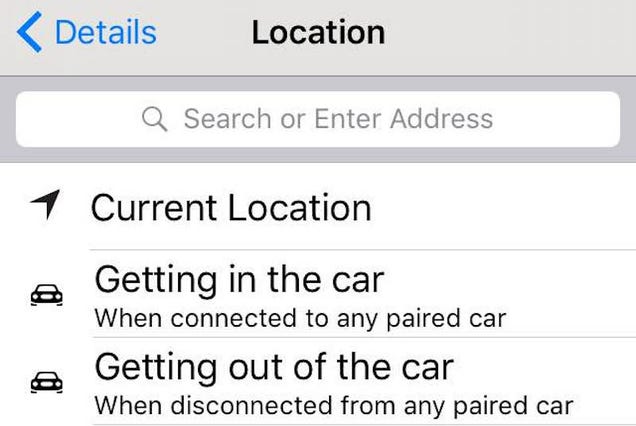
Tell Your iPhone to Notify You When It Connects to Your Car’s Bluetooth

If you’re like me, you head out to run errands only to get back home and realize there’s at least one thing you forgot to do. If you’re an iPhone user, you can set up a location-based reminder that comes in handy for situations like this.

Read more…

http://ift.tt/1XcTAeW