Gifford Pinchot is often called the “Father of American…

Gifford Pinchot is often called the “Father of American Forestry.” His life and legacy shaped American conservation and our public lands. Celebrate his birthday and check out his story https://on.doi.gov/Pinchot  Photo of Gifford Pinchot National Forest by Pat Di Geronimo (http://ift.tt/18oFfjl).

Located within the Pacific Flyway, Sonny Bono Salton Sea…

Located within the Pacific Flyway, Sonny Bono Salton Sea National Wildlife Refuge in California is an important resting and nesting place for migrating birds. With a fascinating history and an uncertain future, the refuge takes visitors 227 feet below sea level to witness a stunning desert landscape. It can get extremely hot in August, but well prepared adventurers can still find gulls and migrating shorebirds. Photo by Sarah Chah (http://ift.tt/18oFfjl).

Apostle Islands National Lakeshore’s protected bays, pristine…

Apostle Islands National Lakeshore’s protected bays, pristine beaches and natural beauty provide outstanding water recreation. Public docks are found on 12 of the islands in the Wisconsin national lakeshore, and visitors can explore this area of Lake Superior by boat, kayak or canoe. Use safe boating practices and you’ll enjoy fun times and stunning scenery. Photo by Jasmine Wilhelm (http://ift.tt/18oFfjl).

Towering 800 feet above the North Platte River, Scotts Bluff in…

Towering 800 feet above the North Platte River, Scotts Bluff in Nebraska has served as a landmark for peoples – from Native Americans to emigrants on the Oregon, California and Mormon Trails to modern travelers. Rich with geological and paleontological history as well as human history, there is much to discover while exploring the 3,000 acres of Scotts Bluff National Monument. Photo by Brian Poffenberger, National Park Service.

Towering 800 feet above the North Platte River, Scotts Bluff in…

Towering 800 feet above the North Platte River, Scotts Bluff in Nebraska has served as a landmark for peoples – from Native Americans to emigrants on the Oregon, California and Mormon Trails to modern travelers. Rich with geological and paleontological history as well as human history, there is much to discover while exploring the 3,000 acres of Scotts Bluff National Monument. Photo by Brian Poffenberger, National Park Service.

For National Lighthouse Day, we’re featuring the Cape Hatteras…

For National Lighthouse Day, we’re featuring the Cape Hatteras Lighthouse at Cape Hatteras National Seashore in North Carolina. Protecting mariners in an area known as the “Graveyard of the Atlantic,” the lighthouse was built in 1870 and is distinctive for its spiral black and white paint pattern. It remains the tallest brick lighthouse in America and is a favorite subject of visiting photographers. Photo by Stacy Abbott (http://ift.tt/18oFfjl).

Learn more about the Cape Hatteras Lighthouse: http://ift.tt/2byLo89 

Southwest Colorado’s Alpine Loop National Backcountry Byway…

Southwest Colorado’s Alpine Loop National Backcountry Byway provides access to some of the most spectacular scenery anywhere in the Rockies. Here, jagged peaks up to 14,000 feet in elevation rise above rushing streams and wildflower-filled meadows. A few miles further West, the American Basin in Handies Peak Wilderness Study Area has a plethora of wildflowers including fields of Colorado’s state flower, the columbine. You can scale 14,000 foot Handies Peak with a long non-technical but demanding day hike. Photo by Bob Wick, Bureau of Land Management, @mypubliclands

Southwest Colorado’s Alpine Loop National Backcountry Byway…

Southwest Colorado’s Alpine Loop National Backcountry Byway provides access to some of the most spectacular scenery anywhere in the Rockies. Here, jagged peaks up to 14,000 feet in elevation rise above rushing streams and wildflower-filled meadows. A few miles further West, the American Basin in Handies Peak Wilderness Study Area has a plethora of wildflowers including fields of Colorado’s state flower, the columbine. You can scale 14,000 foot Handies Peak with a long non-technical but demanding day hike. Photo by Bob Wick, Bureau of Land Management, @mypubliclands

In the last four years of the 19th century, over 100,000…

In the last four years of the 19th century, over 100,000 prospectors flooded into the Klondike region of Alaska and Canada looking for gold. Klondike Gold Rush National Historical Park not only tells the stories of these pioneers, it preserves 13,000 acres of historic sites and stunning wilderness. Traveling the trails is like going back in time. Photo by C. Anderson, National Park Service.

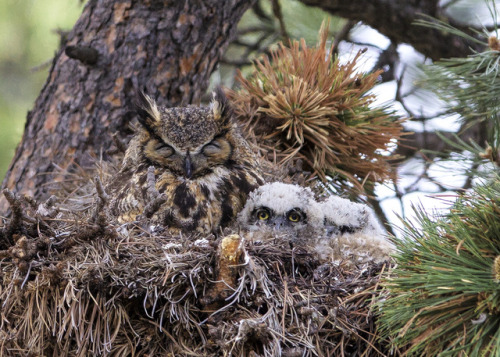
It’s International Owl Awareness Day, and we’re celebrating…


An owl family at Rocky Mountain National Park.


Barn owls by USFWS.


A parliament of baby burrowing owls by USFWS.

It’s International Owl Awareness Day, and we’re celebrating these majestic birds with awesome owl photos and facts!

With fluffy feathers, large eyes and dramatic facial expressions, these birds of prey have long been fan favorites. There are 150 species of owls worldwide and 19 that call North America home, providing plenty of opportunities to spot these birds on public lands or in your backyard.

While they may look adorable, owls are fierce hunters. These well-adapted predators are silent hunters with excellent eyesight and hearing, allowing them to soar through the night sky in search of prey. Some scientists estimate that a single owl can eat 2,000 rodents a year.

Be sure to check out more owl photos – they’re a real hoot! https://on.doi.gov/owls