Bobby Kennedy: The Making of a Liberal Icon

Bobby Kennedy Crop

When Robert F. Kennedy ran for a U.S. Senate seat from New York in 1964, many cried foul. John F. Kennedy’s younger brother had served as attorney general in the late president’s administration — an appointment that had itself generated controversy — and his candidacy in a state in which he neither resided nor voted (he lived in Virginia, voted in Massachusetts) was seen as a shameless attempt to use New York as a steppingstone for a future White House bid. The New York Times, which would eventually endorse his Republican opponent, called the campaign a “cynical” move and alleged that New York was nothing more to Kennedy than a “convenient launching-pad” for his “political ambitions.”

As Larry Tye recounts in his clear-eyed and absorbing new biography, Bobby Kennedy: The Making of a Liberal Icon, others saw the same naked political calculations but responded with what amounted to a shrug. Kennedy, like many of his fellow citizens, was clearly still mourning the assassination of his revered brother the year before. “If the Attorney General has a wound so great that, not to heal him but just for a little while to relieve him, he must be made a Senator, then we owe him nothing smaller,” declared the veteran political journalist Murray Kempton in The New Republic.

The two reactions demonstrate how polarizing Kennedy was. To some, he was less like his brother Jack than like his ruthless, vindictive father, Joe. (“Jack made friends, Bobby enemies,” Tye quips.) But traveling in America and abroad, he attracted adoring crowds inspired by his youth and his promise, even before JFK’s death made him, as Tye writes, “a prince in exile.” Kennedy, of course, did win the Senate seat, and he used it to launch his presidential campaign in 1968, as political observers had predicted he would. The idealistic Bobby who ran against the Vietnam War and as a champion for African Americans and the poor — and who, like his brother, was cut down in his prime by an assassin’s bullet — is the Bobby we remember today.

There was much more to Kennedy, though, and Tye cuts through the gauzy nostalgia to create a perceptive account of a life rife with contradictions, unearthed via boxes of previously unseen family papers along with interviews with RFK’s widow, Ethel, his former aides, and many others who knew him. Early in his career, the liberal icon of the book’s title worked as counsel to the crusading anti-Communist senator Joseph McCarthy, a position secured for him by his father; he left the job less because of disenchantment with McCarthy’s overzealous witch hunts than because of his hatred for the senator’s chief counsel, Roy Cohn. (Cohn was just one of RFK’s famous nemeses; others included Teamsters boss Jimmy Hoffa and President Lyndon Johnson.)

Bobby, as Tye refers to him throughout the book, was drafted by his father to manage JFK’s campaigns for Senate and then president, and his cutthroat techniques, along with Joe’s money, helped secure Jack’s victories. When Joe decided that Bobby would serve as Jack’s attorney general, both sons balked; JFK worried about charges of nepotism, particularly since Bobby had never actually tried a case in a court of law. Tye describes an astonishing encounter in which Joe Kennedy told John, “By God, he deserves to be attorney general of the U.S., and by God, that’s what he’s going to be. Do you understand that?” The president-elect responded, “Yes, sir.” Jack later joked that the job would give his little brother some legal experience.

It did, with mixed results. Take civil rights: the administration tried to walk a middle path, with Bobby gradually coming to appreciate the urgency of the issue of racial injustice and the need for federal action. While RFK increased the number of black attorneys in the Justice Department from six to sixty, he also appointed a number of racist, segregationist judges in the Deep South. He secured the safe passage of the Freedom Riders from Alabama to Mississippi, but he also approved FBI director J. Edgar Hoover’s request to wiretap Martin Luther King Jr.’s telephones.

With JFK gone and Joe incapacitated by a massive stroke, Robert Kennedy, still only in his thirties, was at last free to be his own man. He fantasized about taking time off to teach or simply to read but knew that public service was, in Tye’s words, “his calling as well as his inheritance.” As a senator, he learned best through direct experience, traveling to Mississippi to witness poverty firsthand and to California to understand the abuse of farmworkers. “He came to us and asked us two questions,” recalled farmworker labor leader Dolores Huerta. “All he said was, ‘What do you want? And how can I help?’ That’s why we loved him.”

Tye, who is the author of previous biographies, of Satchel Paige and Superman, admits to having been “captivated” by his subject since he was in high school, and he occasionally falls victim to the sentimental depiction of Kennedy that he has set out to dispel. (When, while campaigning for the Senate, Bobby is asked a question about the Warren Commission investigating JFK’s assassination, Tye doesn’t just have RFK tearing up in response — he has “silver tears [collecting] on his lower lashes.”) These lapses are minor, though, in a book that demonstrates forcefully and convincingly that Kennedy underwent a genuine change to emerge on the right side of history. “In today’s derisive political context he’d be decried as a flip-flopper,” the author observes, “but his transformation was heartfelt and transcended politics.” While the Bobby we remember today is that passionate idealist running an insurgent campaign for the presidency on behalf of the poor and the dispossessed, Tye has done readers a service by showing us exactly how far he traveled to get there.

The Barnes & Noble Review http://ift.tt/29t3Cng

In the Avalanche Lake area of Glacier National Park, abundant…

In the Avalanche Lake area of Glacier National Park, abundant rainfall, prehistoric glaciers and rushing streams have combined to create a landscape of striking beauty and rich diversity. So much water allows nature to display vibrant colors –  from sparkling blue lakes to rich green forests. A hike on the Trail of Cedars is a great way to experience this gorgeous Montana landscape. Photo courtesy of Steven Bumgardner.

INTERIORS: Mr. Robot


Courtesy of INTERIORS Journal

Courtesy of INTERIORS Journal

Interiors is an online film and architecture publication, published by Mehruss Jon Ahi and Armen Karaoghlanian. Interiors runs an exclusive column for ArchDaily that analyzes and diagrams films in terms of space. Their Official Store will carry exclusive prints from these posts.

The visual medium of film has meant that style has always played a significant role in cinema. It’s one of the reasons why film and architecture have gone hand in hand for the past hundred years. In some sense, both mediums display complementary qualities; film as photography captures the structural aspects of architecture, while architectural design dictates cinematic space.

The same can’t be said for television – because even though television has undergone an aesthetic transformation in the past few years, with shows like The Sopranos, Mad Men, Breaking Bad, True Detective, and The Knick, it’s still very much a character-based medium. The format itself allows for the close examination of characters over the course of many hours.


Courtesy of INTERIORS Journal

Courtesy of INTERIORS Journal

Mr. Robot opens in a New York City coffee shop (Think Coffee on 4th Avenue in reality, but named Ron’s Coffee in the series), with the majority of its first episode set entirely in a single location as it introduces its audience to the character of Elliot Alderson (Rami Malek). In contrast, the season wraps with a tracking shot tour of an opulent mansion, a place whose connection to the narrative of the series as a whole is shrouded in secrecy and mystery. These spaces couldn’t be more different from one another, and yet, that’s precisely where Mr. Robot finds its architectural interests – in disparate, conflicting spaces.

Mr. Robot switches between spaces that include gritty New York City streets, abandoned buildings, and modern office spaces. The sleek steel structure of E. Corp’s building façade juxtaposed with Elliot’s Lower East Side apartment building, next to fast food restaurants and subway stations, makes this arguably the most architectural television series ever.

In fact, for a television series so incredibly interested in architecture, it’s fitting that its protagonist spends his days overlooking an architectural model of the city of New York at the Queens Museum. It’s the architectural style of filmmaking, however, that makes Mr. Robot so rich.

Sam Esmail’s Mr. Robot is the work of a singular author, and while it’s heavily invested in its protagonist’s unreliable narrative, it’s also very much concerned with architecture and style. This is mostly seen in its unconventional framing as well as its photography of office spaces and buildings; it’s a series interested in how spaces appear and how characters appear in those spaces.

Throughout the series, Esmail continuously uses his camera in ways that speaks to the architectural significance of spaces. In the second episode of the series, for instance, a camera is attached to the front door of Elliot’s apartment – as he opens his door, we see the entirety of the space through the movement of the camera, all in a single shot. This occurs once again in a later episode with a camera attached to the side of a car door. In fact, even the series’ most notable scene, in which our hero devastatingly discovers a deadly surprise in the trunk of a car, a sharp performance is made possible by an effective choice – holding on his reaction for an unbroken take that lasts several minutes. This is a series – and a filmmaker – inherently interested in using space to capture feeling. These significant moments throughout the series are all determined by the use of space (or lack thereof).


Floor plan of Elliot's apartment in Mr. Robot. Image Courtesy of INTERIORS Journal

Floor plan of Elliot's apartment in Mr. Robot. Image Courtesy of INTERIORS Journal

The most prominent space in the series is Elliot’s apartment, which becomes a safe haven for his character. It’s the one space that feels somewhat safe amid the intense chaos throughout the series; even though there are outside forces that threaten the private space, such as when Fernando Vera’s crew infiltrates the space or when Tyrell Wellick breaks in and confronts Elliot, there is a great deal of power in Elliot’s apartment. It’s more than his home, it’s where we, as an audience, continuously revert to throughout the series.

In fact, for a show that deals with so many complex ideas – crises of identity, hacking, corporatism, oppressive government surveillance – this single apartment space grounds the story. It’s how the audience can connect and identify with the hero amid these concepts.

In an exclusive interview with Interiors, Matthew Munn, production designer of the pilot episode of Mr. Robot which set the stage for the remainder of the season, speaks about his work as it relates to Elliot’s apartment.

Munn notes that the apartment space is “small and cramped… it is a New York apartment after all and I wanted it to feel like one.” The space, however, is also a reflection of Elliot’s character. Elliot, for instance, isn’t the type of person who would be interested in painting his walls, which is why the filmmakers opted for warmer grays as a way of making the space feel safer, along with incandescent lighting that warms up the overall space.


Courtesy of INTERIORS Journal

Courtesy of INTERIORS Journal

The interior of his apartment also doesn’t have a particular style. “We talked a lot at the outset of prep that Elliot’s apartment should be a reflection of him and his interests. In my mind, Elliot is not an interior decorator, and his apartment functions as a place for him to work and sleep.” The series effectively makes Elliot’s apartment home base, but even within this single space, there is a strong emphasis on specific spaces, such as his couch and desk. The majority of his time is spent working on his computer or doing drugs as a way of escaping from reality.

The most significant space, however, is Elliot’s desk. “The desk area was all about his work. We wanted a simple table to support what was obviously the only thing in the apartment that Elliot really spends money on – his computer.” Elliot is a character that has a homebuilt computer system that he spends his time taking apart. In a life of chaos, he finds order in his own way. “I wanted this space to feel like it was a work zone and to be cluttered in a way that only Elliot could discern its order.”

The architecture of Mr. Robot is a reflection of its characters. The clean, contemporary office spaces of E. Corp accurately reflect Tyrell’s persona, whereas the chaotic apartment space best mirrors Elliot’s lifestyle. Matthew Munn elaborates by noting, “Elliot’s apartment is almost like a cave where he goes for sanctuary and work; so much about the outside world makes Elliot uncomfortable, almost like a wild animal, and I tried to make the apartment feel like the cave that he would retreat back to.”

The 2nd Season of Mr. Robot premieres July 13th, 2016 on USA Network.

These diagrams, along with others, are available for purchase in our Official Store.


Courtesy of INTERIORS Journal

Courtesy of INTERIORS Journal

Interiors is an online publication in which films are analyzed and diagrammed in terms of space. It is run by Mehruss Jon Ahi and Armen Karaoghlanian. Check out their Website and Official Store and follow them on Facebook, Twitter and Instagram.

http://ift.tt/29zatNQ

LeanToo / Nick Deaver Architect


© Casey Dunn

© Casey Dunn


© Casey Dunn


© Casey Dunn


© Casey Dunn


© Casey Dunn

  • Architects: Nick Deaver Architect
  • Location: Austin, TX, United States
  • Design Team: Nick Deaver, AIA, Adam C. Melius
  • Builder: Moontower Design Build
  • Area: 1900.0 ft2
  • Project Year: 2015
  • Photographs: Casey Dunn

© Casey Dunn

© Casey Dunn

LeanToo is the addition to an existing cottage situated in vibrant Austin neighborhood.  The site had the original home set back from the street and bracketed by two large heritage oak trees, an active city drainage line that cut through the property, and a dry creek at the rear.


© Casey Dunn

© Casey Dunn

The owners of the cottage had previously worked with the architect and had asked for the design to allow for large gatherings, intimate respite, and to be Austin cool. They love collecting paintings and sculpture, and having music play throughout the home. Our design had to able to live and adjust to these collections and occupants. The design itself is aware of the neighboring residential context along with the needs of the owner and site.


© Casey Dunn

© Casey Dunn

Plan

Plan

© Casey Dunn

© Casey Dunn

It’s subtle low pitched roof sets as a base to the traditional cottage form and we set back the carport to down play the addition’s street presence, acknowledge the neighboring fabric, and add value to the whole.  Renovations were also done to the original cottage, with a new kitchen and guest room both opening to the addition. Exterior terraces were introduced to respond to several things including the tradition of being outside during the beautiful seasons of the Texas Hill Country. The terraces continue up into the house from grade in both the front and rear yards, we like to say there is a single level to this home where we reject stairs in favor of steps. Steps allowed us to maximize the floor space while not expending energy on vertical circulation, and it allowed us casual points of gathering between larger meeting areas. Large glass panes, sliding panel doors, and a quiet screen porch make for the home to open itself up in several dynamic ways without compromising the site’s natural beauty. LeanToo was a project of intense detail that was aware of the intricate stitching needed to both respect the cottage, introduce a modern form, and address the complex site. Several materials were reused, helping to retain the character and charm of the surroundings in the color, use, and texture of material.


© Casey Dunn

© Casey Dunn

http://ift.tt/29sP3jM

Kooo Architects’ Colorful Mobile Fashion Store Built From Japanese Disaster Hoods


Courtesy of Kooo Architects

Courtesy of Kooo Architects

When posed with a brief for a Japanese-style mobile fashion store, Kooo Architects decided not to respond in a purely visual symbolic way. Rather, they looked at the climate for constructing architecture in Japan, and decided to raise social awareness of the destructive power of earthquakes. Using approximately 1000 disaster hoods to create an 8m diameter partial dome, their design embodies the color and texture of their client’s fashion range while reminding the public of the prevalence of natural disasters.


Courtesy of Kooo Architects

Courtesy of Kooo Architects

The hoods themselves, also known as bousai zukin, are commonplace in Japanese schools to protect children’s heads from fire and debris in the case of earthquakes. The structure is easy to assemble, with convenient workability as critical design features. The hoods are self-supporting and no rigid structural material was used, but rather a soft and highly cushioned material called Breathair. The hoods are connected by waterproof zippers and magnets, piling up to create the lightweight frame structure. 


Courtesy of Kooo Architects

Courtesy of Kooo Architects

Whilst the feasibility of such a lightweight structure could be questioned, it’s structural integrity has been proven through testing and iterations. The lower hoods support those stacked above, and the thickness and density of the air pressurized material increases with the addition of more hoods. Transparent acrylic rods are added inside the hoods to reinforce the structure, and different layers of the padding and lining have corresponding intensity adjustment. 


Courtesy of Kooo Architects

Courtesy of Kooo Architects

Based in Tokyo and Shanghai, the founders of Kooo Architects have both previously worked for Kengo Kuma, a practice who have become synonymous with technically innovative designs. His recent carbon fibre project takes a different approach to the ongoing issue of earthquakes in Japan, by literally tying the building to the ground. Similarly, Kooo wanted to highlight the immovable challenge that the construction industry in Japan has to face, whilst also reminding individuals to be prepared for the worst.


Courtesy of Kooo Architects

Courtesy of Kooo Architects

Their client, a fashion designer with an interest in social contribution, was quick to facilitate Kooo’s approach. The printed graphics on the hoods replicate the client’s signature textile patterns. The semi-opaque material allows light to filter through, creating a multi-colored internal sphere. Kooo Architects said, “After the dismantlement of this pavilion in the future, the hoods will be donated to other earthquake-prone countries, raising the awareness of disaster prevention, thus, achieving the requirement from the owner of making a ‘Japanese design.”


Courtesy of Kooo Architects

Courtesy of Kooo Architects

The store is due for completion by the end of 2017. 

News Via Kooo Architects 

http://ift.tt/29yBa6w

What Color Is Your TRUE Personality?

Giving a very simplistic definition of personality we can say that it’s what drives how we think and how we make decisions, and the way we interact with others. It’s what is making us – us. According to Dr. Carol Ritberger there are 4 distinct personality types in the world: Red, Orange, Yellow, and Green. Based on those we cannot only describe the behaviour of a person, but also the health issues he/she may be prone to.

If we want to understand an know the people around us, we have first to know ourselves. This quiz is an easy way to do just that.

true_personality2Take this quick, easy quiz and find out what color is your true personality

What Color Is Your TRUE Personality?
//cdn.playbuzz.com/widget/feed.js

Leave a comment below to tell us what you’ve got!

The post What Color Is Your TRUE Personality? appeared first on Change your thoughts.

http://ift.tt/2a1X1l9

Black Lake Dunes – California – USA (by Rob DeGraff)

Black Lake Dunes – California – USA (by Rob DeGraff)

Cross-shaped windows allow light to filter into Lebanese church by Maroun Lahoud


Crucifix-shaped windows are carved through the bush-hammered stone walls of this marble-lined church on Mount Lebanon, designed by Paris-based architect Maroun Lahoud (+ slideshow). (more…)

http://ift.tt/29raTZ6

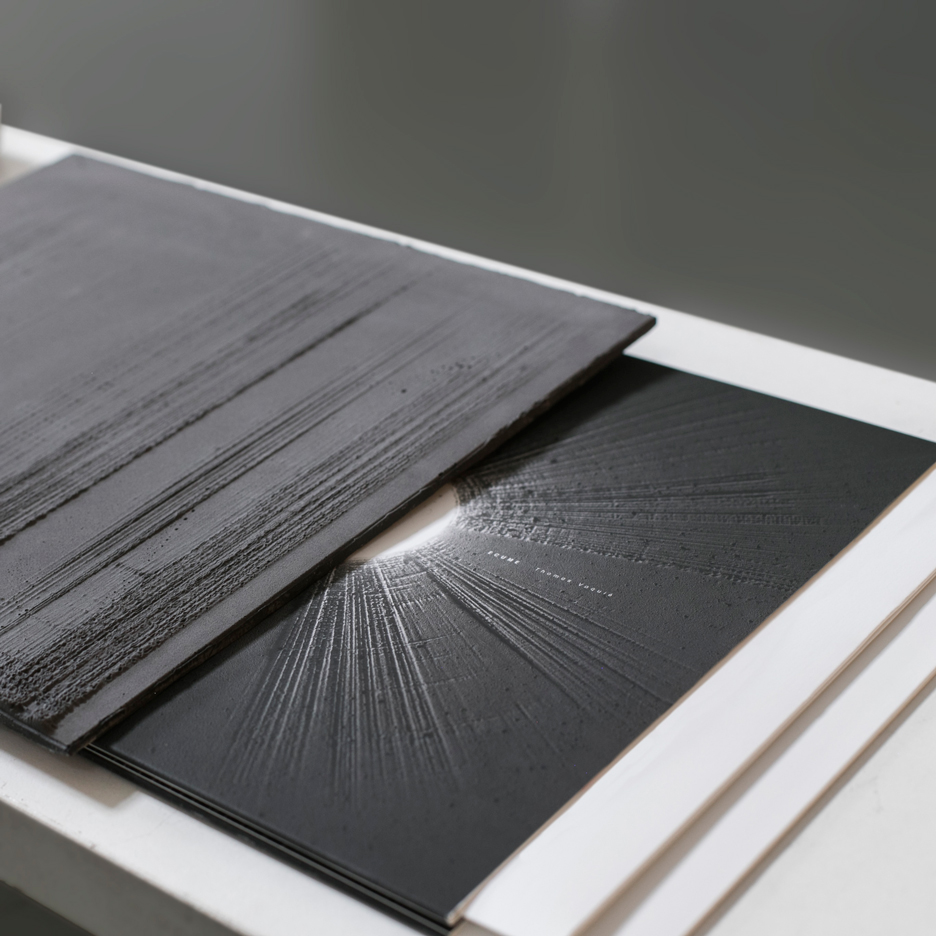
AntiVJ casts sound waves in concrete for Ecume vinyl cover


Sound waves are visualised and cast in concrete to make the cover for Brussels-based musician Thomas Vaquié’s album Ecume. (more…)

http://ift.tt/29GX1tm

💙 Way to go on 500px by John Freeman, Modena, Italy☀ ……

💙 Way to go on 500px by John Freeman, Modena, Italy☀  … http://ift.tt/1QhNdCV

http://ift.tt/29P7Vyx