Month: May 2017

#relationshipquotes #lovequotes #relationship #inspirationquotes #motivationalquotes
#relationshipquotes #lovequotes #relationship #inspirationquotes #motivationalquotes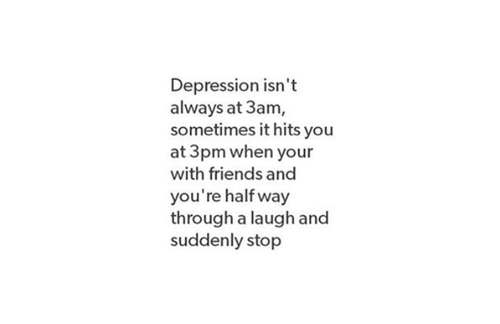
Six Encounters with Lincoln
How do we gauge the success of a presidency? The media has recently found itself asking this question. There are standard measures like passing durable legislation and responding well to crisis. Equally important, at least for the current president, are keeping campaign pledges and maintaining popularity through statements and speeches. President Obama’s goal seemed to be stability and incremental progress; President Bush (43) disregarded the headlines, content to let history judge his bold actions. Each administration seems to offer a new lens through which to view the office and its occupant.
When we evaluate the present, we inevitably measure it against the past. This raises an interesting question: just how effective were our most revered presidents? Take, for example, the man widely thought of as one of the greatest among them—Abraham Lincoln. He gazes out from iconic photographs and up from the pennies in our pockets with such reassuring benevolence that we tend not to assess his performance critically. The late writer and noted historian Elizabeth Brown Pryor urges us to do so in Six Encounters with Lincoln, her provocative final book.
An acclaimed biographer of Robert E. Lee and Clara Barton, Pryor found six overlooked episodes that reveal Lincoln’s character, his fallibility, and the awesome task he confronted, at times with mixed success. With them she seeks to replace the “mirage” that Lincoln has become with a living, breathing politician. “When we are aware of greatness we want to hear about it over and over again,” she writes, “but greatness does not mean perfection.” Lincoln’s blunders interest Pryor more than his moments of high inspiration.
Four of these six encounters involve interviews between President Lincoln and petitioners: a Union soldier, a Cherokee elder, a group of politically active women, and a southern businessman. The remaining two are set-pieces rather than conversations: a bungled flag-raising and a military review. Pryor uses each to illuminate some aspect of Lincoln’s presidency or character that is under-explored, or uncomfortable, or simply illuminating for its novelty. Several episodes are stretched rather thin, such as the brief interview with the soldier, during which Lincoln used the word “nigger.” This leads Pryor to discuss at great length a lamentable fact that was already known: that Lincoln used coarse and racially ugly language throughout his life. But other encounters are more telling.
The military review affords Pryor the opportunity for her most trenchant criticism: that Lincoln was ineffective as a wartime president. She offers it bluntly: “he blundered through military labyrinths with all the agility of an angered buffalo, while thousands of people died.” Shortly after Lincoln’s inauguration, a group of 78 Army officers came to the White House to meet their new commander in chief. Inexperienced in the customs of military pageantry, Lincoln shook hands rather than saluting, allowed his attention to wander during the ceremony, and generally struggled to project authority. It was a sign of things to come. During the Civil War, Lincoln “wrote orders himself, countermanded decisions, or sent mixed messages, without informing senior leaders—then wondered why his commands were not carried out,” Pryor writes. She also contends that his visible agonizing over the war projected indecision to the troops rather than the certainty that they needed. Worst of all, Lincoln had a talent for picking and promoting mediocre officers, culminating in the insubordinate leadership of General George McClellan.
These are fair critiques, yet Pryor does not tell the whole story. Lincoln of course relieved McClellan of his command, eventually recognizing and relying on the brilliant generals Ulysses S. Grant and William Tecumseh Sherman. He did not countermand their decisions. Lincoln proceeded from a key strategic insight: given the Union’s larger military and economic resources, time was on his side, despite individual Confederate victories. His military leadership was only part of his conduct of the war; political moves like the Emancipation Proclamation, preventing Maryland from slipping into the Confederacy, and securing passage of the Thirteenth Amendment abolishing slavery had military repercussions. Lincoln’s careworn face may have revealed indecision to some soldiers, but in a broader sense it reflected the agony of the nation’s most tragic hour. Brisk confidence would have been out of place. And, of course, Lincoln’s side won the war. Any fair discussion of his military leadership must show tally marks on both sides of the column.
The flag-raising encounter was a symbolic blunder that Pryor uses to explore Lincoln’s love of anecdote. Charged with christening a new Marine bandstand, he managed to pull the flag into a tangle between the pavilion and the flagpole. When the standard finally emerged it was badly torn and missing several stars: an uncanny representation of the fractured country. Lincoln might well have saved the scene for later use; he always had (or thought he had) the perfect yarn or homely story. In Pryor’s telling he told such tales strategically, deflecting opponents, delivering a cutting rebuke, or avoiding politically tense moments by taking the floor and then laughing uproariously. At other times Lincoln could be tone-deaf about his stories. A cruel political cartoonist has lady liberty asking Lincoln, “Where are my 15,000 sons—murdered at Fredericksburg?” To which the president replies, “This reminds me of a little Joke…”
Pryor uses other encounters to portray Lincoln as unsympathetic to women’s rights and indifferent to Native Americans. She closes with his interview with a southern businessman named Duff Green during Lincoln’s famous trip to Richmond at the end of the war in 1865. The two discussed Reconstruction, and by most accounts Lincoln was receptive to Green’s pragmatic suggestions for rebuilding the South. Yet Pryor is harshly critical of Lincoln’s conduct after leaving the ship that brought him to Richmond. He threw aside caution and toured the southern capitol while freed blacks surrounded him in adulation. White southerners seethed at the display, and Pryor seems determined to view the scene through their eyes, describing “an unwise victor, chuckling over his spoils in a most offensive manner.” But whose perception was more important: the vanquished South, which had after all caused the devastating war, or the liberated slaves, finally free after centuries of bondage? African-Americans in Richmond had earned their moment of jubilation, and so had the victorious president.
There is a difference between illumination and revision—between saying “he is more complex than you thought he was,” and “he is not as great as you thought he was.” Six Encounters with Lincoln walks this ridge and leaves too many footprints on the wrong side. A focus on his failures, paradoxically, casts the magnitude of his achievement into even stronger light. Lincoln proved himself both a political genius and a moral luminary—he freed the slaves, won the Civil War, and preserved the union. For all its trenchant analysis and graceful writing, Six Encounters with Lincoln manages to ignore these central facts. Perhaps Pryor thought them so well-established that they needn’t be repeated. Yet the result is a book that reads as a misguided effort to cut the great emancipator down to size. Pryor is right that Lincoln was not perfect. What she fails to say is that he was a close to perfect as any president we have had so far.
The Barnes & Noble Review http://ift.tt/2oQZ3PQ
A Man Alone in a Comic Book
Guy Delisle’s new book, Hostage, is his first nonfiction graphic narrative in which he is not a character. Christophe André’s first-person voice, matched to Delisle’s drawings tells the story of André’s nearly four months as a hostage after being abducted while on his very first mission as an administrator for Doctors Without Borders. He begins in the past tense but soon switches to the present, narrating day by day the moments and events that structure his experience.
Visual Tools To Boost Your Productivity At Work

Did you know that you can only be productive for about 3 hours in an 8-hour work day?
One good reason is the limited concentration of humans. Aside from that, there are other factors that can eat up your time at work. Just think about meetings, lunch breaks and having small chats with your co-workers.
If you aren’t careful, those 3 hours of productivity can easily go down the drain.
While there are plenty of methods and tools which you can use to organize your work and enhance your focus, not all of them are effective in generating positive results.
Increasing Productivity Through Visualization
Human beings are visual learners. In fact, they can process visuals 60,000x faster than text. This is why a visual tool can truly boost your productivity, especially when you need to organize your work and increase your focus.
But, first, why would visual methods or tools work better?
A tool or a method that is based on visualization has the power to engage both sides of the human brain. Such tools require the skills of the left brain for letters, sequences, lines and numbers as well as the right brain for color, spatial awareness, image and rhythm. This does not only enhance the thinking process, but it also stimulates creativity.
To help streamline your work and increase your productivity, you can use the following visual tools.
Mind Maps
A mind map is a tool that you can use to visualize an idea that is sprouting in your head. It provides a framework for gradually developing a concept or a strategy.
At the center of the mind map, you put down the main idea and, as you develop it, you can add the related information on the branches that fork out from the center.
A comprehensive mind map makes it easier to identify and analyze links between details that make up the concept. It is a great tool to use when planning out a strategy, event or a project. Use a mind map to schedule your day at work first thing in the morning, and you’ll see how it helps you estimate and organize your work properly.
Flowcharts
With a flowchart, you can graphically illustrate the sequence of steps in a process, be it the hiring, sales or the manufacturing process.
How does this help you increase your productivity?
Imagine you are working on developing a new sales process. With the use of a flowchart, you can easily picture how it should work out as well as identify the areas that need more careful planning. Plus, when it comes to pitching your idea to your team or seniors, a flowchart can explain at a glance what you will have to explain in a thousand words.
Flowcharts are also an effective decision-making and problem-solving tool.
See Also: 5 Key Steps That Will Improve Your Decision Making
Gantt Charts
A Gantt chart is a project planning tool. It helps a team visualize the project schedule and monitor and record the progress you make. It can also be useful when allocating resources or setting up deadlines.
A comprehensive Gantt chart provides you a quick overview of all the important details of a project, such as the due dates, task names and those who are in charge of them. When estimating your tasks and tracking their progress, a Gantt chart could be a handy productivity tool.
Organizational Charts
Traditionally, this type of chart is used to graphically illustrate the structure of an organization. While it illustrates job titles and responsibilities, it can also clear the reporting structure within or between departments. It can also be used to identify ideal employees when allocating resources and help new employees in understanding company hierarchies and departments better.
Fishbone Diagrams
Fishbone diagrams (a.k.a. cause-and-effect diagrams) help identify the root cause of an issue. It can be considered as a visual problem-solving technique. Drawn like a bone of a fish, the head of the fish represents the issue that needs to be solved. The bones, one the other hand, can be used to jot down the potential causes.
A fishbone diagram can be considered as a time-saving tool when used to structure a brainstorming session or a thorough analysis of an issue.
See Also: 55 Bulletproof Productivity Hacks
The right work strategy can help you improve your output by 25% and, with the right tools, you can definitely further the outcome.
Created with Creately.
The post Visual Tools To Boost Your Productivity At Work appeared first on Dumb Little Man.
Remodeling a Home in Portland With a Marked Retro Style

This home, located in Portland, Oregon, and dating from 1967, was recently remodeled. The home is surrounded by large outdoor spaces, terraces to share and enjoy the good weather with family or friends, and an unevenness in the terrain that has served to create terracing for plants, seeking to give greenness and life to the exterior of the home. Although on the outside we can still see vestiges of its..
The post Remodeling a Home in Portland With a Marked Retro Style appeared first on HomeDSGN.
The sloping dunes and curving shadows at Great Sand Dunes…

The sloping dunes and curving shadows at Great Sand Dunes National Park and Preserve in Colorado make this special park a photographer’s dream. Ranger Patrick Myers has been capturing amazing scenes here for years. With golden sunrises, epic blue skies and every color sunsets, taking pictures never gets old. Photo by Patrick Myers, National Park Service.
How Awareness In Business Can Predict Your Future Success

In 2000, Reed Hastings met with Blockbuster’s CEO, John Antioco, to propose adding another video rental delivery system. Antioco rejected the proposal and ignorantly followed the path that eventually led to the closure of Blockbuster. Reed Hastings, the CEO of Netflix, achieved success while Antioco missed the opportunity.
In 1999, Mark Cuban sold his publicly traded company, Broadcast.com, to Yahoo for $5.7 billion and proceeded to further expand his successful empire. By 2002, Yahoo shut down its broadcast services and also discontinued Broadcast.com. Cuban sold at what seems to be just the right time.
Antioco and Cuban were successful businessmen at the time and each made an important move at a critical time in their businesses. Antioco’s move led to the eventual closure of Blockbuster and Cuban’s move further propelled his successful career as an entrepreneur.
Those moves involved one thing: awareness. It’s a critical element in strong emotionally intelligent people. While emotional intelligence focuses on personal and social awareness, contextual awareness is just as important. The act of being aware can predict whether someone succeeds or fails in his career.
Awareness Exposes Past Shortcomings
Failure without learning is a missed opportunity.
People who have the ability to recognize why and how the failure occurred in the past can gain insight into ways to grow. Unfortunately, failures or shortcomings are not always easy to identify.
If you only chalk up failures as when something catastrophic happens in your life, you are going to miss on the opportunity to grow through them. Failures are priceless and far too many people would rather ignore failures in order to feel like they are successful.
As much as possible, do not ignore your failures and use them instead. If you are more worried about being right or winning in all situations, you will miss those losing moments where experience has a valuable lesson to teach you.
See Also: 5 Ways To Make The Most Of Failure
Push back from your present situation and reevaluate those moments where you messed up, where you did not meet up to standards or where you did not meet a goal. These are the failures that can leave you with a valuable set of lessons.
Your awareness in the past will help you succeed in the future. Truthfully recognizing your past successes and failures will open the doors to a successful tomorrow.
Awareness Brightens Present Situations
Awareness has the ability to let you see your current situation accurately. With all the distractions fighting for your attention every day, it’s easy to feel overloaded and even burned out. They can stop you from seeing life clearly. And the less clarity you have, the harder it is to successfully pursue your dreams, plans and goals.
Recognize your present situations, their benefits and consequences. The more awareness you have in the present, the better you’ll be in making decisions. Awareness helps you decide what you should and shouldn’t pursue. Your decision in these matters will be a deciding factor to your level of success.
Mark Cuban saw his present situation within his company as a good point to sell high. Without this present awareness, he might have missed the opportunity to sell high and build his empire off of his company being sold.
John Antioco missed his current situation because he was blinded by his current success. Blockbuster was very successful when Reed Hastings approached Antioco, but Antioco didn’t see the true colors of Blockbuster’s present success. Blockbuster was making most of their money on people’s late fees and Hastings and Netflix eliminated this pain from customers. While Blockbuster was successful on other people’s failures to return their movies on time, Netflix grew in success because they solved customers’ problems.
Do not be blind to your current situation. A true reality check will allow you to see if you are in a healthy situation or not.
Awareness Sheds Light Into The Future
People who can honestly identify past successes and failures and see their present situations accurately will have the advantage to see into the future. Things today are changing constantly and those who are able to identify the changing tides have the upper hand.
See Also: How To Maximize Your Potential While Embracing Your Weaknesses
A surfer, for example, will sit in the water to wait out on his desired wave. He must be aware of the movement of water and the timing of the wave before he jumps. That is awareness.
Mark Cuban didn’t miss his success wave. In fact, he caught it just in time.
Awareness Will Predict Your Future Success or Failure
Step back and exercise your ability to be aware of yourself, your relationships, social environment and context. The stronger your awareness of the past, present and future, the greater your chances of being successful.
Use awareness in business to learn lessons, measure conditions and plan for growth. These things can surely set you on the right track to achieving your goals.
The post How Awareness In Business Can Predict Your Future Success appeared first on Dumb Little Man.
Stylish apartment in New York, exquisitely decorated by Jennifer Post

New York City is known for being one of the most cosmopolitan cities in the world, always at the forefront in everything. It is perhaps for that reason that we always have high expectations when seeing its avant-garde designs. These two apartments are located in a building designed by one of the most renowned architectural firms – Zaha Hadid Architects. The first one is an apartment in which its designer,..
The post Stylish apartment in New York, exquisitely decorated by Jennifer Post appeared first on HomeDSGN.
Playing Great Defense With Money

Gaining financial independence won’t happen overnight, nor will it happen only by knowing how to cut costs. But, those are great ways to start.
As many sports fans say, defense wins championships.
Playing great defense with your money is the best way to rack up small victories and quick wins in your quest to achieve financial security. It’s the first thing you should think of. Defense is where you learn what you truly need and hone your sense of discipline.
Some people might first think of trying to earn more money to keep more of it. That’s great–nothing wrong with making more!
I’m all for that, but defense comes first. Simply trying to bring in more money won’t make you rich if you don’t know how to use it.
If you can’t manage $500 well every month, you won’t manage $2,000 any better.
“The really good business manager doesn’t wake up in the morning and say ‘Today I am going to cut costs’ any more than he wakes up and decides to practice breathing.” -Warren Buffett
Think about what’s under your control. Choosing to play great defense is almost entirely up to you. It’s unlike getting a raise at your job, returns in the stock market or clients hiring you as a freelancer. These aren’t bad things, but they aren’t as much of a sure bet.
If you cut costs, you immediately keep that money. It’s a guaranteed win for you.
Think about how to cut costs and which areas you can do it. Here are a few quick suggestions from my own life.
The Gym
Do you use it? Is it worth your money?
For many gym members, it’s not worth the expense, especially if it’s more of an aspirational statement rather than part of an actual routine. I gave this up. I run almost every day, and it doesn’t cost me anything.
See Also: How To Train For A Marathon
Car
Drive the kind of car you need, not the newest or the biggest. Don’t get caught up in those TV ads with cars doing all sorts of rough-and-tumble things you would never actually do. What it does on a closed track with a professional driver is completely irrelevant to you. Don’t get taken in. You may not even need to own a car.
TV & Cable
Spending lots of time and money on TV is a good way to be less healthy and keep less of your money. The same is true of many entertainment choices. Try this new lullaby: “Netflix and chill / kill the cable bill.”
See Also: 5 Ways to Cut Down on Your TV Costs
Add 25%
Remember that everything you buy is bought with after-tax income, meaning that you should add 25% to account for your tax bracket. 25% is easy math, even if it’s not your bracket. Keeping this in mind can only help you cut spending.
Timing
Most things have some element of timing built into the price. Restaurants with happy hours or special deals, stores offering time-sensitive deals, vacation spots with off-season discounts…you get the idea. Use it to your advantage.
Lifestyle creep
Avoid it. Stay away from spending more on luxury goods, like high-end gadgets or designer clothing just because you can. That’s a good way to end up owing more than you own and spending more than you keep. It’s what you keep that will matter more.
Save more than 10%
No matter your income, you’ll likely thank yourself later in life for saving more now. Compound interest needs time to work in your favor, and you need to give it a push. It’s commonly recommended to save 10%, but I see this as insufficient in a world of longer lifetimes, potentially lengthier retirements and rising healthcare costs. Try to save more if you can.
Keep the network alive
This relates more to advancing in your career than it does saving money, but staying connected with people you’ve known in the past or work with now can only help you. Even if you don’t experience the benefits right now, continue building your relationships by helping those you can. Learning how to cut costs counts, but human capital pays dividends too.
The post Playing Great Defense With Money appeared first on Dumb Little Man.
 Sig Nordal