Happiness Techniques From Around The World That Can Change Your Life

When we look back across our lives, it is often the most prominent of events and landmarks that we remember: a kiss, a birthday party, a new job, or a sporting achievement. Yet it is the way we live our day-to-day lives that truly defines who we are and how we feel. Happiness breeds happiness, and it is important to start with the fundamentals.

All around the world, ordinary people and famous achievers alike have developed ways to buoy their daily experience for thousands of years. Whether due to the local climate, religious and cultural tendencies, or just a chance habit that caught the imagination of others in that region, every place has its own techniques to share on how to make regular life just that little bit nicer.

So let’s take a look at things folk from around the world do to give their day that tweak it needs, and how you can adapt these ideas to your daily life.

Japan

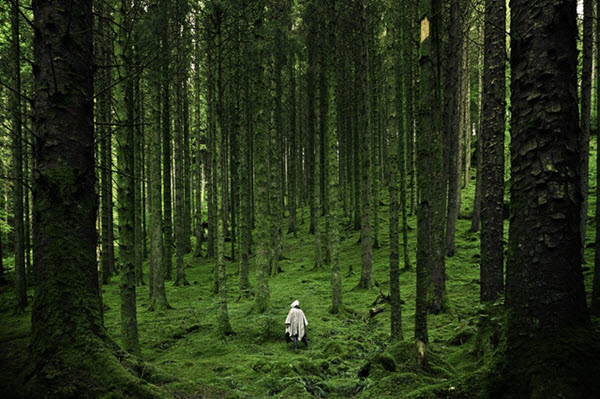
The Japanese have a relatively new ‘tradition’ to reconnect with their souls. It’s called ‘shinrin-yoku’, or forest-bathing, and was developed in the 1980s in an atmosphere of suffocating cityscapes and omnipresent technology.

shinrin yoku

To practice shinrinu-yoku:

  • Go for a walk in the forest, or a wooded area of your local park
  • Take time to think about every sound you hear while you walk
  • Appreciate the smells and the texture of the trees
  • Reconsider your existence in the context of our ancient natural world.

Hawaii

The Hawaiians have a particular method for dealing with problems in everyday relationships: ‘Ho‘oponopono’. Whether it’s your partner, a friend, or a colleague at work whom you feel has done you wrong, Ho‘oponopono is a means of figuring out things by yourself rather than responding rashly and making things worse.

Allowing resentment to build will ultimately hurt you more than the person to whom it is aimed. Instead:

  • Take a deep breath
  • Find ten minutes to think things through
  • Be grateful for what you have
  • Forget your own needs for a moment and consider the other person’s point of view
  • Express your own feelings calmly
  • Work towards mutual forgiveness.

Norway

‘Friluftsliv’, or ‘free air life’, is the Norwegian practice of spending time in the outdoors. Aside from the benefits of fresh air, subjecting yourself to decent amounts of natural daylight can help you to regulate your sleep and stay in touch with the natural rhythms of the world around you.

free air life norway

If you spend most of your time indoors:

  • Establish a morning and/or evening ‘outdoors ritual’, such as walking the dog
  • Use every coffee break at work as an opportunity to get some fresh air
  • If it’s warm enough, eat lunch outdoors; otherwise, take a stroll through the park before you eat indoors
  • Look beyond the borders of your town. It’s usually easy to find a national park or natural area to visit on the weekends.

Germany

If the Norwegians are all about heading into nature by themselves to ‘re-connect’, Germans are more about reconnecting with each other. ‘Gemütlichkeit’ is that particularly German manner of celebrating togetherness with a frothy beer, a song and a dance.

To get some of this goodness in your own social life:

  • Be careful not to take the people you live and work with for granted
  • Never miss a chance to raise a toast
  • Take time to greet people properly and say meaningful goodbyes, even if you see them every day.

Spain

The famous Spanish siesta is an endangered animal. Sadly, even as experts more frequently recommend an afternoon nap to boost workplace productivity, many business managers are concerned that lost time and energy is bad for profit margins.

spanish siesta

To take a healthy, effective siesta:

  • Nap for no more than thirty minutes
  • Sleep in an armchair or sofa rather than a bed
  • Make sure you do it regularly and not just as an occasional treat.

See Also: Get Strong, Sleep, Repeat: The Importance Of Sleeping

France

We are a generation of multi-taskers – but often, allowing our work and personal lives to overlap means doing a bad job at both and truly enjoying neither. A little daily ritual to demarcate the various areas of your life can help you more accomplished and relaxed. The French do this by taking a small drink between work and the evening meal: the apéritif.

apéritif france

To leave work behind for the day:

  • Change into a new set of clean clothes as soon as you get home
  • Switch off work notifications on your phone
  • Pour yourself a drink of something special – it doesn’t have to be boozy!

Argentina, Uruguay, Paraguay, Brazil

In 1909, the French Society of Hygiene told us: “Yerba mate raises morale, sustains the muscular system, augments strength and allows one to endure privations.” What they did not mention is that drinking this special tea in the company of friends is also good for the soul.

To tap into the South American ritual of mate-tea drinking:

  • Always offer a drink to everyone in the room when you’re brewing up
  • Try to establish a ‘tea tray’ culture for meetings at work
  • Try the real thing – yerba mate can be found in lots of health shops and some regular grocery stores.

Turkey

‘Keyif’ is all about idle moments of relaxation and contemplation. Remind yourself to take a couple of these each day – the manner of doing so is different from individual to individual.

To identify your moment of mindfulness:

  • Slow down – take the long route from A to B, and never be in more than a hurry than you need
  • Pay attention to what makes you happy, be it the sound of the breeze in a tree you walk past each day, or a particular seat in a café that makes you feel calm
  • Try watching a few ASMR videos for some ideas on how the mundane can become almost transcendental.

Bosnia & Herzegovina

Bosnian people like to break up their morning with a slow coffee, brewed in a special pot and served with sugar or candy. It’s thick and tasty like Turkish coffee, but just as important is the symbolic side: taking time to discuss the day’s events or a business proposition.

bosnian coffee

  • Enjoy tea or coffee as an experience in itself, not something to fuel you while you work
  • Use your coffee break to talk to other people, rather than staring at your phone
  • Look into buying a Bosnian coffee set online – it will change your life!

See Also: How to Supercharge Your Afternoon With a Napuccino (aka a Coffee Nap)

Nigeria

‘Ubuntu’ is the philosophy of putting the community ahead of the individual. Individuals become stronger in a healthy, happy community.

  • Try asking questions or listening rather than interrupting when you think somebody is wrong
  • Consider the benefits for your group as well as yourself when making decisions
  • Look at each group task as an opportunity to learn or to teach.

Try just a handful of these happiness techniques from around the world, and you are sure to see your quality of life improve!


The post Happiness Techniques From Around The World That Can Change Your Life appeared first on Dumb Little Man.

http://ift.tt/2xqWG7d

Refined and Elegant Bulgari Hotel in the City of Milan, Italy

This elegant and refined hotel is located in Milan. It has an impressive location just a few steps from the famous La Scala Opera House and the fashion shops of Via Montenapoleone and Via Della Spiga. In the middle of the lush and green private garden bordering the Botanical Garden of Milan, Bulgari Hotels & Resorts Milano offers travelers an elegant retreat from the hustle and bustle of Italy’s most..

More…

Charming Cottage Designed by Tammy Connor

This charming cottage, with its impeccable rustic and traditional style of aged wood and stone covered by the leaves that have dropped from the trees on a cold and cloudy autumn morning, looks simply like something out of a story. It was designed by the talented Tammy Connor, who definitely turned it into a gem and created a beautiful interior that looks both refined and comfortable. The classic living room..

More…

How To Buy An Online Business You’ll Be Successful With

As the world of online trade and digital media continues to boom, the prospect of making a living over the internet has become an attractive one. However, despite how encouraging it is, not all people have the guts to start. Many of them are deterred by the prospect of having to start from scratch.

Building a successful website can seem like a daunting task to someone who has never done it before. In addition to a great design concept, you also need a comprehensive business plan, the know-how to improve your searchability and the right strategy to bring traffic to your website.

Fortunately, you can bypass a large part of the work by buying an online business that’s already existing. Once you find one with potential, all you need to do is keep it running and focus on its growth.

However, as is the case with any business venture, entering the world of E-commerce without sufficient prior knowledge could be disastrous. Some websites may appear to be promising acquisitions but require more work than you’d ever bargained for. Others may have a bad history or even be blacklisted.

Yet, these are not enough reasons for you to give up your dream of becoming an internet entrepreneur. Simply take some time to research your potential purchases and ensure you are fully prepared to work on your goal.

Of course, before you do any of this, you need an idea of the type of business you would like to own. If you want to stand out from the crowd, you have to be passionate about your endeavor.

Purchasing An E-commerce Site

If you are convinced to buy an online business, a good place to start is by browsing listings on an established marketplace, such as Exchange. There are numerous e-commerce business brokers to explore, with listings at all price points across a huge number of industries. (And if you’re into buying a website, check out Empire Flippers.)

exchange marketplace

However, it is not as simple as just finding an affordable existing site and expecting to turn it into a profitable venture. Unfortunately, some of the seemingly more affordable options may have hidden problems that could severely hinder your success. For example, the site may have been previously blacklisted or be under an AdSense ban.

As such, there are a few factors you ought to investigate before you start buying an online business.

The Good and the Bad

The true value of an online business lies in its potential for growth. When people purchase an existing business, it is generally either of the two reasons:

1. They have a passion for the industry and wish to grow the business as a long-term venture.

2. They plan to flip the website, increase its traffic, ranking and profitability before selling it.

Whichever you aim to do, you will need to investigate several factors in order to get a full measure of the business you are considering. Take, for example, the presence of an active community.

Check comments and forums in order to determine how many people are regularly using the site. Be aware of the site’s bounce rate- the higher it is, the more people simply navigate away from it.

Go over all links, titles and headings and check them for relevance and functionality. Factors, such as keyword density and authoritative functional backlinks, can impact the success of a website. Consider using the Wayback Machine to explore the site’s history and get a feel for how it could be improved.

The Right Price

For your investment to be worthwhile, it is vital not to overpay for your chosen business. However, determining the true value of an acquisition can be challenging, particularly if you are new to website brokerage. Fortunately, there are a few factors which can help you put together a more accurate picture of a site’s current value.

Existing revenue streams, such as AdSense, sales and donations. Do not be fooled by a recent spike in revenue. Instead, look at a site’s long-term performance to get a fairer idea of how the business performs on average.

Volume of traffic and its sources. Be sure to scrutinize traffic referrers. You could be fooled into thinking a site has high traffic but it may just be coming from dubious sites rather than Google or legitimate sources. Check also that you have traffic coming from websites, social media accounts and subscribers. Mailing lists can also be very valuable- if put to good use- as they allow you to connect with a site’s community and raise awareness about your site.

Page rankings. The better the site ranks in searches, the less work you may have to do to get it noticed. However, it is important to determine how many pages rank highly and for what reason. This will enable you to figure out how to optimize the site going forward.

Age of the domain. Older, established sites can have more favorable rankings as they’ve had time to build up a reputation and become more trusted by Google and other search engines.

Running costs. Don’t purchase a site without investigating the cost of keeping it online. Calculate the combined cost of the domain, hosting and security packages. Weigh these things against the potential profitability of the business.

Now that you have an idea of the site’s performance, the next step is to look for recently sold websites with similar statistics and within the same industry. This will give you a rough sense of what may be a fair price to offer.

Flipping, Clipping and Drop Shipping

ecommerce business

Once you’ve found the business you want and have negotiated the terms of sale, it’s time to get started on making the website your own.

If there is existing content, you already have something to work with. However, you may need to reorganize and refresh the site’s content in order to boost SEO and generate a consistent, coherent voice throughout the website.

See Also: Get One Step Closer To Success: How To Make A Difference in e-Commerce SEO

Reach out to suppliers and make sure you know exactly what role you have to play in ensuring that the business runs smoothly.

If you have purchased a drop-shipping enterprise, your main responsibilities will be communication and increasing sales through marketing. Alternatively, if you sell a service or digital product, you will need to ensure that this remains up-to-date and relevant.

Engage with the site’s existing community to let them know what to expect going forwards. Pay attention to their feedback and work to build on what you already have. The first step could be to optimize the site’s layout, ensuring it displays and functions correctly on mobile devices and across all major browsers.

One way to speed up this process is to invest in an e-commerce CMS. Not only does this give you access to a range of tools with which to improve your domain authority, you can also uniformly rework the site’s aesthetic without interfering with sales.

Onwards and Upwards

Ultimately, it is not difficult to find and buy an online business. However, even the most promising venture requires time and effort if it is to continue to be profitable. You need to be prepared to continuously create content and keep your website up to date.

Make sure you have thoroughly considered the time and attention you will need to give your new enterprise. Ensure that you have a full understanding of its maintenance and running costs before you seal the deal. After all, whether you adopt a struggling business and transform it into a successful one or you purchase a more established website and make it even better, this transaction is only the beginning.

Nevertheless, if you keep these tips in mind, you can approach the world of website brokerage with confidence. From there, you will be able to seek out a business within your preferred industry and work towards developing the booming online enterprise you have always wanted.

See Also: The Average Joe’s Guide To Setting Up An Online Business


The post How To Buy An Online Business You’ll Be Successful With appeared first on Dumb Little Man.
http://ift.tt/2ghJKvW

Retro Style House in Australia designed by Mountford Architects

This wonderful home project located in Attadale, Australia, was inspired by the 1950s design of a house owned by the actor Gary Cooper. It was built by the prolific architect Quincy Jones in Hollywood Hills, California, USA. It was designed in 2013 by the architectural firm Mountford Architects, and the project, with an area of 530 square meters, was personally undertaken by the architect Ben Mountford. The result is a..

More…

Improbable Destinies: Fate, Chance, and the Future of Evolution

As a child in the evangelical South during the 1970s, I was taught that “Darwin” was a bad word. My textbook for the creation of life was the opening chapters of Genesis, Yahweh’s six days of exquisite labor and then an extra day to chill. One week. The notion of evolution and its timeline — billions of years — seemed a heresy cooked up by egghead scientists and Satanic secularists. Just four decades and forty miles away from the infamous Scopes trial, I sang “I’m No Kin to the Monkey” along with my peers in Sunday School: I don’t know much about his ancestors / But mine didn’t swing from a tree. Anti-Darwinism remains as American as God, guns, and apple pie: a recent poll revealed that nearly half of adults believe in a divine creation of a universe only a few millennia old.

But since the mapping of the human genome in 2000, we’ve confirmed beyond a shadow of a doubt that humans are primates, sharing over 99 percent of our coding DNA with chimpanzees, whose own sequence tracks more closely to ours than to gorillas or orangutans. The genomics revolution has proven that Darwin was a prophet, his legacy still debated by evolutionary biologists across the globe. In his new book, Improbable Destinies: Fate, Chance, and the Future of Evolution, Harvard biologist and zoologist Jonathan B. Losos infuses a sense of whimsy and playfulness into the staggeringly complex problems of evolution, explaining why the evidence must be tested and re-tested, new data introduced, with each generation of scientists.

A lizard specialist, Losos has pursued his fieldwork in mostly tropical archipelagos, where he’s studied anoles and how their scattered populations morph into similar body shapes, with virtually identical nutrition and behavior, depending on the ecological niches they inhabit.

Tahiti, Bermuda, Madeira, Bali. Everyone loves islands but no one has nesiophilia — the inordinate fondness and hungering for islands — more than an evolutionary biologist. Darwin drew much of his inspiration from island stopovers on the fabled voyage of the Beagle . . . Each oceanic island or archipelago is a world unto itself, the evolutionary goings-on there independent of what happened elsewhere. That means that by comparing one island to another, we can get a sense of evolutionary potential and predictability.

The occasional hurricane would wipe out Losos’s slithery subjects, but he gleaned enough data to build an argument: presented with wildly different environments, species usually fill open niches in predictable ways — the concept of convergent evolution. In other words, if you could roll evolution’s dice over and over, you’d get the same (or similar) results each time.

Improbable Destinies takes us on a whirlwind odyssey, from vibrant Caribbean jungles to English grasslands to innovative swimming-pool labs in Seattle, surveying a spectrum of species: guppies, moths, deer mice, bacteria. He recounts myriad experiments that show that Darwin was wrong about one pillar of his theory: evolution doesn’t always move at a glacial pace but rather can be observed within a few generations (or over the course of a biologist’s career): “The resistance of rats to developing cavities, the tendency of fruit flies to fly toward light, and fruit fly tolerance of alcohol fumes . . . pick any trait that varies in a population, impose artificial selection, and you will get an evolutionary response.”

The literary scholar Harold Bloom once asserted that “the meaning of a poem is always another poem,” but his maxim could apply to science writing as well. Behind Improbable Destinies lurk David Quammen’s The Song of the Dodo and Jonathan Wiener’s Pulitzer Prize–winning The Beak of the Finch, but Losos’s major influence is Stephen Jay Gould’s 1989 masterpiece, Wonderful Life, whose detailed analysis of the Burgess Shale’s wealth of Cambrian fossils posits that life on earth could only have evolved the way it has once — rewind the tape and you’ll get different chemistry, different avenues of natural selection, different flora and fauna, and so on. (Gould’s title is an homage to Frank Capra’s 1946 film, which allows James Stewart a glimpse of a notional world in which he’d never been born.) Losos both explicitly and implicitly engages Gould’s ideas; and in a twist that Darwin would have loved, he reaches no firm conclusion. “Start with identical circumstances and you’ll usually — but definitely not always — get a pretty similar outcome.”

Improbable Destinies is a crackling good read, threading rich anecdote into trenchant science. It belongs on the same shelf as I Contain Multitudes, Ed Yong’s gorgeously crafted account of microbes and their critical roles in our bodies; Nick Lane’s dense, groundbreaking work on the origins of life, The Vital Question; and other recent books that grapple with Darwin’s revolution, such as Richard O. Prum’s The Evolution of Beauty and Robert M. Sapolsky’s Behave. Ours is an era of paradigm shifts in science, with a bonanza of literature that captures our world’s breathtaking diversity as well as its dire future. As Losos notes, “The elephant in the room, of course, is global warming . . . one seven-year-long experimental study on worms detected replicated genetic changes associated with warmer soils. I predict that this is just the tip of the melting iceberg and that soon we will detect many physiological, behavioral, and anatomical changes convergently evolved in vulnerable species.”

Given that climate change may be our most daunting challenge — and given that all kinds of species, from worms to fish to germs, will mutate rapidly to accommodate these shifts — books such as Improbable Destinies offer a roadmap for our species, from the African savannahs to inundated coasts. Fortunately for readers, Losos and Yong and Sapolsky are also every inch the prose stylists as the majority of fiction writers promoted with more fanfare. It’s high time to transform the hearts and minds of Americans hostile not only to evolution but the crisis that is already forcing the world’s next cycle of rapid biological change. It’s high time we act — our evolutionary future may pivot on what we do next.

The post Improbable Destinies: Fate, Chance, and the Future of Evolution appeared first on The Barnes & Noble Review.

The Barnes & Noble Review http://ift.tt/2wbeBQz

10 Books on Increasing Your Creativity

You’re reading 10 Books on Increasing Your Creativity, originally posted on Pick the Brain | Motivation and Self Improvement. If you’re enjoying this, please visit our site for more inspirational articles.

Increasing your creativity—or developing any sense of creativity in the first place—seems to be hardest when you need it most. Personally, I’d always thought “creativity” was sort of elusive. I thought creative people, like Pablo Picasso, for instance, were blessed with some sort of magical, innate talent that most of us just don’t have. And this is how I’d rationalize why people like Picasso were so much more creative than I was. But, as it turns out, I was dead wrong (kind of.)

You see, most people think Picasso just sat down in front of a canvas and effortlessly cranked out masterpiece after masterpiece all day long, but that’s not how things went down at all. The way Picasso actually painted was much more in-depth. He’d sit down and start at the corner of the canvas with one single stroke of the brush. Then, he’d expand from there, allowing the brush to let him transfer whatever he was envisioning onto the canvas.

Sometimes, he’d decide to let an idea take his painting elsewhere. Other times, he’d end up painting something totally different than what he initially envisioned. A few times, he’d start the whole damn thing over again. But, almost every single time, he’d end up with something beautiful. How did he create so many million-dollar masterpieces? Was he talented? Heck yeah. Was he “born with it”? Maybe, but people are born with all sorts of talents they neglect to nurture and refine.

And that’s the key: cultivation. Picasso cultivated his talent into mastery. He was dedicated to his craft. In other words, he did it often enough to recognize that if he went off the beaten path halfway through a painting, he could take a different route and still end up with a piece of art.

Bottom line? Creativity is neither magical nor mysterious. Creativity is like a muscle. And if you need help increasing your creativity, then these ten books will show you how to build that muscle up so you can maximize your own creative potential—both personally and professionally. I’ve also listed my own key take-aways from some of these books, as well as my favorite quotes on creativity from each. Hope you enjoy it!

Prefer audio? Listen to the podcast version of this article here


1. “The War of Art” by Steven Pressfield

41DwUdCY6xL._SX311_BO1,204,203,200_

“Creative work is … a gift to the world and every being in it. Don’t cheat us of your contribution. Give us what you’ve got.”—Steven Pressfield

“The War of Art” will teach you how to break through the blocks every creative runs into from time to time. It certainly did the trick for me. Reading it almost feels like getting a solid kick in the rear from your very wise, very experienced, grandpa. Creatives have to work through the fear of failure, being their own worst critics and a lack of self-confidence. Pressfield also talks about overcoming procrastination and the energy that comes from working on the things you deem to be your true calling.

2. “Flow by Mihaly Csikszentmihalyi

flow

“Happiness is not something that happens. It is not the result of good fortune or random chance. It is not something that money can buy or power command. It does not depend on outside events, but, rather, on how we interpret them. Happiness, in fact, is a condition that must be prepared for, cultivated, and defended privately by each person. People who learn to control inner experience will be able to determine the quality of their lives, which is as close as any of us can come.” —Mihaly Csikszentmihalyi

(Take another look at the above quote and notice how applicable it is when you replace the word “happiness” with the phrase “increasing your creativity.”)

Ever experience that feeling where you totally lose track of time, you feel absolutely unstoppable and your excellent work just seems to effortlessly stream out of you? That’s called a “flow-state.” And in this book, you’ll learn how to bring it about within your own work.

3. “Lateral Thinking” by Edward de Bono

lateral-thinking

“Lateral thinking is like the reverse gear in a car. One would never try to drive along in reverse gear the whole time. On the other hand one needs to have it and to know how to use it for maneuverability and to get out of a blind alley.”—Edward de Bono

For some people, the concept of increasing your creativity is sort of like hitting the lottery: There’s a fat chance it’ll happen today, but maybe next time. In “Lateral Thinking,” author Edward de Bono shows us how to align our thinking in a way that actually helps us become more creative. While everyone else is trying to dig the same hole in the same place, this book shows you how to dig a new hole somewhere different.

4. “Steal Like an Artist” by Austin Kleon

steal-like-an-artist-51fIZsUhrpL._AC_US218_

“You don’t want to look like your heroes, you want to see like your heroes.”—Austin Kleon

This is a book about permission. It’s about the permission to stop hiding behind your own shadow, the permission to start creating something that actually matters and the permission to stand on the shoulders of giants who came before you and take advantage of their great ideas. The idea isn’t to “steal” other people’s work. (So, don’t do that; stealing is bad.) Just take bits and pieces from other people’s work and make something of your own out of that. If you use people’s stuff to make something of your own, then let them know about it. It’s usually (but not always) flattering.

5. “The Creative Habit” by Twyla Tharp

the-creative-habit-51U-BkmvXWL._SX375_BO1,204,203,200_

”If art is the bridge between what you see in your mind and what the world sees, then skill is how you build that bridge.” —Twyla Tharp

Twyla Tharp is one of the world’s greatest choreographers. In “The Creative Habit,” she tells us that creativity is exactly that—a habit…If we want to go from creating ordinary work to creating extraordinary work, then we need to develop the habits that’ll help us make that a reality.

6. “The Talent Code” by Daniel Coyle

the_talent_code_51X37zKAfVL._SX328_BO1,204,203,200_

“Every human skill, whether it’s playing baseball or playing Bach, is created by chains of nerve fibers carrying a tiny electrical impulse— basically, a signal traveling through a circuit. Myelin’s vital role is to wrap those nerve fibers the same way that rubber insulation wraps a copper wire, making the signal stronger and faster by preventing the electrical impulses from leaking out. When we fire our circuits in the right way— when we practice swinging that bat or playing that note— our myelin responds by wrapping layers of insulation around that neural circuit, each new layer adding a bit more skill and speed. The thicker the myelin gets, the better it insulates, and the faster and more accurate our movements and thoughts become.”—Daniel Coyle

In “The Talent Code,” Daniel Coyle, a journalist and reporter, brings us a scientific approach to creativity. In the book, Coyle tells us about a neural insulator called “myelin,” which some neurologists consider to be the key to acquiring skills of every kind… And of course, if you want to level-up your creative output, you’ve gotta level-up your skills. Bottom line? More myelin = creative excellence… Creative excellence in sports. In business. In art. In everything. And if you want to achieve creative excellence, too, then you’ve got to be growing myelin on a regular basis. The best way to do it? 10X the amount of practice you put into becoming the best at what you do. If you’re in sales, call 10X the amount of people you normally do, and you’ll naturally get better and more creative as a result. If you’re a writer, 10X the amount of words you write per day and you’ll naturally get better and more creative as a result. Set goals that are just beyond your reach so that you’ve got no choice to level-up your skills in order to achieve them. That’s how you build more myelin.

7. “Creativity” by Mihaly Csikszentmihalyi

creativity

“Creativity is a central source of meaning in our lives for several reasons… First, most of the things that are interesting, important, and human are the results of creativity. We share 98 percent of our genetic makeup with chimpanzees… Without creativity, it would be difficult indeed to distinguish humans from apes.”—Mihaly Csikszentmihalyi

In “Creativity,” Mihaly Csikszentmihalyi schools us on how to leverage flow-states to increase our creativity. In the book, he discusses what he learned after interviewing 91 creative professionals from a wide array of professional endeavors, from astronauts to writers, philosophers and everyone in-between. Here are a few big ideas from the book: Creative people have a thirst to constantly continue learning about their subjects of interest; they never get sick of practicing the fundamentals, and they know how to connect seemingly unrelated ideas together to create something totally new.

8. “Daily Rituals” by Mason Currey

daily_rituals_517lOS+zzmL._SX335_BO1,204,203,200_

“Inspiration is for amateurs .… The rest of us just show up and get to work.”—from “Daily Rituals” by Mason Currey

In this creativity book, the author profiles 250 of the most creative people of modern history. Freud. Orwell. Benjamin Franklin. Maya Angelou. Ayn Rand. All these people had creative habits that helped them gain their notoriety. And in this book, Mason Currey details those elements of their daily lives, from when they wake, to how they work, to the foods they eat. Everything’s covered. This is an awesome coffee table book. Pick it up whenever you need some of the world’s greatest thinkers to inspire you towards increasing your creativity.

9. “Creativity, Inc.” By Ed Catmull

creativity-inc

“It isn’t enough merely to be open to ideas from others. Engaging the collective brainpower of the people you work with is an active, ongoing process. As a manager, you must coax ideas out of your staff and constantly push them to contribute.”—Ed Catmull

This book is about the intersection of where creativity meets commerce. It was written by the co-founder of Pixar, Ed Catmull. The key creativity take-away I walked away with after reading this book was about igniting higher levels of creativity within an organization. I learned that I could inspire my employees to become more creative by fostering an environment that was actually conducive to creativity.

10. “The Originals” by Adam Grant

originals_519x-323TLL._SX324_BO1,204,203,200_

“Our companies, communities, and countries don’t necessarily suffer from a shortage of novel ideas. They’re constrained by a shortage of people who excel at choosing the right novel ideas.”—Adam Grant

The actionable insight from this book for me was this: increasing your creativity requires increasing your output. Regardless of what type of work you do, the key to creative genius lays in creating constantly and consistently and in very high quantity. It’s all about volume–those who create the most work increase the odds of creating the best work. Maya Angelou wrote 165 poems, Picasso created over 5,800 works, and 12,000 drawings. Einstein wrote 248 publications. Bottom line? High output —> high creativity.


Time to start increasing your creativity.

Now that you’ve got this list of the 10 best books on increasing your creativity — there’s only one question left… Which one do you read first? Should you go out and get all of them immediately? Should you read them all at once? Or should you take a lifetime to read them? So many options. So little time. Ultimately, it’s totally your decision what you do with this list and how you apply it to your life and career. But if I may, here’s what I would suggest you consider as you get started:

  • Subscribe to a book summary site, like FlashBooks to get the key-takeaways from the books on this list.
  • If you’d prefer to read an entire book, I would highly suggest that you read just ONE book at a time. Sometimes, when we see something new and exciting, we have tendency to want to do/learn/read it all at once… and as we all know, this is nearly impossible to do without stressing ourselves out. So, choose a book. And then commit to reading it from start to finish.

You’ve read 10 Books on Increasing Your Creativity, originally posted on Pick the Brain | Motivation and Self Improvement. If you’ve enjoyed this, please visit our site for more inspirational articles.

http://ift.tt/2vurQJd

10 Books on Increasing Your Creativity

You’re reading 10 Books on Increasing Your Creativity, originally posted on Pick the Brain | Motivation and Self Improvement. If you’re enjoying this, please visit our site for more inspirational articles.

Increasing your creativity—or developing any sense of creativity in the first place—seems to be hardest when you need it most. Personally, I’d always thought “creativity” was sort of elusive. I thought creative people, like Pablo Picasso, for instance, were blessed with some sort of magical, innate talent that most of us just don’t have. And this is how I’d rationalize why people like Picasso were so much more creative than I was. But, as it turns out, I was dead wrong (kind of.)

You see, most people think Picasso just sat down in front of a canvas and effortlessly cranked out masterpiece after masterpiece all day long, but that’s not how things went down at all. The way Picasso actually painted was much more in-depth. He’d sit down and start at the corner of the canvas with one single stroke of the brush. Then, he’d expand from there, allowing the brush to let him transfer whatever he was envisioning onto the canvas.

Sometimes, he’d decide to let an idea take his painting elsewhere. Other times, he’d end up painting something totally different than what he initially envisioned. A few times, he’d start the whole damn thing over again. But, almost every single time, he’d end up with something beautiful. How did he create so many million-dollar masterpieces? Was he talented? Heck yeah. Was he “born with it”? Maybe, but people are born with all sorts of talents they neglect to nurture and refine.

And that’s the key: cultivation. Picasso cultivated his talent into mastery. He was dedicated to his craft. In other words, he did it often enough to recognize that if he went off the beaten path halfway through a painting, he could take a different route and still end up with a piece of art.

Bottom line? Creativity is neither magical nor mysterious. Creativity is like a muscle. And if you need help increasing your creativity, then these ten books will show you how to build that muscle up so you can maximize your own creative potential—both personally and professionally. I’ve also listed my own key take-aways from some of these books, as well as my favorite quotes on creativity from each. Hope you enjoy it!

Prefer audio? Listen to the podcast version of this article here


1. “The War of Art” by Steven Pressfield

41DwUdCY6xL._SX311_BO1,204,203,200_

“Creative work is … a gift to the world and every being in it. Don’t cheat us of your contribution. Give us what you’ve got.”—Steven Pressfield

“The War of Art” will teach you how to break through the blocks every creative runs into from time to time. It certainly did the trick for me. Reading it almost feels like getting a solid kick in the rear from your very wise, very experienced, grandpa. Creatives have to work through the fear of failure, being their own worst critics and a lack of self-confidence. Pressfield also talks about overcoming procrastination and the energy that comes from working on the things you deem to be your true calling.

2. “Flow by Mihaly Csikszentmihalyi

flow

“Happiness is not something that happens. It is not the result of good fortune or random chance. It is not something that money can buy or power command. It does not depend on outside events, but, rather, on how we interpret them. Happiness, in fact, is a condition that must be prepared for, cultivated, and defended privately by each person. People who learn to control inner experience will be able to determine the quality of their lives, which is as close as any of us can come.” —Mihaly Csikszentmihalyi

(Take another look at the above quote and notice how applicable it is when you replace the word “happiness” with the phrase “increasing your creativity.”)

Ever experience that feeling where you totally lose track of time, you feel absolutely unstoppable and your excellent work just seems to effortlessly stream out of you? That’s called a “flow-state.” And in this book, you’ll learn how to bring it about within your own work.

3. “Lateral Thinking” by Edward de Bono

lateral-thinking

“Lateral thinking is like the reverse gear in a car. One would never try to drive along in reverse gear the whole time. On the other hand one needs to have it and to know how to use it for maneuverability and to get out of a blind alley.”—Edward de Bono

For some people, the concept of increasing your creativity is sort of like hitting the lottery: There’s a fat chance it’ll happen today, but maybe next time. In “Lateral Thinking,” author Edward de Bono shows us how to align our thinking in a way that actually helps us become more creative. While everyone else is trying to dig the same hole in the same place, this book shows you how to dig a new hole somewhere different.

4. “Steal Like an Artist” by Austin Kleon

steal-like-an-artist-51fIZsUhrpL._AC_US218_

“You don’t want to look like your heroes, you want to see like your heroes.”—Austin Kleon

This is a book about permission. It’s about the permission to stop hiding behind your own shadow, the permission to start creating something that actually matters and the permission to stand on the shoulders of giants who came before you and take advantage of their great ideas. The idea isn’t to “steal” other people’s work. (So, don’t do that; stealing is bad.) Just take bits and pieces from other people’s work and make something of your own out of that. If you use people’s stuff to make something of your own, then let them know about it. It’s usually (but not always) flattering.

5. “The Creative Habit” by Twyla Tharp

the-creative-habit-51U-BkmvXWL._SX375_BO1,204,203,200_

”If art is the bridge between what you see in your mind and what the world sees, then skill is how you build that bridge.” —Twyla Tharp

Twyla Tharp is one of the world’s greatest choreographers. In “The Creative Habit,” she tells us that creativity is exactly that—a habit…If we want to go from creating ordinary work to creating extraordinary work, then we need to develop the habits that’ll help us make that a reality.

6. “The Talent Code” by Daniel Coyle

the_talent_code_51X37zKAfVL._SX328_BO1,204,203,200_

“Every human skill, whether it’s playing baseball or playing Bach, is created by chains of nerve fibers carrying a tiny electrical impulse— basically, a signal traveling through a circuit. Myelin’s vital role is to wrap those nerve fibers the same way that rubber insulation wraps a copper wire, making the signal stronger and faster by preventing the electrical impulses from leaking out. When we fire our circuits in the right way— when we practice swinging that bat or playing that note— our myelin responds by wrapping layers of insulation around that neural circuit, each new layer adding a bit more skill and speed. The thicker the myelin gets, the better it insulates, and the faster and more accurate our movements and thoughts become.”—Daniel Coyle

In “The Talent Code,” Daniel Coyle, a journalist and reporter, brings us a scientific approach to creativity. In the book, Coyle tells us about a neural insulator called “myelin,” which some neurologists consider to be the key to acquiring skills of every kind… And of course, if you want to level-up your creative output, you’ve gotta level-up your skills. Bottom line? More myelin = creative excellence… Creative excellence in sports. In business. In art. In everything. And if you want to achieve creative excellence, too, then you’ve got to be growing myelin on a regular basis. The best way to do it? 10X the amount of practice you put into becoming the best at what you do. If you’re in sales, call 10X the amount of people you normally do, and you’ll naturally get better and more creative as a result. If you’re a writer, 10X the amount of words you write per day and you’ll naturally get better and more creative as a result. Set goals that are just beyond your reach so that you’ve got no choice to level-up your skills in order to achieve them. That’s how you build more myelin.

7. “Creativity” by Mihaly Csikszentmihalyi

creativity

“Creativity is a central source of meaning in our lives for several reasons… First, most of the things that are interesting, important, and human are the results of creativity. We share 98 percent of our genetic makeup with chimpanzees… Without creativity, it would be difficult indeed to distinguish humans from apes.”—Mihaly Csikszentmihalyi

In “Creativity,” Mihaly Csikszentmihalyi schools us on how to leverage flow-states to increase our creativity. In the book, he discusses what he learned after interviewing 91 creative professionals from a wide array of professional endeavors, from astronauts to writers, philosophers and everyone in-between. Here are a few big ideas from the book: Creative people have a thirst to constantly continue learning about their subjects of interest; they never get sick of practicing the fundamentals, and they know how to connect seemingly unrelated ideas together to create something totally new.

8. “Daily Rituals” by Mason Currey

daily_rituals_517lOS+zzmL._SX335_BO1,204,203,200_

“Inspiration is for amateurs .… The rest of us just show up and get to work.”—from “Daily Rituals” by Mason Currey

In this creativity book, the author profiles 250 of the most creative people of modern history. Freud. Orwell. Benjamin Franklin. Maya Angelou. Ayn Rand. All these people had creative habits that helped them gain their notoriety. And in this book, Mason Currey details those elements of their daily lives, from when they wake, to how they work, to the foods they eat. Everything’s covered. This is an awesome coffee table book. Pick it up whenever you need some of the world’s greatest thinkers to inspire you towards increasing your creativity.

9. “Creativity, Inc.” By Ed Catmull

creativity-inc

“It isn’t enough merely to be open to ideas from others. Engaging the collective brainpower of the people you work with is an active, ongoing process. As a manager, you must coax ideas out of your staff and constantly push them to contribute.”—Ed Catmull

This book is about the intersection of where creativity meets commerce. It was written by the co-founder of Pixar, Ed Catmull. The key creativity take-away I walked away with after reading this book was about igniting higher levels of creativity within an organization. I learned that I could inspire my employees to become more creative by fostering an environment that was actually conducive to creativity.

10. “The Originals” by Adam Grant

originals_519x-323TLL._SX324_BO1,204,203,200_

“Our companies, communities, and countries don’t necessarily suffer from a shortage of novel ideas. They’re constrained by a shortage of people who excel at choosing the right novel ideas.”—Adam Grant

The actionable insight from this book for me was this: increasing your creativity requires increasing your output. Regardless of what type of work you do, the key to creative genius lays in creating constantly and consistently and in very high quantity. It’s all about volume–those who create the most work increase the odds of creating the best work. Maya Angelou wrote 165 poems, Picasso created over 5,800 works, and 12,000 drawings. Einstein wrote 248 publications. Bottom line? High output —> high creativity.


Time to start increasing your creativity.

Now that you’ve got this list of the 10 best books on increasing your creativity — there’s only one question left… Which one do you read first? Should you go out and get all of them immediately? Should you read them all at once? Or should you take a lifetime to read them? So many options. So little time. Ultimately, it’s totally your decision what you do with this list and how you apply it to your life and career. But if I may, here’s what I would suggest you consider as you get started:

  • Subscribe to a book summary site, like FlashBooks to get the key-takeaways from the books on this list.
  • If you’d prefer to read an entire book, I would highly suggest that you read just ONE book at a time. Sometimes, when we see something new and exciting, we have tendency to want to do/learn/read it all at once… and as we all know, this is nearly impossible to do without stressing ourselves out. So, choose a book. And then commit to reading it from start to finish.

You’ve read 10 Books on Increasing Your Creativity, originally posted on Pick the Brain | Motivation and Self Improvement. If you’ve enjoyed this, please visit our site for more inspirational articles.

http://ift.tt/2vurQJd

There’s more to Badlands National Park than gorgeous scenery….

There’s more to Badlands National Park than gorgeous scenery. You can see bison and bighorn sheep roaming the grasslands near colorful, jagged rock formations. Rich fossil beds reveal the remains of ancient mammals like saber-toothed cats and rhinos. 244,000 acres of South Dakota badlands will make this one of your favorite national parks. Photo by Shawn Stackhouse (http://ift.tt/18oFfjl).

My Battle Against Depression As a Child and What I Wish I Would’ve Known

You’re reading My Battle Against Depression As a Child and What I Wish I Would’ve Known, originally posted on Pick the Brain | Motivation and Self Improvement. If you’re enjoying this, please visit our site for more inspirational articles.

I was nine years old when my life completely changed.

I had always been a happy kid, but anxious. Being an only child with overprotective parents ensured that when I had to face the world on my own I had no idea about what to do. Every social interaction was awkward, every word-exchange a gamble, almost scripted, and not very well. Having to go to school was dreadful; I tried to make myself as invisible as possible, but even then, I got noticed, bullied and harassed. I hated the whole experience, and knowing that I would have to continue going through it for many more years would almost put me in a relentless panic.

One Monday morning I woke up and the fear had been replaced with emptiness; a sad void that stemmed from my heart and protruded to my limbs, rendering my useless. The colors of the world had disappeared, and everything was in black and white now. I had the constant sensation of falling into a bottomless abyss, not knowing when I would reach the bottom, if there even was one.

My mom failed at getting me out of bed that morning. She could tell that something had changed, something serious. In the midst of things, I’d lost my purpose to enjoy, to look forward, to live, to breathe. All there was left to do was lay in bed and stay soaked in sadness and sweat, barely more alive than dead.

My parents and everyone else that knew of my condition could not explain how a nine-year-old could be so sad. Life was just beginning, there were so many things to look forward to! But I kept struggling with purpose, because I had convinced myself there wasn’t any. Going to a doctor was not an option. Taking me to a psychiatrist would mean that I was crazy, and I wasn’t crazy, just really, really sad. So, my parents resorted to what they knew best; prayer and Bible passages, as well as forcing me to go to the park from time to time to enjoy the fresh air.

It didn’t work as well as they would’ve liked to.

The stigma and lack of information regarding mental illness at the time made my journey immensely difficult. I spent decades self-medicating with alcohol and drugs, ruining friendships and relationships, damaging my family beyond repair. I didn’t know what else to do, where else to turn. Sometimes I just wanted to feel numb, others I needed to feel something, something that would prove to me that my heart was still beating somewhere inside me.

I had to hit rock bottom several times to have the fortune to meet doctors that took the time to understand me, to be able to begin the slow crawl from the hole that I had dug for almost 20 years. It was painful, almost impossible at times, but I feel fortunate to have succeeded. That is the reason that children and parents are my focus nowadays; we must educate society to look for warning signs of mental distress early own, and we must end the stigma that tells them not to ask for help. We have a great responsibility, as a society, to help that nine-year-old child that might feel purposeless find a way to have hope, and to smile again.

The Flawed Ones is a novel that touches on the subject of depression, addiction, mental illness, the humanity that still surrounds those that are afflicted, and the stigma that we must eradicate to help the ones that feel helpless. You can have a chance to win a free copy before its official release at theflawedones.com

Photo credit: Michał Parzuchowski

You’ve read My Battle Against Depression As a Child and What I Wish I Would’ve Known, originally posted on Pick the Brain | Motivation and Self Improvement. If you’ve enjoyed this, please visit our site for more inspirational articles.

http://ift.tt/2w7IFwi