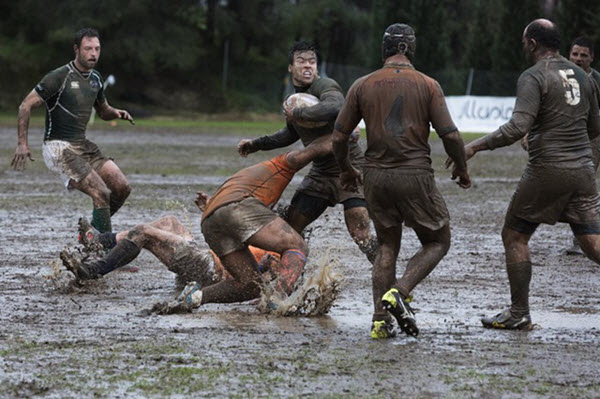
Turning Trials Into Triumph

Every success story is riddled with trials and tragedy. Our ability to overcome these obstacles is what makes them so appealing. From small startups disrupting industry giants to a small platoon battling a massive army, there are moments that test our character and build our resolve.

When it seems like there’s nowhere to go is when the fiercest battles take place in our mind, body, and spirit. The ones who triumph are forever remembered and depicted as heroes while those who fail are often forgotten.

So, what’s the difference between these people?

Well, it’s not their position, stature or even wealth. The determining factor that separates the great and the not-so-great is their grit and determination. In one word, it’s perseverance.

This is the quality that keeps us moving forward in a sea of adversity. It’s what pushes us to keep fighting against the current and overcome tidal waves of doubt. We batten down the hatches and weather the storm knowing that it will soon pass and we’ll be better after it.

It’s sticking to the plan when most have walked away — working alone, without pay, and without recognition. It’s this quality that makes us bend, but not break. We face our fears in defiance of the odds, shattering the barriers of reality, pushing the limits of what’s possible and reaching new horizons.

Either placed in these situations by choice or by circumstance, this is when we shine the brightest. This ability to hold ourselves to a different standard and not settling for mediocrity is what makes us stronger. Forever striving for success, we know that failure is not a permanent condition, but just a temporary inconvenience.

Our ability to recognize that nothing worth having comes easy is what encourages us to take a risk. It is what forces us to show up and perform every single day without any loss of enthusiasm.

A Tale Of Turning Trials Into Triumphs

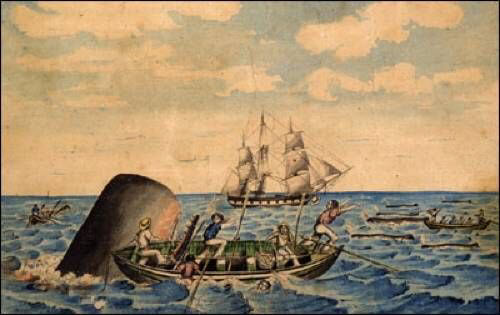
The crew of the Essex knows this quality all too well. When placed between a rock and a hard place, they chose to rise to the occasion. This incredible true story of perseverance and fighting spirit is the inspiration for Herman Melville’s Moby Dick.

essex whaling disaster
Via Mother Nature Network

The Essex was a whaling ship from Nantucket, Massachusetts piloted by Captain Pollard and his 20 men in the 1800’s. During their whaling expedition, the ship was rammed by a whale which caused it to sink.

This left Captain Pollard and the crew fending for their lives on three small rescue boats, hundreds of miles away from civilization with no land in sight. With little provisions, much of the Essex crew did what they could to fight off starvation and dehydration. Sadly, much of the crew perished due to these abysmal conditions. Despite this, the survivors did not lose hope.

In such a dire situation, most would succumb to the circumstances. Captain Pollard, however, kept his resolve and encouraged his men. After weeks at sea, the remaining survivors eventually resorted to cannibalism and doing everything necessary to fight off death.

Surviving long enough for a passing ship to rescue them, the survivors were found delirious, starved and a shadow of their former selves. Eventually, the surviving crew members were able to return to Nantucket, where they tried to forget the horrors of the ocean.

Fighting seemingly insurmountable odds is why the Essex survivors will forever be remembered. Their courage and ability to endure the agony of hopelessness are qualities that are admirable and something we should all strive for.

Conclusion

Luckily, we rarely face life and death circumstances. But, many times we are too easily discouraged at the first sign of resistance- unable to say no, stand up, and do what is necessary for the face of adversity. We must learn to channel our inner survivor and fight off these obstacles with the tenacity of a prize fighter.

stand up to obstacles

To do otherwise would be selling ourselves short and conforming to the reality that society has placed on us. Rather than living on our knees, let’s die on our feet knowing that, at the end of the day, we gave life everything we had. Leaving no stone unturned, forever pushing past our comfort zones.

We must realize that life is a bold adventure and to take advantage of it, we must keep moving forward. Let’s make the commitment to strengthen our resolve because if we never quit, there’s no way we’ll fail. And that is exactly how you start turning trials into triumph.

See Also: How To Conquer The Fear Of Success (Or Failure)

The post Turning Trials Into Triumph appeared first on Dumb Little Man.

http://ift.tt/2ssNqMm

On Becoming the Becky Sharp of Science: Hope Jahren

It is no secret that the field of science is dominated by men. But famed geobiologist Hope Jahren, who has won such prestigious awards as the James B. Macelwane Medal, takes what can often be an oppressive system in stride. “It’s not about whether they approve of my work at Harvard or at whatever journal. This is not about whether my boss is nice to me. This is about me knowing more than I did yesterday.”

In her nationally bestselling book, Lab Girl, which is now out in paperback, Jahren digs into everything from her Minnesota childhood, when she spent hours playing and conducting experiments in her father’s laboratory, to her love of author Jean Genet. But the meat of the book focuses on her incredible determination and drive to study plants, despite the often shocking hurdles that male scientists put in her way. We are also introduced to Bill, her brilliant, eccentric lab partner, who provides inspiration and support when she needs it most. Most striking is how successfully Jahren extends the mantle of scientist to each one of her readers, using terminology that is not only accessible but emotionally arresting. One finds it impossible to read this book and not develop a deeper and more protective connection to the natural world.

I caught up with Hope Jahren this spring, not long after Lab Girl was honored as a finalist for the Barnes & Noble’s Discover Great New Writers Award. She spoke to my via phone from her  lab in Norway, to discuss the multiple meanings of language, sexism in science, and why finishing a book is like losing a loved one.– Bill Tipper

The Barnes & Noble Review: What is geobiology?

Hope Jahren: It’s the combination of geology and biology. You can look around you and see all kinds of things that aren’t alive — water, atmosphere, rocks, etcetera, and look at all the things that are alive — plants, little worms, yourself, etcetera, and geobiology is interested in the processes that turn the one into the other.

BNR: Was examining that intersection where you wanted to go when you first undertook your scientific career?

HJ: Well, I was always interested in geology and in physics and chemistry, and those, of course, are the manipulation of things that aren’t alive. It’s much, much easier. We have really good ideas about how gases behave and how liquids behave, and what chemicals do when you mix them. A lot of that stuff was worked out in the 1700s, in the earliest phases of the Enlightenment. But then, when you try to apply those same things and you throw a living organism into the mix, that’s when it all gets amazingly complicated.

It’s like Alice in Wonderland, where it starts out with things you understand and it’s very familiar. Then, all of a sudden, weird stuff starts to happen, and these characters are introduced, and everything becomes very unpredictable. I think when you introduce living organisms into scientific experiments, it’s a very similar thing.

BNR: In the book, you so brilliantly draw connections between the natural world and our thinking about everything from love to work to economics.

HJ: I grew up with biblical literature. I was always taught to interpret its symbols, and that meaning is a tiered thing that exists on many levels, in everything we do, some of it conscious, some of it subconscious, and all of these different levels of meaning contribute to understanding, which is a much more holistic thing. That probably also goes back to some of the earliest reading that my mother and I did on Susan Sontag, who talks a lot about metaphor and things like that. That’s how I was taught to read in general. You read difficult things and you might not know what they mean right away. But through the course of your life, you will be presented with different scenarios and different information, and if you’re patient and you just live life, things will make sense along the way.

With communication, you’ve got something you want to say, and it’s this disembodied message that doesn’t really fit into words. The challenge is to approximate whatever that is as best you can. It’s almost like shooting an arrow toward a target. Sometimes you miss the target altogether, and sometimes you can really stick it in the bull’s-eye. It’s with practice, shooting that same arrow, that you realize what the bull’s-eyes are.

My whole, passionate focus was: How do I distill this plant stuff? I’ve spent decades of my life studying them, but not everybody is going to. The world needs to turn on a lot of other wheels. So if I had a chance to say one thing, to distill it down to its purest, most elegant, spherical form, what would I say? The funny thing is, I think, if you do that work, and you really polish it and it’s just a clear bell ringing on one concept, you just look at the words and you’ll find it means more than one thing.

BNR: That seems to me an extraordinary insight, and a very useful way of thinking about it for writers. That in that effort to distill and capture the idea, the language itself is going to give you all of this extra meaning.

HJ: One standard that I held myself to was that I was going to write a book, and it was going to say everything important that I wanted somebody to know about plants, whether they were taking my class, or in college, or on the street, or whatever, and I was going to not use one word that they had to look up. I was going to come to them and use their words. I held myself to that standard. So when I ran up against a scientific word, I forced myself to choose the best commonly invoked term, and then shape it as precisely I could with accessible adjectives and things like that, and then let go.

BNR: It’s astonishing how well you succeeded at that. In talking about how trees make energy you write: “The plant pigment chlorophyll is a large molecule, and within the bowl of its spoon-shaped structure sits one single precious magnesium atom. The amount of magnesium needed for enough chlorophyll to fuel 35 pounds of leaves is equivalent to the amount of magnesium found in 14 one-a-day vitamins, and it must ultimately dissolve out of bedrock, which is a geologically slow process.” Was it natural for you to talk about the bowl of chlorophyll’s spoon-shaped structure, or was that a kind of image you had to work to craft?

HJ: I use a lot of allusions to feminine objects, to objects associated with female labor: “spoon” of course, and then the one that people often touch on is “a leaf is a platter of pigment strung with vascular lace,” which is dishes and lace.

BNR: Did you want to work against the kind of gender prejudices that are in a lot of scientific writing?

HJ: It was not a conscious thing. The first work that I did with my hands was in my father’s lab, but it was also with my mother in the garden and in the kitchen, so those were the objects of my early toolkit. I naturally gravitate toward them. I’ve also always let myself do that, use the objects of my life. But it does create this nice juxtaposition of these very female images with these scientific concepts, which I really like and I think makes me a special voice in the end.

BNR: My favorite adjective in that sentence [with the phrase] “the one single precious magnesium atom” is “precious.” That’s a word that lights up that whole sentence for me.

HJ: The magnesium is associated with feeding — that’s what the plant is doing, trying to feed itself. So there’s this nourishing, maternal thing at work. When I’m saying something like that, I’m trying to poke your subconscious into coming along for the ride. I’ve invoked these symbols that you associate with nourishment, and then I’m going to talk about how the tree nourishes itself. That’s a type of learning that’s really effective. You’ve got to try to engage people both on a conscious level and a subconscious level, otherwise they’ll wander. I also talk a lot about the five senses, how things taste, how they smell, what plants sound like, etcetera.

BNR: There’s a wonderful sort of bookshelf peeking out in different places in this book. In your first encounter with your long-term research partner, Bill, you’re reading a book about Jean Genet.

HJ: Yes. Those are all true stories. I didn’t invoke them for any literary purpose. It’s just what I happened to be doing at the time.

BNR: Were there particular books that were strong influences on you as this book came to be?

HJ: I was greatly influenced by Vanity Fair by William Makepeace Thackeray, because he’s got this fantastic heroine, Becky Sharp. I wrote an essay on her; it’s on my blog somewhere. I just love her.

I had read so much Victorian literature, and it was sort of constricting. There’s Dickens, who has these amazing characters, but the women are either too good or too bad, and they’re either young ingénues or these old-maid types, and there’s no real place in between. But when I got to Vanity Fair my mind just opened up. Things don’t end particularly well for Becky Sharp, but she doesn’t care. She just asks the question: “How do I get what I want within this very constrained power structure that is supposed to keep me from getting what I want?” She had this freewheeling approach. I thought: If I can be the Becky Sharp of scientific research, then we’ll see how far that goes.

BNR: With a year behind you since the book’s release, and having talked about it in these kinds of conversations with many other people, do you see it differently? Is it more of an artifact for you?

HJ: I think the main feeling I’ve had since the release of the book is really grief, because it was so joyful to sit, and write, and play with the words, and play with the sentences, and read them out loud, and use my mind that way. These were some of the happiest months of my life, and then it was just over. It gives me joy to hear that the book is doing what I hoped it would do: teach people about plants, but it’s been more of a grieving process. This book was my best friend for a long time. I got up early in the morning with it, and it was there when I went to bed. I feel really melancholy about it.

BNR: This really seems to be a story of dealing with the contingency of life and the idea that this work, which requires persistence and long-term effort, can somehow continue in the face of the absolute unpredictability of things.

HJ: Well, that’s one of the main things of the work, this contrast between work and grace. To what extent do things come to you because you work for them, and to what extent do things fall into your life out of grace? I think my personal answer for that is that you work to keep yourself busy while you’re waiting for grace.

BNR: Why did you decide to write a book versus continuing your own scientific writing?

HJ: Scientific writing is great. It’s actually a lot like writing poetry, because you have to condense. You have to put many years of work by many people into a few pages. Then it’s done in this weird, passive, very omniscient third person. Because the point is not how you feel about it. It’s all about advancing the idea.

So by doing that writing, there were huge parts of me I was never going to get to use. I was never going to get to write dialogue. I was never going to get to be funny. You can only report results in the scientific setting, and there are so many things we did that didn’t yield results, but we still learned from them. Scientific writing is a wonderful tradition, but it’s confining.

I remember thinking, “I’m just going to let myself do this. I’m going to drop the ball on all this other stuff people want me to do for six months, and I’m going to stop denying myself this book. And then, whatever happens, happens.” It just got to a point where it was more painful not to write. It took more energy to suppress it than to write it.

BNR: There is a thread that runs through this book about the sexism that exists within the scientific community, and it reflects the power inequities writ large in our culture. I’m curious to know if you feel that things are moving in one direction or another with women in science in particular.

HJ: Is there sexism in science? Yes. Is it getting better? No. There’s this fundamental and culturally learned power imbalance between men and women in our society, and it finds expression within every human endeavor. I tried to talk about the particular ways in which it finds expression within science. It’s flavors of the usual things. It has to do with safety. It has to do with discomfort around female reproduction. It has to do with the policing of female sexuality. All that kind of stuff. And I give examples of when each of those things comes into play.

For me, I think it’s a kind of Becky Sharp strategy. When the rules aren’t fair, you can’t hold yourself to the rules. Now, that doesn’t always work, and there’s a price to be paid, and all that kind of thing, but what I try to drill in is that the real rewards of the job are not ones that could be taken away from me.

I’m also an example of somebody that would have put up with just an endless amount of shit to be able to do that job, just because I loved it so much. But I still resent what I did have to put up with. We need to attack these fundamental power imbalances that exist. Sexual violence, reproductive rights, and compensation for equal labor.

BNR: What you’re suggesting is that these things aren’t any more specific to science than they are to any other particular corner of our world. Simply, as long as we have male supremacy as a feature of our society, it’s going to have all of these dysfunctional effects.

HJ: Exactly. I also didn’t quit science because there’s nowhere to run. Where are you going to go? Where is this Disneyland where I’m going to get equal pay for equal work and all this kind of stuff?

But the other thing is that I never idolized these guys that were giving me crap. The people that I respected did not fit the mold of who was powerful within the structure. That’s what I often tell people, that you have to keep in close touch with the part of it that makes you happy. If it’s being in the lab, if it’s working with your hands, let yourself stop and feel the joy that comes from getting to do that for two hours. If you just focus on that, you’ll always be doing the job for the right reason. The rest of it is just shit you gotta do! [Laughs]


The Barnes & Noble Review http://ift.tt/2rYtW5R
How Internment Became Legal

To the Editors: David Cole’s interesting piece “Trump’s Travel Bans—Look Beyond the Text” repeats a common mistake about the Supreme Court’s decision in Korematsu v. United States: that the Court’s decision “upheld the internment” of people in the United States because of their Japanese ancestry.

http://ift.tt/2qKouP3

The Wit of Virgil Thomson

To the Editors: In “The Knight Errant of Music Criticism,” Christopher Carroll writes that Virgil Thomson’s letters are “regrettably” absent from his collected Herald Tribune articles and other essays. I agree.

http://ift.tt/2rfvCGG

A Contemporary Home in the Mexico City Neighborhood of Lomas de Chapultepec

This house, with a marked 1960s style, is located in a neighborhood called Lomas de Chapultepec, in Mexico City, Mexico. It was designed in April of 2016 by the architect José Juan Rivera Río and his studio JJRR / Arquitectura. It is surrounded by beautiful green gardens, and the materials used to construct it include volcanic rock, concrete, and steel columns. The construction has several accesses to the gardens, as well..

More…

June is Great Outdoors Month and the perfect time to explore…

June is Great Outdoors Month and the perfect time to explore public lands and waters. Take a walk on a national seashore, go birdwatching in a wildlife refuge, paddle a wild and scenic river, find peace in a wilderness area and marvel at the natural beauty of national parks. Every outdoor experience is unique and helps strengthen our connection to nature. Even the most simple moments can have a powerful impact. In the dark and quiet forest of Great Smoky Mountains National Park in Tennessee, photographer Radim Schreiber found himself surrounded by blinking lightning bugs (or fireflies) and captured this amazing shot. Photo by Radim Schreiber (http://ift.tt/18oFfjl).

7 Creative Ways To Use Drones For Kids’ Learning

Drones, the modern age RC helicopters of the era, are a fantastic tool for numerous applications. These flying pieces of electronics could do a lot of things, from spying on someone to delivering goods and remote monitoring. There are various military applications, too, but let’s not go into that domain.

Some of us might have some really creative ideas when we talk about drones. But, for this particular article, let’s focus on the productive perspective of using drones for your kids.

These ideas will definitely compel you to look for the best drones for kids and add them to their learning years.

1. Science And Math

Drones are complex pieces of electronics that require a thorough understanding of science and math concepts. Some of the significant terms are propulsion, load capacity, coordination, radio frequency and whatnot.

You can enroll your kids in a program where they can learn how to design and make their own aerial robots, code them to perform some tasks and put their creations to the test. With activities like these, students can enhance their technical skills with hands-on experience and exposure to new technologies.

2. Filmmaking

film and photography

For children who seem to have a liking for recording and video films, filmmaking and photography might be the right activities for them. Drones with cameras have been an attractive part of aerial videography. They can help your kids explore a whole new domain and learn lots of new things about it.

3. Social Learning

Drones offer an amazing way to look at the world from a different perspective. A drone can expose the kids to their surrounding as well as help them explore new things. Kids could take up exploration trips with friends and family to discover new places. They could go on camping trips, a hiking expedition or maybe just a drive to a nearby area.

4. Land Survey

land survey

Drones have been used by farmers for land surveys and wildlife monitoring. Your kids could do the same in your backyard.

The kids could explore the type of vegetation in the area or the kinds of trees that grow in the neighborhood. You could teach them about the seasons and their effect on a time lapse video recorded using a drone. When going on an education expedition, equip the drone with a camera to explore the terrain and learn more about it up close.

5. Programming Lessons

Once you have got your kids all excited and involved in a drone, it’s time to teach them new things. You could enroll them in a programming class where they could learn new ways to program their drones and make them more functional.

6. Physical Education

Drones can be a valuable part of your kids’ physical education course.

A camera rigged to a drone could record the performance of the kids and help the instructor plan a routine for them. Furthermore, it can also be used in various sports activities to encourage participation and make them more fun. Workouts, like sprints, hurdles and hide–and–seek, could be coupled with a drone to make them more exciting.

7. Motor Skills

Motor skills and hand-eye coordination are essential parts of a child’s physical and mental development. These skills enable one to perform various tasks on a daily basis.

Flying a drone requires an excellent combination of hand-eye coordination complemented with sharp thinking abilities. So, when teaching a child to fly a drone, you are practically helping him develop those skills in a fun way.

Analyzing paths and flying through a constrained airspace allow them to think intellectually and make quick decisions. These things can enhance radical thinking.

See Also: The Health Benefits Of A Drone Hobby

These are just a few applications of the best drones for kids. Look out as you may find a lot more ideas to help them learn and develop new skills flying by.

The post 7 Creative Ways To Use Drones For Kids’ Learning appeared first on Dumb Little Man.

http://ift.tt/2rXXocb

Zen Architects Designed a House in Melbourne, Australia

This house, built on a slightly sloped terrain in suburban Melbourne, Australia, was designed by Zen Architects in 2015 and has a total of about 340 square meters of space. It was designed to integrate the beauty of the exterior surroundings with the interior spaces and thus has a number of glass walls. These not only allow the uninterrupted flow of natural light to the interior, but also provide beautiful..

More…

Alexey Rozenberg Designed this Fantastic Apartment in Moscow, Russia

This 175-square-foot apartment was designed by Alexey Rozenberg for a couple that has two children. It is located in Moscow, Russia and the project was completed in 2015. It is divided into two areas. The main one is where the social areas are located – living room, dining room, and kitchen – as well as the Master bedroom. In the second area, we will find the children’s rooms as well..

More…

Three Great Reasons To Play Intramural Sports As An Adult

When you were a kid, your parents probably enrolled you in a sport or two. They probably figured it’d help you keep in shape and make some new friends. Plus, it’d get you out of their hair for a little while. A win-win, right?

A lot of time has passed since those childhood games and you’ve already grown up and moved on. Have you ever thought about embracing your inner child again?

Because if you haven’t, I think you should. It might be time to consider getting back into intramurals.

But, how can you find the time?

You’ve got a committed career now. You’re a productive member of society with duties to your family and co-workers. You need to pay your bills and taxes. You need to manage your savings and start planning for retirement.

And really, why bother with social sports, anyway? They take so much time and effort. Aren’t there better ways you could be occupying yourself?

Honestly, not really.

The experience is more than worth it and with the following benefits of intramural sports, you’ll surely be convinced to get back into it right away.

They’ll Help You Feel Like A Kid Again

intramural sports

You’ve no doubt heard the phrase ‘young at heart.’ How would you like to embody it?

By putting some time and effort into intramural sports, you’ll be healthier, happier, and more energetic. And, as an added bonus, you’ll even be more productive at work.

The benefits of intramural sports offer more than just health benefits. By maintaining a healthy body, you’ll also ensure you’ve got a sharper mind. You’ll be more alert, more energetic and, ultimately, more efficient.

Plus, there’s ample evidence that suggests how regular exercise can reduce the risk of developing certain types of illness and disease. I’m talking about more than just the common cold here. Getting fit also means you’re less likely to develop Type 2 Diabetes, hypertension, obesity or heart disease.

See Also: 10 Habits That Can Prevent Heart Disease

They’re A Great Way To Meet New People

Making friends as an adult is hard, isn’t it? Outside of your co-workers, who do you really interact with on a regular basis? How often do you get off work for the day and decide to go over to a friend’s place or go out to a party?

Chances are, the longer you’ve been an adult, the less you go out. Joining a sports league not only gets you out of the house more by giving you an excuse to be somewhere, it can be a great way to meet new people, too. And, as an added bonus, you’ll automatically have a common ground with those people – a shared passion for the sport you’re playing.  

And here’s the thing: most people, even introverts, crave social interaction in one way or another. It’s something that’s wired into our very biology, as basic as our need for food, shelter, and sleep. Intramural sports provide you with an easy, stress-free means of meeting that need.  

They’re Perfect For Team Building

team building

Last but certainly not least, if you get your co-workers involved, intramural sports can greatly improve workplace relationships. By learning to work with your colleagues outside the office and doing it while you’re enjoying, you’ll learn to work better with them inside the office.

“Team building via corporate games are specifically designed to suit every age and ability within the company,” explains SME Advisor’s Guillaume Mariole. “They are designed to bring out the best in all participants and help to include rather than exclude. This enables high levels of trust to be built within teams, which is a sure-fire way to improve the way teams work together.

You might pass Kevin from accounting in the hallway every now and then. Maybe you exchange the odd nicety, but you don’t really know him all that well. Once you find out he’s got a knack for goaltending in floor hockey, you’ll probably have a lot more to talk about and you’ll both work better together as a result.

See Also: What Managers Should Know About Motivating Their Team

Closing Thoughts

Intramural sports aren’t just for kids. They can make you happier and healthier. They can help you meet new people and even make your workplace life considerably better.

Trust me, give them a try. You won’t regret it in the least.

The post Three Great Reasons To Play Intramural Sports As An Adult appeared first on Dumb Little Man.

http://ift.tt/2srczao