Paul Krugman: It’s All About Trump’s Contempt

"The mother of all sucker punches":

It’s All About Trump’s Contempt, by Paul Krugman, NY Times: For journalists covering domestic policy, this past week poses some hard choices. Should we focus on the Trump budget’s fraudulence — not only does it invoke $2 trillion in phony savings, it counts them twice — or on its cruelty? Or should we talk instead about the Congressional Budget Office assessment of Trumpcare, which would be devastating for older, poorer and sicker Americans?

There is, however, a unifying theme to all these developments. And that theme is contempt — Donald Trump’s contempt for the voters who put him in office. … He is … betting that he can break every promise he made to the working-class voters who put him over the top, and still keep their support. Can he win that bet?

When it comes to phony budget math — remember his claims that he would pay off the national debt? — he probably can. …

The bigger question is whether someone who ran as a populist, who promised not to cut Social Security or Medicaid, who assured voters that everyone would have health insurance, can keep his working-class support while pursuing an agenda so anti-populist it takes your breath away. …

So what did [Trump voters] think they were voting for? Partly,… they … believed that he was a different kind of Republican. Maybe he would take benefits away from Those People, but he would protect the programs white working-class voters … depend on.

What they got instead was the mother of all sucker punches.

Trumpcare, the budget office tells us, would cause 23 million people to lose health insurance, largely through cuts to Medicaid… It would also lead to soaring premiums — we’re talking increases on the order of 800 percent — for older Americans whose incomes are low but not low enough to qualify for Medicaid. That describes a lot of Trump voters. Then we need to add in the Trump budget, which calls for further drastic cuts in Medicaid, plus large cuts in food stamps and in disability payments. …

So many of the people who voted for Donald Trump were the victims of an epic scam by a man who has built his life around scamming. …

Will they ever realize this, and admit it to themselves? More important, will they be prepared to punish him the only way they can — by voting for Democrats?

http://ift.tt/2qj6mAq

The Unmistakable Sign of Having the Right Career

Do you want to know whether you are in the right career? Do you want to know whether you are at a place where you can be your best?

I have been following many successful people over the years. These are people who have overcome great challenges to thrive in their fields. These are people who have made an impact on the world.

They come from different backgrounds, but somehow they give similar advice when it comes to career. It’s as if there is a key to success that these people have found.

In essence, this is what they say is the unmistakable sign of having the right career:

You are having fun doing it.

Yes, you are having fun doing it. And the fun doesn’t come from the money or the reputation you get but from the work itself.

This is the way Warren Buffett puts it:

“I had fun when I was in my twenties, my thirties, and now I am 86 and I am having fun.”

That’s a great way to live, isn’t it? That’s how our career should be!

Now, how can we find such a career? Here is Buffett’s advice:

“I advise students, as much as possible, look for the job that you would take if you didn’t need a job.”

Let’s pause and think about that for a moment: what job would you take if you didn’t need a job?

When you look at the way Warren Buffett works, it’s obvious that he is having fun. How else can you explain reading 500 pages a day for years? Remember, he is his own boss. Nobody forces him to do it. I can’t think of any other explanation of his intensity except that he enjoys doing it.

There is a good reason why having fun is essential for career success: it makes you go further at it than other people. What may feel like a chore to someone else is a joy to you, so you will do more of it.

Here is how Stephen King puts it:

If there’s no joy in it, it’s just no good. It’s best to go on to some other area, where… the fun quotient higher.

Again, similar advice, and there is a useful term here: fun quotient. I think that’s a good way to measure how good a career is for you: how high is the fun quotient?

Mark Cuban puts it this way:

It’s really easy to know if you are in the right job. If it matters how much you get paid, you are not in a job you really love.

I can give you more examples, but you get the point.

There is something you should be careful about, though. You could start what you do for the fun of it, but over time you could lose the fun and it would just become a job.

I know this because it happens to me. I started this website because of the fun of doing it, but over the years there were times when I worked on it simply because it’s my business. It’s no longer the fun that motivated me, but what I would get out of it. Needless to say, this isn’t good. Realizing this pushes me to get the fun factor back.

So here are two questions you should ask yourself:

  1. Do you do your job because of the fun of it or because of an external reward (like money)?
  2. If you used to have fun at what you do but not anymore, how can you get the fun back?

Take time to answer these questions. They can help you have a great career.

Recommended Book Summaries

http://ift.tt/2qmoFkx

On A Journey To Build A Dream School Together In Austria

I am a Community Manager and, as part of the job, I talk to our users a lot. They tell me all sorts of stories, from what they enjoy the most about our product to how they recently traveled to Greece for a 10-day vacation. If you’re going to listen to them, you’ll surely feel inspired to start chasing and building your dream.

But, there is one that really caught my attention.

It’s a story about a group of people who were passionate and brave enough to build their dream from scratch– all by themselves.

school at the alm
The alternative school Schule an der Alm in Austria

A school at the foot of the Alps

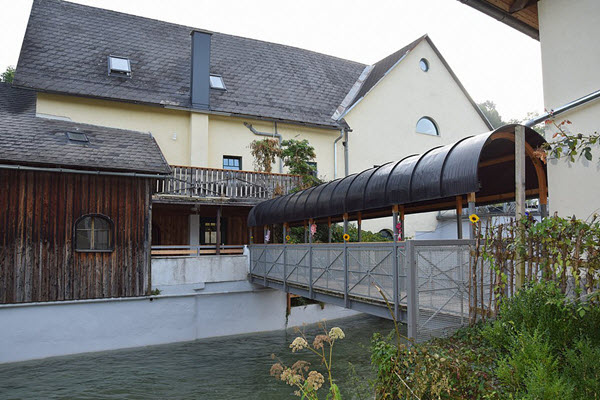
Situated at the foot of the Alps and in a quiet and beautiful place in Pettenbach, Austria, there is this tiny school right next to a forest- Schule an der Alm (School at the Alm).

In that school, students choose what they want to learn and when they want to learn.

Many classes take place outdoors as children aged 6 to 14 years old concentrate on their subjects of interests in small groups. They climb trees in a race to the top, experience living in a teepee, go skiing, ice skating and sledging during winter.

They have a lot of special activities, too. One particular activity that children excitedly look forward to is Creative Day.

On Creative Day, they have the opportunity and the freedom to go wild with their imagination. They can work with wood to craft their own mini houses or use the sewing machine to design their own clothes.

students of the new school
Students having fun handcrafting on a table outdoor

What makes the school even more unique is that it is built by parents, teachers, and children together!

The start of the dream school

It all started about 10 years ago.

Two young women, together with parents like themselves, had a dream to build a school for their children so they could be educated at their will.

Gudrun, one of the teachers at the school then, worked in a normal primary school before.

When it was time for her second son to go to school, “My son should not be educated the same old way I did,” she told herself. “He should not sit in front of a desk for more than 5 hours a day when half of the time, it’s just his teacher talking.”

With such belief, she and the parents she met at Kindergruppe (children’s group) who share the same ideas, took action and founded their own school.

Michael, a gentle, loving father of two from the Kindergruppe, was Gudrun’s neighbor at the time. They decided to start the school at his home where his 13-year-old son later enrolled as well.

“I already know Gudrun and how she teaches, so did my son. We just like the people and how they worked,” Michael told me during my interview. “And I believe, real good learning has to come from following one’s own interests, something the school believes in, too.”

It was bold and brave of Gudrun, Michael and the other parents to be different and to fearlessly hop on a journey to help children educate in nature, out of their own nature.

And it is a one-of-a-kind dream they did not easily give up or compromise.

“Children should have the right to choose what, and when they want to learn, at their own speed.”
— Michael Praschma, a 62-year-old copywriter and one of the parents

It was not until too many children enrolled that teachers, parents, and students started adapting their new school building, constructing classrooms and school backyard.

The adults were responsible for countless duties like cutting the wood, painting the walls and roughing in electrical wiring. Children, on the other hand, were helping them to carry objects from one location to another.

building the school
Father and son preparing wood for the new school

The role of technology in the school

School at the Alm is like a big family and every single person in the school needs to be involved. Every parent needs to spend at least 100 hours helping out with different tasks every year. And it becomes more each year!

If both parents have a job or if their children have to be looked after, a discussion on which tasks are absolutely necessary or not is a must.

In the early days, they tried to do this via emails, a service everyone is used to. However, it later became difficult for them to tell who was responsible for what, how much of something has been done or what decisions have been made.

“Honestly, emails just resulted in a tsunami. So, we spent about 20 hours looking for a solution,” said Michael, who is responsible for keeping everyone on track.

For me, it was quite surprising how such a “hand-made” school actively looked for and embraced “tech” apps to help them move things along smoothly.

using technology
Parents and teachers using Quire in a meeting

The solutions they found recently are Quire, Doodle, and appear.in.

Quire is a central place for task management, where they break down tasks to smaller subtasks for collaboration and tracking. Doodle, meanwhile, is used to decide a meeting time and appear.in is for arranging video calls in meetings.

“Doodle and appear.in, they very much enhance the Quire tool to help us get things rolling,” said Michael.

After 10 years

School at the Alm has now grown into a primary and secondary school. Currently, it has 32 students, ages 6 to 14, 58 parents and 6 teachers.

Before they welcome the new school year which begins in September, the school will be busy- super busy.

An open house day will kick off in May and everybody will be playing a part. Every parent, teacher and, of course, student will be responsible for different tasks. They will be making sandwiches for the buffet, preparing presentations for the information stand and attending little children’s corner to play with and supervise kids.

start of school year
Everyone gathered together for the start of a new school year

This is the story about the school at the Alm.

After reading the story, did it inspire you to make a difference in the world? Did it awaken the giant in your heart? Did you feel inspired to start building your dream? Just go for it!

The post On A Journey To Build A Dream School Together In Austria appeared first on Dumb Little Man.

http://ift.tt/2rXTvAT

Links for 05-26-17

http://ift.tt/2rXF3Je

A Unique Opportunity to Visit an Airship at the DOX Center for Contemporary Art in Prague, Czech Republic

Have you ever dreamed of going onto a giant airship? Well, now’s your chance! This airship was designed by Martin Rajniš from the Czech architectural firm Hut Architektury. It measures 138 feet in length and is docked on top of the DOX Center for Contemporary Art in Prague, Czech Republic. And don’t think this airship is merely decorative! The installation serves as the museum’s new reading and meeting space. So..

More…

May 26th

Life, for people, begins to crumble on the edges; they don’t realize it.

http://ift.tt/1oyH5I7

The Best Night Routine for a Productive Day

You’re reading The Best Night Routine for a Productive Day, originally posted on Pick the Brain | Motivation and Self Improvement. If you’re enjoying this, please visit our site for more inspirational articles.

Even if you don’t consider yourself a productive person, you still have some type of morning routine to kick off the workday. If it’s a daily mad sprint to the train stop with coffee in one hand and a breakfast burrito in the other, there’s probably still at least some forethought (breakfast burritos don’t just happen).

But a bedtime routine? If yours consists of just falling asleep during The Daily Show with a cocktail, you’re doing it wrong. A productive tomorrow begins tonight, and a nighttime checklist can help establish sleep-positive habits that will carry you through the day, as opposed to dragging yourself to five o’clock.

According to Hilary Thompson, a sleep expert for Mattress.com, you’ll also be healthier: “Trouble falling, and staying, asleep can lead to chronic fatigue, mood and memory issues, a slower metabolism, and decreased immune-system functioning,” she says. “A routine can help you get the most out of your night and, ultimately, your day.”

Before you plan on going to sleep, try implementing some (or all) of these steps to set yourself up for a better, more productive morning.

  1. Step Away from the Spreadsheet. Shut off your brain and stop working. The tasks will still be there tomorrow—plus some more, because work. They can, and should, wait.
  2. Look Back, Look Ahead. Review what you accomplished today, then make a to-do list for tomorrow. But don’t feel that you must list everything for tomorrow—the top three biggies will suffice. And don’t make these lists too close to bedtime, as per the shut-off-brain/stop-working directive above.
  3. Cool It. According to the National Sleep Foundation, the ideal temperature for shut-eye is around 65 degrees. The cooler you are, the sleepier you become, so turn down the thermostat.
  4. Cut Off the Alcohol (and Snacks). At least two hours before bedtime, cut off the booze, food, and—you’d be surprised how non-self-explanatory this is—stimulants (not just coffee and soda, but also sugary desserts and even fruits). “Digestion and sleep don’t mix well,” says Hilary Thompson.
  5. Clean It Up. Waking up to a messy household isn’t the way to start the day. Tidy up the kitchen, your bedroom, your workspace, and everything else within eyesight before you hit the sack for a clearer path in the morning.
  6. Dress for No Stress. It worked when you were a kid, so why not now? Plan and lay out tomorrow’s clothing ensemble tonight, and you’ll have one less thing to worry about. “And, if your first outfit of the day is gym clothes for a morning workout, even better,” adds Thompson.
  7. Relax with a Book. Get in some light reading before bedtime—but not that kind of light. Good old-fashioned print is preferable to an iPad or Kindle. “The light from the screen of your tablet or phone is blue-spectrum light … it tells the brain to stop secreting melatonin [a natural sleep-inducing biochemical],” says Lisa Medalie, PsyD, a University of Chicago behavioral sleep-medicine specialist. “Even a few minutes of exposure signals your brain to stay awake.”
  8. Fade to Black. Again, it’s a melatonin thing—the darker the room, the better the slumber. Ever notice how much sounder you sleep in a hotel room? Consider investing in some blackout blinds, or at least an eye mask.
  9. Nix the Netflix. As per the above, shut down all screens an hour or two before bedtime, including TVs and computers. If you absolutely must squeeze in one more episode of Iron Fist, try some blue-light-blocking sunglasses.
  10. Pause the Paws. Sorry, pet lovers, but letting dogs and/or cats on your bed isn’t helping your sleep—when they toss and turn so do you. Keep your four-legged friends out of the bedroom, or, if you can’t bear to be apart, set them up with their own bed across the room.
  11. Block the Clock. Yes, even the LED light from your bedside clock can mess with your sleep—especially if you’re up all night staring at it, so turn it to the wall. “Even a small amount of exposure to the clock’s display can interrupt melatonin flow,” Thompson says. “As long as you can hear the alarm in the morning, there’s no need to see it.”

And, when morning comes …

  1. Snooze (Button), You Lose. “The worst thing you can do is stay up late then hit snooze in the morning,” success author Laura Vanderkam tells Business Insider. “Humans have a limited amount of willpower. Why waste that willpower arguing with yourself over when to get up, and sleeping in miserable nine-minute increments?”

Try out a few of these tips tonight, and you’ll thank yourself when you have a productive tomorrow. Happy sleeping!

You’ve read The Best Night Routine for a Productive Day, originally posted on Pick the Brain | Motivation and Self Improvement. If you’ve enjoyed this, please visit our site for more inspirational articles.

http://ift.tt/2r1UTCu

The Best Night Routine for a Productive Day

You’re reading The Best Night Routine for a Productive Day, originally posted on Pick the Brain | Motivation and Self Improvement. If you’re enjoying this, please visit our site for more inspirational articles.

Even if you don’t consider yourself a productive person, you still have some type of morning routine to kick off the workday. If it’s a daily mad sprint to the train stop with coffee in one hand and a breakfast burrito in the other, there’s probably still at least some forethought (breakfast burritos don’t just happen).

But a bedtime routine? If yours consists of just falling asleep during The Daily Show with a cocktail, you’re doing it wrong. A productive tomorrow begins tonight, and a nighttime checklist can help establish sleep-positive habits that will carry you through the day, as opposed to dragging yourself to five o’clock.

According to Hilary Thompson, a sleep expert for Mattress.com, you’ll also be healthier: “Trouble falling, and staying, asleep can lead to chronic fatigue, mood and memory issues, a slower metabolism, and decreased immune-system functioning,” she says. “A routine can help you get the most out of your night and, ultimately, your day.”

Before you plan on going to sleep, try implementing some (or all) of these steps to set yourself up for a better, more productive morning.

  1. Step Away from the Spreadsheet. Shut off your brain and stop working. The tasks will still be there tomorrow—plus some more, because work. They can, and should, wait.
  2. Look Back, Look Ahead. Review what you accomplished today, then make a to-do list for tomorrow. But don’t feel that you must list everything for tomorrow—the top three biggies will suffice. And don’t make these lists too close to bedtime, as per the shut-off-brain/stop-working directive above.
  3. Cool It. According to the National Sleep Foundation, the ideal temperature for shut-eye is around 65 degrees. The cooler you are, the sleepier you become, so turn down the thermostat.
  4. Cut Off the Alcohol (and Snacks). At least two hours before bedtime, cut off the booze, food, and—you’d be surprised how non-self-explanatory this is—stimulants (not just coffee and soda, but also sugary desserts and even fruits). “Digestion and sleep don’t mix well,” says Hilary Thompson.
  5. Clean It Up. Waking up to a messy household isn’t the way to start the day. Tidy up the kitchen, your bedroom, your workspace, and everything else within eyesight before you hit the sack for a clearer path in the morning.
  6. Dress for No Stress. It worked when you were a kid, so why not now? Plan and lay out tomorrow’s clothing ensemble tonight, and you’ll have one less thing to worry about. “And, if your first outfit of the day is gym clothes for a morning workout, even better,” adds Thompson.
  7. Relax with a Book. Get in some light reading before bedtime—but not that kind of light. Good old-fashioned print is preferable to an iPad or Kindle. “The light from the screen of your tablet or phone is blue-spectrum light … it tells the brain to stop secreting melatonin [a natural sleep-inducing biochemical],” says Lisa Medalie, PsyD, a University of Chicago behavioral sleep-medicine specialist. “Even a few minutes of exposure signals your brain to stay awake.”
  8. Fade to Black. Again, it’s a melatonin thing—the darker the room, the better the slumber. Ever notice how much sounder you sleep in a hotel room? Consider investing in some blackout blinds, or at least an eye mask.
  9. Nix the Netflix. As per the above, shut down all screens an hour or two before bedtime, including TVs and computers. If you absolutely must squeeze in one more episode of Iron Fist, try some blue-light-blocking sunglasses.
  10. Pause the Paws. Sorry, pet lovers, but letting dogs and/or cats on your bed isn’t helping your sleep—when they toss and turn so do you. Keep your four-legged friends out of the bedroom, or, if you can’t bear to be apart, set them up with their own bed across the room.
  11. Block the Clock. Yes, even the LED light from your bedside clock can mess with your sleep—especially if you’re up all night staring at it, so turn it to the wall. “Even a small amount of exposure to the clock’s display can interrupt melatonin flow,” Thompson says. “As long as you can hear the alarm in the morning, there’s no need to see it.”

And, when morning comes …

  1. Snooze (Button), You Lose. “The worst thing you can do is stay up late then hit snooze in the morning,” success author Laura Vanderkam tells Business Insider. “Humans have a limited amount of willpower. Why waste that willpower arguing with yourself over when to get up, and sleeping in miserable nine-minute increments?”

Try out a few of these tips tonight, and you’ll thank yourself when you have a productive tomorrow. Happy sleeping!

You’ve read The Best Night Routine for a Productive Day, originally posted on Pick the Brain | Motivation and Self Improvement. If you’ve enjoyed this, please visit our site for more inspirational articles.

http://ift.tt/2r1UTCu

Trump: The Presidency in Peril

The widely applauded decision to name a special counsel won’t resolve some momentous matters raised by the Russia affair. Robert Mueller’s investigation is limited to considering criminal acts. His purview doesn’t include determining whether Trump should be held to account for serious noncriminal misdeeds he or his associates may have committed with regard to his election, or violations of his constitutional duties as president. The point that largely got lost in the excitement over the appointment is that there are presidential actions that aren’t crimes but that can constitute impeachable offenses, which the Constitution defines as “treason, bribery, or other high crimes and misdemeanors.”

http://ift.tt/2rmJVdV

Neil deGrasse Tyson’s Cosmic Perspective

When you pick up the phone to talk with Neil deGrasse Tyson, it’s hard not to feel a little nervous. The director of the American Museum of Natural History’s Hayden Planetarium is not only the author of multiple books that address the vast terrain of astrophysics (Welcome to the Universe: An Astrophysical Tour, Death by Black Hole: And Other Cosmic Quandaries Origins: Fourteen Billion Years of Cosmic Evolution, among others), he’s also taken up the mantle of none other than Carl Sagan, helming the revamped version of Cosmos, the television program used to bring the sense of the grandeur of science and the marvels of the universe to ordinary viewers.

It’s a mission that Tyson has taken up with enthusiasm and authority, and in his latest book, Astrophysics for People in a Hurry, he’s assigned himself what may be his most subtly challenging task yet: a condensation of the essential insights of 21st-century astrophysics  — and the astonishing history of science that led to them — into a book just over 200 pages long.

Given, all that, perhaps I can be forgiven a few butterflies when I dialed up the scientist, author and educator to talk about dark matter, the strange and stunning discovery of microwave radiation, and how a writer approaches what the first chapter of his new book calls “The Greatest Story Ever Told.”  Fortunately, the genial and friendly Tyson managed to dispel any sense that I was being going to be graded on my performance in Astrophysics 101.  Nevertheless, I did take a few notes.  The following is an edited transcript of our conversation. — Bill Tipper

The Barnes & Noble Review: This is not your first attempt to distill some of the biggest thinking in science for ordinary readers. When you put together Astrophysics for People In A Hurry, what was different about this as a book and as a project?

Neil deGrasse Tyson: There are many people who carry with them fragments of cosmic knowledge brought to them by snippets of a documentary they may have channel-surfed past, or a headline that they saw, because the face of the universe, when there’s an interesting discovery, it typically makes headlines. Like a new exo-planet, a black hole, something new about the Big Bang—this sort of thing.

BNR:   Pluto. I don’t know if you’re familiar with that controversy.

NTD:   Sorry. I left that out. Pluto rears its head, its cute little head every couple of years. So it occurred to me that people might not have time to read fuller, fleshier books. The readers will — readers want the big book. But how about the people who like to read, but simply don’t have time to read?

So I distilled what, in my judgment, is the most interesting, important astrophysics into a small volume that does not pull punches. Right?

BNR:   No, not at all.

NTD:   So no one will accuse it of being dumbed down. The next question people ask me is, “Oh, was Astrophysics For Dummies taken?” No. I just come right at you. But it’s framed in such a way that I’d like to believe that by the end of the book, you are conversant with anything important that comes down the pike, in terms of headlines and what people are talking about at the water cooler. I think of it kind of as a consummation of your relationship with the cosmos.

BNR:   You begin in the book from an idea that is challenging for a lot of us to get our heads around. You say: “In the beginning, nearly 14 billion years ago, all the space and all the matter and all the energy of the known universe was contained in a volume less than one-trillionth the size of the period that ends this sentence.” That’s a scale that’s mind-bending: Even given that very concrete image, it’s very challenging for the imagination to accommodate. Is that something that you have grown used to over the course of a career in astrophysics? Is it something they teach?

NTD:   Well, first, I don’t think it’s mind-bending. I think it’s mind-blowing. Mind-bending would be, “Oh, how can that happen? That’s kind of interesting.” But what you quote is a completely mind-blowing statement. And it is for that reason that my opening comment of the book is “The universe is under no obligation to make sense to you.” I am just prepping you that it is no longer valid for you to invoke common sense to judge what is and is not true.

Apart from that — It’s mind-blowing to me, too. It’s completely mind-blowing. You can gain a familiarity with such statements and such calculations. But I don’t know if it ever just sits comfortably within us. Familiarity and comfort are two different things. So the familiarity is from daily exposure, but it still kind of rubs you weirdly. So no, I don’t think you embrace it in the way you might be asking.

It is not there for you to understand. It is there for you to recognize as true. So if you think you understand it, you’re fooling yourself. There is no way to understand a particle popping in and out of existence, becoming matter, transmuting back to energy, tunneling from one place to another. It’s just completely weird stuff. But it is. So what you can do is, if you work at it long enough, you can then develop a calculational insight that could guide discoveries, rather than a common sense insight to what would be discovered from the new ideas.

BNR:   You’ve created narrative and metaphor out of decades of scientific work, not only your own, but that of many people. I am struck, for example, how much of the book is kind of a little history of a big part of science.

NTD:   Two things about that. One,it’s possible to go off the deep end with metaphors, and then you’re left with just metaphors and you have no idea what was going on. You have to think of the right dose of metaphor, and what word will sit better within you if I use that word instead of another. This is all purposeful: my pedagogical soul is expressed through those tools, those literary tools.

But you made another related point…

BNR:   As I read through, I thought, this isn’t only a distillation of these concepts in astrophysics; it’s also telling me about the history of how these concepts were discovered.

NTD:   Of course, history is a bottomless pit. So the whole book could have been just history. But I hand-picked the history that I just thought was really cool: You’ve got to know this about what happened! I’m sitting there, writing. I say, “I can’t write this unless I tell you how Herschel found the infrared.”

BNR:   That’s the one that leapt out at me as such an amazing story.

NTD:   And you get to see how clever he was, how thorough he was, how that story of discovery is shocking today!

BNR:   There’s another another moment that you might call a lucky accident, which is the discovery of…that you described the process by which the background microwave radiation in the Universe was first kind of tracked.

NTD:   That might be my longest historical side-ramp, now that I think about it. Because there are the characters, and you have to set it up that it’s even in a microwave thing, and then who were they, and it’s all about radiowaves. But my hope is that it was a pleasant excursion, and not weighed down by what is so often the historical protocol of saying, “Well, he was this title at this institution before he was here, and his mother did this, and he was trained here at Cal Tech.” There’s a limit to where the act of being historically complete renders the passage uninteresting.

BNR:   What I took away was, again, another kind of paradox, which is that these are scientists who were working with extraordinary rigor — I’m thinking of Herschel back in the 18th century, or these engineers trying to perfect microwave transmission, and discovering this critical piece of data about the evidence of the Big Bang –these are both the results of painstaking and precise science, and yet, at the same time, lucky accidents.

NTD:   Yes. Now, of course, as Branch Rickey says, luck is the residue of design. You’ve got to kind of be ready for the luck. When the luck bites you in the ass, you’ve got to know what bit you in the ass. Otherwise, you’re saying, “Oh, that’s uncomfortable; let me stand somewhere else.” It reminds me of a comic who sort of parodied Newton and the Apple, and Newton is sitting under the tree and an apple falls off the tree and hits him in the head. He looks up at the tree, frustrated, and just goes and sits under a different tree! [LAUGHS]

BNR:   Do you think that we’re educating people in the ways that we should to develop the capacity for these kinds of lucky accidents, to be in the place where these serendipities can emerge?

NTD:   Let me answer a bigger question than that. Just yesterday, I did a Reddit AMA. I’ve done one every couple of years or so. That community is interested in what I do. They’re sort of educated rabid fans instead of just regular rabid fans, so I like intermittently serving that community.

One of the questions was from a student in college who loves science and loves physics, but he’s struggling mightily, and is in fear that maybe science is not for him. In my reply, I took some blame for what’s happening to him. And here is the blame. My public display of science is one of fun, and it’s interesting, and it’s insightful, and you should do it.

But I don’t spend enough time communicating how much discipline it takes to become a scientist and to be a scientist. I don’t really spend much time doing that. Because I grab your hands, and we are waltzing through the fun of cosmic discovery and the results of cosmic discovery. So I am reminded that at some time I should take pause with my audience and say: There are times when you’re in the lab and things don’t work, and times you’re in the lab where you kind of neglect personal hygiene because you’re so focused on trying to get something life, and your social life is suffering, because everyone else is in South Padre Island or at the bar where they’ve ended their work. So science, if you are struggling, that IS the thing, that IS what it is. That is not some barrier en route to some place. That IS the place. And you may have one, two perhaps, discoveries in your life that make headlines. In your life. So at some point, you need to learn to embrace the discipline and focus and devotion that becoming a scientist and being a good scientist requires. And the fact that he’s feeling this in college, I said, “He’s right on track.” That’s what I told him!

And built in there with that discipline, of course, is curiosity. The formal manifestation of childhood curiosity is what we call science. I’ve tweeted fragments of that sentence, but that one was sort of better than previous ones. I might tweet that one today.

So then you’re prepared for luck and serendipity.

BNR:  As you put this book together, what did you think, “This is what I want people to walk away from this book with?”

NTD:   That they can have a coherent understanding of the major challenges and discoveries that undergird modern astrophysics.

BNR:   That seems both simple and, from another perspective, that seems incredibly ambitious.

NTD:   Yes. I couldn’t have written this book ten years ago or twenty years ago. I wouldn’t have known how to write the book 10 or 20 years ago. I would have been fumbling — this has a certain maturity of vision that I currently have.

BNR:   Does that come from years of the writing, or from talking to people and doing things like Cosmos and work like that? Or is it everything?

NTD:   Yes, it’s everything, but it’s mostly how many times I’ve been in front of people, attempting to communicate an idea, and monitoring their reaction to me. Are your eyebrows up? Or are you distracted by something else, so I’m not capturing your attention? What is it that I was saying in that moment? What words do I use that excite you? This is the summation of what I have come to learn about what excites people and what keeps them coming back for more.

By the way, in this spirit, as you may know, Alan Alda has a book coming out in a month or so, two months, called If I Understood You, Would I Have this Look On My Face? That’s like the title of the book! That title is a statement of someone being lectured to from someone who is not really paying attention to what might be the tangled mental pathways of thought in their audience.

I am thinking about how you are thinking at all times. And I ask myself: Could they misinterpret this? What baggage are they bringing that I should address that maybe they don’t even know that they’re carrying the baggage, that could interfere with them absorbing this information? Is there some reference that we all are familiar with and comfortable with that I can tap, that can help me communicate this complex idea? Is there some topic that you don’t even know is amazing, but I think is amazing because these other things that you found to be amazing? So surely you’ll think this is amazing—let me present that.

So it is not a syllabus from a formal soup-to-nuts course in astrophysics. No. I have hand-picked topics that have a record of exciting people when they learn about them.

BNR:   I want to talk a little bit about the last section of the book, which you call “The Cosmic Perspective.” In it, you gather up so many threads, many of them familiar, but I think in a very specific and interesting way which knits together a kind of humility before the face of the complexity of the Universe, and a deep sense of responsibility and optimism all at the same time. I’m curious to know the process by which you came to some of the thinking that’s in this last stage of the book.

NTD: After the book was in galley, I re-read the chapter and said, “this is a little rambly,” but then I thought, “it’s rambly because that’s how I came to it. Bacteria in our gut—that’s a biological cosmic perspective.” So you get to see all the bits and pieces that I then stapled together to make this larger statement in this chapter.

We’re coming on the 50th anniversary of Apollo-8, launched in 1968, in December. When they published the mission’s photo of “Earth Rise: Lunar Landscape,” we changed on Earth. It was almost like a firmware upgrade in our sense of that which we need to tend on earth. Before then, yes, you cared if your stream was polluted, your river was polluted, or your lake, but nobody thought globally about things. The hippies were not even thinking globally. They just wanted to end the war and make love. There was not an environmental concern by anybody until after that photo was published. In it, you saw Earth not with color-coded countries, as was familiar in a classroom; you saw it as only Nature could show it to you, with ocean and land and clouds.

Of course, in 1969, we would walk on the Moon. In 1970, was the first Earth Day. But why didn’t we have Earth Day in 1960, or 1950, or 1940, or 1980? It happened while we were going to the Moon. Of course, we had plenty of other stuff to worry about. We were still in a hot war, still in a cold war, there was still campus unrest, the civil rights movement was only just barely finishing out the hard work of the ’60s.

No one thought about garbage thrown out of a window, in any kind of “take care of the Earth” sense until after that photo was published. We would go on to ban leaded gas. We would ban DDT. We would introduce the catalytic converter. The Environmental Protection Agency would be founded, the National Oceanic and Atmospheric Administration would be founded, all while we were going to the Moon. Period. So THAT is a cosmic perspective, uploaded into every citizen of Planet Earth. And you cannot put a price tag on that. You cannot say, “Oh, what was the cost of Apollo and show me the spinoffs of it.” That is not even the way to have that conversation. The cosmic perspective changes you in fundamental ways that, in my judgment, is only for the better, for the greater good of the individual, the state, the community of nations, and the species.


The Barnes & Noble Review http://ift.tt/2s0YmAq