
💙 Caught the light on 500px by steven whitehead, Redhill,… http://ift.tt/1ZmgNdO
💙 Caught the light on 500px by steven whitehead, Redhill,… http://ift.tt/1ZmgNdO

Mankind has a strange relationship with the darker elements of its history. While some argue that we must consign our greatest mistakes to the past in order to move forward, others believe that ignoring, or refusing to acknowledge, our transgressions dishonors those who suffered – and leaves us vulnerable to repeating them. This ongoing debate has found its latest incarnation in western Austria, where the national government has announced its intention to demolish a seemingly unremarkable yellow house in the riverside town of Braunau am Inn – a house which, despite its unassuming façade, has gained infamy as the birthplace of Adolf Hitler.
Braunau’s unfortunate association with the Austro-German dictator began with his birth on April 20th, 1889. The fourth son of Alois and Klara Hitler, he spent only three years in the house of his birth before moving to the town of Passau on the German side of the river Inn. The fact that his residence in Braunau was so brief did little to dissuade fanatics who, longing to see the birthplace of the (who would later be known as) führer, began to elevate his former home in Braunau to that of a ‘pilgrimage site’ as early as the 1930s. When Braunau was occupied by the United States Army in 1945, it was American intervention that prevented a group of German soldiers from destroying the recently-deceased German dictator’s former home.
Over seven decades later, most residents of Braunau wish that the Americans hadn’t stood in the way of the house’s destruction. Its presence in the heart of their town is a constant reminder of a legacy that they are ashamed of; that the house has regularly been visited by successive generations of Nazi sympathizers, especially on the anniversaries of Hitler’s birth, is no small source of chagrin. Fears about this trend led the Austrian government to take up the building’s lease in 1972, after which it saw many uses as a museum, a school, a library, and the home of an organization dedicated to assisting the disabled.
In recent years, however, the house’s very existence has been placed in jeopardy. Continually frustrated by the owner’s refusal to renovate the building, and leery of its status as a de facto shrine to Hitler, Nazism and Fascism, the Austrian government took ownership of the house in July and began deliberating over its possible fate. Although the matter still requires a parliamentary vote, it is predicted that the building will be demolished and replaced by a new structure which will not carry the same association with one of history’s darkest chapters.
The impending decision has fanned the flames of a debate that has not settled since 1945. Those who would rather see the house destroyed cite its appeal to neo-Nazis as an impetus for action, a chance to strike a symbolic blow at those who continue to echo the hatred touted by their idol. “It is my vision to tear down the house,” said Austrian Interior Minister Wolfgang Sobotka, who explicitly mentioned his desire to eradicate what had repeatedly become a ‘cult site’ for neo-Nazis. Others, including Vice Chancellor Reinhold Mitterlehner, would rather see the house turned into a museum that would educate future generations about the dangers of radical extremism.
Hitler’s birthplace is only one of many sites connected to the atrocities of the Second World War to face controversy of this nature. In Poland, the Auschwitz-Birkenau memorial (formerly a Nazi-controlled concentration camp), along with an extensive catalogue of Holocaust artifacts, is under a continuous restoration program in order to maintain the authenticity of the site and, in the words of the organisation in charge, to “warn humanity against itself.” The decision to preserve Auschwitz was not universally supported, however, and even those who do believe it should remain intact are locked in an ongoing debate over the question of rebuilding parts of the memorial which, despite the efforts of preservationists, are rapidly deteriorating.
Another architectural relic of this period can be found to the south: the Palazzo della Civiltà Italiana, a gallery building originally erected to house a national exhibition celebrating the achievements of Fascist Italy under the reign of Benito Mussolini. The exhibition, however, never took place (due to the outbreak of the Second World War) and the palazzo would ultimately remain empty for decades. Although the Italian dictator may not be as infamous as Adolf Hitler, the building’s association with his authoritarian reign led to similar controversy in 2015 when the palazzo was renovated to become the new headquarters for Fendi. The fashion house, along with its supporters, argued that the palazzo’s striking, minimalist architecture was a symbol not of fascism, but of the company’s commitment to its native Italy. Architectural writer Owen Hatherley, meanwhile, proclaimed that while the architecture itself may be aesthetically pleasing, its creation by twisted minds meant that it was, and should be, “tainted.”
Across the Atlantic, similar debates began almost before the dust settled following the terrorist attacks of September 11th, 2001. Less than a month after the tragedy, people across the United States—and indeed, across the world—began voicing a wide variety of opinions as to just what should be done with the site of the World Trade Center buildings. Some argued that the original complex should be replicated exactly, an idea derided by others as an absurd form of denial in the wake of very real devastation. Although preservation of the original buildings were not possible, the struggle of finding a balance between “moving on” from a painful moment in human history, and respecting the lives lost as a result of that moment, is much the same.
Until the Austrian government makes its final decision, the future of Hitler’s birthplace remains uncertain. Even once a verdict is reached, however, it is unlikely to quell further debate – and may, if anything, simply fuel the fire. Whether the unassuming yellow house in Braunau is torn down or not, the atrocities committed by one of its former residents will not—and cannot—be erased from history. What Austria’s leaders must decide is whether to obliterate a symbol of one of history’s most reviled figures, or to preserve his birthplace as a reminder that his actions must never be repeated.
In front of the house stands a stone bearing a short inscription:
Für Frieden Freiheit und Demokratie. / Nie wieder Faschismus. / Millionen tote mahnen. [For peace, freedom, and democracy. / Never again Fascism. / Millions of dead warn us.]
In the end, it is respect of their legacy, not Adolf Hitler’s, that complicates this debate. As to whether that legacy is best respected through symbolic destruction or solemn preservation remains contentious.

For Casa Cor Rio 2016, the most important architectural and interior design event in Brazil, Gisele Taranto Arquitetura was challenged to create six different designs for a dining room. The 26th edition of the event takes place in a house surrounded by Burle Marx gardens in Gávea, an affluent residential neighborhood located in the South Zone of the city of Rio de Janeiro. Ovoo Dining Room by Gisele Taranto –..

From the architect. This is a two-story building of the early 20th century, a typical village house of the Peloponnese with the main living areas on the upper level and the lower level used separately for agricultural functions.
The adaptation of the building into a contemporary vacation house was based on two main principles. On the one hand the spaces were arranged in a fluid and continuous way, without setting firm boundaries. On the other hand it was important to underline the differentiation of the two levels.
The upper and the lower level create a distinct dipole, the former as an area of winter living and the latter as the summer counterpart. The upper level is the reminder of the old main house and preserves the formal elements and the hierarchical arrangement. The ceiling and the walls are painted green, forming a dialogue with the surrounding mountains. The green box organizes the living area. The old terrazzo is fully preserved as a reminiscent of the old plan. All the new floors that define the new functions are structured around it.
The lower level vividly illustrates the initial stonewalls and all the subsequent structural interventions of the building. The various and diverse elements are whitewashed and unified. The space is divided into three cascading sub-areas aiming at different levels of privacy.
The dipole is also present at the facades. The lower level is whitewashed unlike the upper part where the render remains intact, revealing the footprint of time.
The main quality of the old building lies in its cross section, a non-visible condition. The contemporary intervention reveals that quality and turns it into an everyday experience.
Product Description. One of the main features of the interior is that the space is green all around and the floor materials define the different areas. Three different materials (forged cement, cement tiles and oak wood) are arranged around the old L shaped terrazzo.

Apartment ST is a private home located in Jūrmala, Latvia. Completed in 2015, it was designed by OPEN AD – Architecture and Design. Apartment ST by OPEN AD – Architecture and Design: “A flat near the seaside which the owner only uses during the summer. The interior is bright, inconspicuous and well lit, with high-quality furniture and considered functionality. Valuable materials have been used in a simple way and with..

Industrial designer Kim Ramain-Colomb’s brightly packaged Habibi cosmetics range is based on traditional Moroccan makeup. Read more

Technical and Industrial High School building is located on one of typical parcels of grid-planned İzmir Atatürk Organised Industrial Zone. Rectangular, introverted boxes placed on rectangular parcels define settlement characteristic of organised industrial zone. Monotonuos character on third dimension is the result of introverted and uniform settlement of buildings located on a flat terrain. This industrial layout provides an introverted and an isolated life. Modern education vision requires interactive and motivating interior spaces. However, social and dynamic experience can’t be provided in this zone.
As a result of restricted references of topography and urban layout, 2 design strategies are accepted for building to reflect its existence by contrasting with urban context. First of all, technical ateliers and social units are distrubuted to 5 blocks located around an atrium. Educational block is located at upper floors. Secondly, green topography is continued to differentiate public block and educational block.
Building mass is composed of spaces surrounding a large atrium which provide dynamic interiors and continious visual perception. Atrium, defined by permeable wall surface is a public space, reflecting institional identity. Spaces, arrayed on corridor surrounding the gallery are merged to it by niches containig different programs such as club rooms.
Niches with different properties between different blocks , enables interaction of exterior space with dynamic interior spaces. They have different identities due to different programs such as ceremony areas, entrance plazas, recess and sports areas.
A new level is created for providing a different contextual perception and for breaking monotonuos layout of the context on third dimension. The new level where green landscape sustains, not only offers an alternative interaction spaces but also, creates a new horizon for users.
Building program is distributed to 5 floors. Large areas such as conference hall, sports hall, ateliers and socializing areas like canteen, dining hall are located on ground floor, 1. floor. Classrooms, adminstrative offices, teacher’s lounges, library are located on 2., 3., 4. floors.

You’re reading 3 Ways You Can Use Meditation to Relieve Stress, originally posted on Pick the Brain | Motivation and Self Improvement. If you’re enjoying this, please visit our site for more inspirational articles.
“If the problem can be solved why worry? If the problem cannot be solved worrying will do you no good.” ― Śāntideva
If there is one thing that held me back for the better part of my life, then it was stress and fear of rejection. I spent my adolescent years, growing up in an environment that took drinking alcohol and consuming drugs for granted, and the idea of healthy living was never on the table.
We all go through some learning lessons in this life, some take longer than others to understand, but ultimately the goal of life is to find happiness within, but when overwhelming stress and fears of rejection are standing in your way — making those first steps can become quite the challenging experience.
I know this feeling by heart, because when the time came to make serious adjustments in my life and leave the old behind, I was left with a turmoil of emotions and big questions as to what my life had become after having had a run of being an addict for more than 5 years.
Little by little I began to pull myself back together. The scars of old friends and lost memories were still there, but having set myself on the path of meditation quickly showed me that there are alternatives in life, such as healthier choices, meaningful relationships, and stress-free living.
My biggest fear, as mentioned, was fear of rejection. I know now that part of the reason was because of lack of self-acceptance that I had for myself. Drugs was a convenient solution to forget about my problems, and instead of dealing with obstacles in my way, I would mindlessly spend my resources for temporary boosts of happiness.
Meditation has taught me that happiness resides within, and that it is an accessible emotion available to anyone, all it takes is a little bit of patience and determination to look within as to what are the things standing in the way of your own true happiness.
That is why I want to show you today, how meditation can help you relieve your own stress, and how it can help you to understand yourself better as a conscious human being — someone who is part of something much bigger than just problems alone.
Self-awareness is the conscious knowledge of one’s own character, feelings, motives, and desires. I recall the amount of emotional turmoil I had to go through in order to break through some of my densest layers of fears, but it also taught me this:
We humans are like a library, before we acknowledge our own self-awareness the library is a complete mess, nothing makes sense. Yet when we tune-in within our inner-library, we understand that with a little bit of organization we can rearrange this library to have everything sit exactly where it needs to sit; just like books do in a real library.
When you become self-aware of your own body and mind, you gain an invaluable tool for organizing your life in a way that resonates deeply with your own heart, and there’s really no better medicine for the soul that being in alignment with the desires of the heart.
For me, this desire ended up being the need to help others understand themselves better, and how they can too, reach a higher understanding of themselves, and the planet that we all share.
You may go through a range of meditation techniques before you find the right one for you, but ultimately they all come back to a single factor — meditation is about observing your breath.
When you are relaxed, your breath gently flows in and out of your nose. Being deliberate (conscious) with your breathing patterns will automatically calm your nervous system and promote a sense of well-being.
Stress, fears and anxiety promote adrenal breathing which causes you to think that taking big and deep breaths fast is going to reduce your uncomfortable feelings, yet the effect is the exact opposite as you continue to fuel your adrenal response.
Meditation has taught me that breathing should come naturally, it’s a natural function of the human body, and rather than having to force the breaths in and out, we can choose to become mindfully aware of our breathing patterns and how they impact our levels of stress and anxiety.
I can’t even begin to fathom as to how many times I have experienced what’s commonly known as existential crisis since having been on this spiritual journey. I think many of us arrive at this point in life after having gone through some challenging hardships.
Drugs left behind a big stain of dirt on my whole being, and eventually it started taking a toll on me. I kept running into questions like “Who am I?”, “What is the purpose of life?” and so forth. Hindsight I learned that these questions helped me to better shape myself as a person, someone who understands the challenges of needing to change, and has allowed me to connect deeper with the alignment of my own life.
I attribute this phenomena to the natural evolution of consciousness as you’re beginning to unravel any layers of security through your meditation practice. The beauty of meditation is that it naturally presents us with that which is holding us back, and with time we learn a way to let go of that heavy baggage that no longer serves a purpose.
Then, things like synchronicity start to become a daily occurrence. You’re suddenly running into situations and people that continue to propel you further on your journey of self-discovery.
You have surely heard of the saying “Being in the right place, at the right time.” — and this is so true for those who remain persistent with meditation, things just start to shift by themselves, and things that used to stress you out in the past are starting to fade in the myst of what was left behind.
Wanting to have a guru in your life to guide you doesn’t always have to be about an ego, as a matter of fact — it’s a beautiful thing to ask for help on this journey we’re all on. When you ask for help, you’re acknowledging a part of you that needs healing, and you’re only looking for ways to resolve issues that you feel is time to let go of.
Alex Hope is a mindfulness teacher with expertise in healing emotional wounds. Over the years of dealing with emotional trauma, he was inspired to start his own wellness project SkillCode — a community of seekers who are dedicated to unraveling their true Self through the practice of cultivating self-awareness.
You’ve read 3 Ways You Can Use Meditation to Relieve Stress, originally posted on Pick the Brain | Motivation and Self Improvement. If you’ve enjoyed this, please visit our site for more inspirational articles.
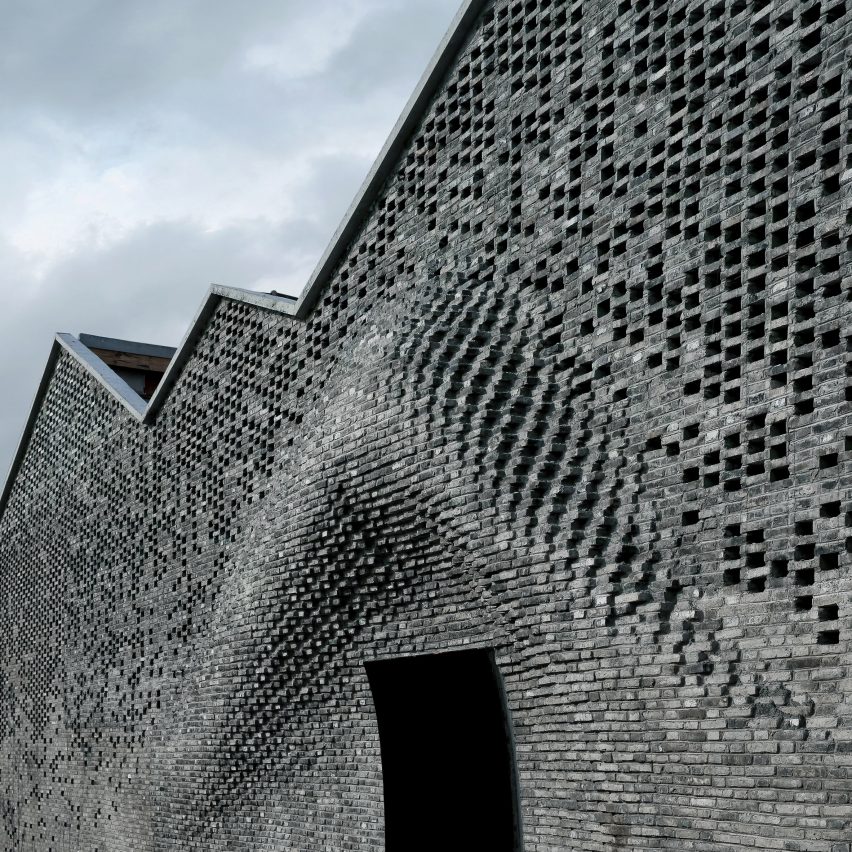
Chinese studio Archi-Union Architects programmed robots to construct the undulating brick facade of this art gallery in Shanghai’s West Bund district. Read more
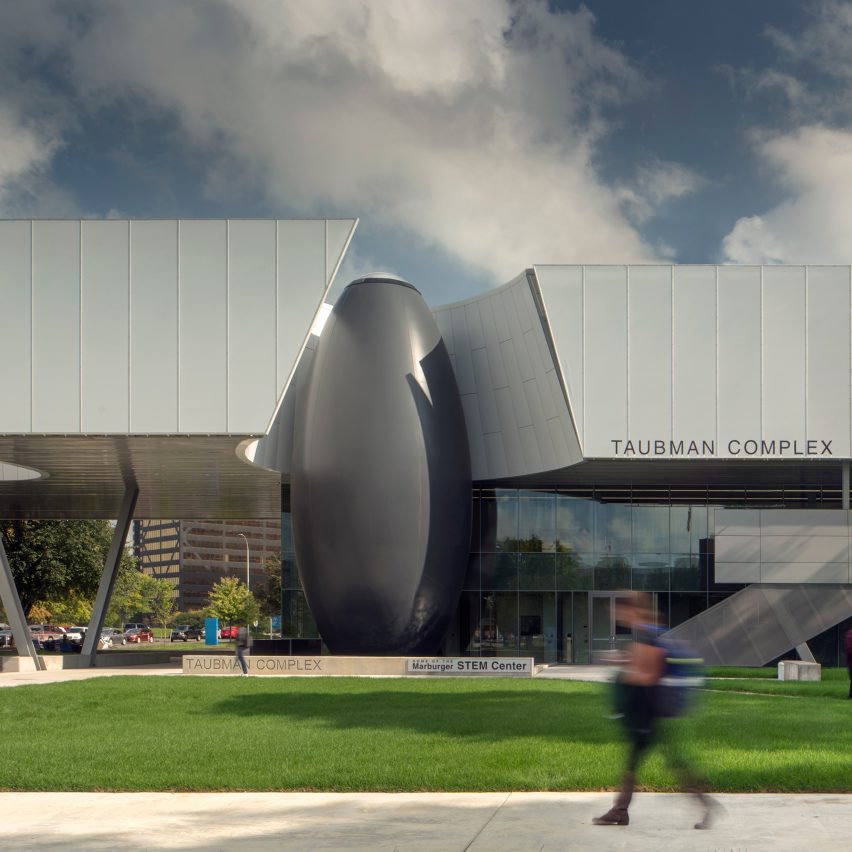
US studio Morphosis has completed a science, design and engineering facility in Michigan, which features a scrim made of ETFE plastic and an entrance stairwell contained within a black orb made of carbon fibre. Read more

