Lisa Ko on Immigration and the Inspiration for “The Leavers”

“I’m stubborn as hell,” is Lisa Ko’s pithy self-description in the “About Me” section of her blog. Herself the first U.S.-born child of Chinese immigrants, Ko, forty-two, drew upon a large percentage of bullheadedness reserves in gestating, writing and distributing The Leavers, her much-discussed first novel, published this spring by Algonquin Books after winning the 2016 PEN/Bellwether Prize for Socially Engaged Fiction. In May, Ko discussed her plot, her characters, and her process in pithy conversation with Kaitlyn Greenidge (whose own well-wrought debut novel, We Love You, Charlie Freeman, received similarly enthusiastic critical approbation upon its 2016 publication), before responding to questions from the audience that attended the encounter at the Barnes & Noble branch on Manhattan’s East 86th Street. —Miwa Messer, Director, Barnes & Noble Discover Great New Writers


Kaitlyn Greenidge: Talk about the story that inspired the book.

Lisa Ko: I started writing The Leavers eight very long years ago. It was inspired by an article I’d read in the New York Times about an undocumented immigrant who had been in a detention center in Florida for over two years. What struck me most about her story is that she had a young son she had tried to bring into the U.S., and he’d gotten caught by immigration and adopted by a Canadian family. This really shocked me, and I started finding out about all these other undocumented immigrant parents who had their U.S.-born children taken away from them by the U.S. courts, adopted by mainly white American families while they were being deported or detained. It just seemed to bring up a lot about how we look at immigrant bodies, why do the parents have to go and the kids had to stay — what that says about who should be assimilated and who couldn’t.

So I started writing about a character named Holly, who paid fifty grand to get smuggled into the U.S. from China. She has a son named Deming, and one day, when he’s eleven years old, she goes to work in New York City and she never comes home. After that, Deming gets adopted by a white family, moves upstate from the Bronx; his name is changed to Daniel Wilkinson, and ten years later he starts to look for his mom. So the book is really about mother and son and what happens to them before and after their separation, and also it’s his search for belonging and family at home.

KG: I was struck that this woman, whose real-life story was so horrible, gets to have an afterlife in your novel. That’s a wonderful thing that novels can do, different from any other way of writing. Also, as I was reading, I was reminded again and again about how society has decided to classify certain bodies; we seem to think that certain people are allowed the natural benefits of parenthood and other people are not. This book plays with that question a lot.

Can you talk about writing about motherhood in particular, and writing about a mother?

LK: My character, Polly, who is Deming’s mom, is sort of ambivalent. It’s interesting that she’s not a very likable character. I like reading about unlikable women. Why do we have to be likable? We can be human. We can be ambivalent, and full of different complexities. I tried to create as human a character as I could, putting some of my own ambivalence and fear about motherhood, while also thinking about somebody in her position. She’s someone who, as a teenager, had the drive to leave this small town in China and make it all the way to New York. She’s a bit of a badass and a rebel; it makes sense that would be her character.

KG: It’s also about the relationship between a mother and a son, which is tricky to write about — a bond that isn’t explored much in fiction.

LK: The book started off with Polly as the main character. But I couldn’t stop thinking about the fact that she had this son. That became the compelling story, one I wanted to keep going with, imagining what it was like for the kids in these real-life stories to grow up in adoptive families, knowing that their parents wanted to take them but weren’t able to. What was it like for them to grow up in these white communities? What was it like to have that conflicted sense of identity and displacement? So I started writing more about his character, and it grew on me. He’s sort of a lost kid. He’s searching for belonging and searching for his mom as well, which parallels his search for identity.

KG: What is so palpable when he’s young is his fascination with his mother. She’s almost kind of a superstar for him.

LK: Yeah, and she was gone for a while, too. She can’t take care of him as a single mom, so she sends him back to China to live with his grandfather — which happens frequently with a lot of recent Chinese immigrants. So when she comes back, it’s like he’s meeting her for the first time.

KG: When you’re working on a project that long, it’s so helpful to find different communities to work in. What different writing communities did you find when you were working on the book?

LK: I started writing this book in my MFA program at City College. I also wrote it juggling many, many jobs, or during my lunch breaks. I went to residencies and sublet my apartment when I could. I’ve been part of a very important writing community through VONA, Voices of Our Nations Arts, which is a national writing workshop for writers of color. They’ve been a big support; we’ve traded work a lot as well.

KG: How did you start writing?

LK: I started writing stories when I was five years old. I was like a super-weird only child and lived in my head a lot — like I think a lot of writers do. I had a lot of imaginary friends.

KG: When did you first feel that writing was something you could do and wanted to put out into the world?

LK: It took a while to get to that path. It’s not like you grow up in an immigrant family being told, “Yeah, you should really write some fiction.” That’s like, “so your ancestors suffered for you to write a novel and not make any money . . . ” I did it on the sly. I took writing classes in college and published a few stories. But I didn’t see it as a career. It was something that I did and did and did and did, and kept doing.

KG: What’s surprised you most as you’ve gone through this book publishing process, or book-coming-out-into-the-world process?

LK: It’s been super-gratifying and amazing to see people read it and connect with it. That’s been beyond my wildest dreams. You write it in your head, alone in your apartment, and then all of a sudden a real human being is reading the words and quoting it back to you.

The post Lisa Ko on Immigration and the Inspiration for “The Leavers” appeared first on The Barnes & Noble Review.

The Barnes & Noble Review http://ift.tt/2ueF1OG

mikenudelman:These graphics explain how the world’s best pilots…

The Force

In addition to being the most exciting, suspenseful, Machiavellian book I have read this year, The Force, Don Winslow’s nineteenth novel, could serve as the set text for an entire course on ethics. In its pages notions of right and wrong, justice and law, integrity and duplicity, professional duty and personal obligation are dissected, extrapolated, and rearranged in every sort of macabre permutation.

Blue-eyed, six-foot-two, thirty-eight-year-old Detective Sergeant Denny Malone is the Staten Island–born hero-cop son of a hero-cop father and the leader of New York’s elite Manhattan North Special Task Force. Tough, smart, and committed, the four-man “pack of alphas” are “the 1 percent of the 1 percent of the 1 percent” of the city’s 38,000-member police force. They are — were — “Da Force,” blowing “through the city like a cold, harsh, fast, and violent wind, scouring the streets and alleys, the playgrounds, parks, and projects, scraping away the trash and the filth, a predatory storm blowing away the predators.” All crime is their province, but drugs and guns are their special targets — and it is drugs and guns that have landed Malone where we first meet him: behind bars, a calamity that has taken eighteen years to develop and almost 500 pages to explore.

Manhattan North Special Task Force is made up of Malone, in whose voice — filtered through a behind-the-eyeballs third person — the story is told; Phil Russo, his best pal from Staten Island; and the trilby-wearing, cigar-chomping Bill Montague, a.k.a. Big Monty. They have recently lost a fourth member, “Billy O,” killed during a raid, and he has been replaced by Dave Levin, a man who has a lot to learn (and accept) about “the Job,” as they call it. The veterans — Malone, Russo, and Monty — are honorable men by their own lights and have been frustrated by their inability to nail the big boys in the drug-and-gun trade, the men who preserve their territory through beatings, mutilations, and murders. It is only a matter of Realpolitik, then, to cook up phony reasons for entering apartments without warrants, plant guns on people they know to be criminals, or “testilie” in court in order to put the bad guys away.

The men are honorable, too, as they maintain with increasing elasticity, in accepting the gratitude of the community, gravitating from taking small freebies (coffee and donuts) to larger ones (meals and tickets) to accepting fatter and fatter envelopes of cash for various missions, on to pocketing thousands of dollars secured during drug raids. Is this wrong? Malone, finally confronting a big mess of his own making, examines his once-flexible conscience: “Told yourself it was different because you were robbing drug dealers instead of banks.” Even the ultimate: absconding with several million dollars’ worth of cocaine and selling it off to be peddled on the streets the Task Force is supposed to police, fits – barely — into the code. After all, the money will be used for their children’s college and for the survivors of their dead comrade. They’re “doing the right thing.”

The one unforgivable breach of the code is ratting on another cop, and the most grievous version of this is to rat on your partners. It is a thing of horrifying beauty to see how Winslow sets up a nightmarish sequence of traps and snares to place Malone in a situation that would seem to demand it. After years of fearing NYPD’s investigative Internal Affairs Bureau, Malone gets nabbed by the feds, and pretty soon he’s playing a fast-paced, down-and-dirty game of hardball with New York City’s power brokers, their “faces full of wealth, grit, cynicism, greed and energy.”

That this fine novel will be a movie is not in doubt. It is filled with exhilarating details of weaponry, court maneuvers, and New York’s lowlife, and is punctuated by blood-rousing action scenes. It is also leavened along the way with jokes and nicely cynical wisecracks. (“When the pope came to NYC, Malone wanted to arrest him.”)

But above all, Winslow brings the same mastery of the anatomy of corruption to this book that he brought to the Mexican drug trade and our ruinous “war on drugs” in The Power of the Dog and The Cartel, his brilliant duo of narco-thrillers. Laying bare the intertangled ganglia of criminal enterprise, law enforcement, the justice system, and politics, he displays a deep and unsavory knowledge of how things work in NYC, from the distribution of street territory among various ethnic criminal gangs to the running of the “Iron Pipeline,” whereby guns from southern states with negligible gun laws make their way up Interstate 95 into the arsenals of northern crime bosses and onto the streets. Finally — and, if I may say so, gloriously — he illustrates the sanitized involvement of real estate moguls, judicial officials, and the mayor’s office in the whole dirty business. And, even if the novel’s end, a melodramatic Götterdämmerung, is not entirely believable, it is perfectly satisfying.


The post The Force appeared first on The Barnes & Noble Review.

The Barnes & Noble Review http://ift.tt/2uDsF5t

A Test for Consciousness?

Parks: You can’t prove, scientifically, this idea of experience being buffered or delayed in neural eddies.

Manzotti: At this stage, no. Neuroscientists can’t disprove it, or prove that the experience is “generated” in the head. But let’s remember, we do science by forming a hypothesis, making predictions in line with that hypothesis, and inventing experiments that prove or disprove the hypothesis.

http://ift.tt/2uf2QaA

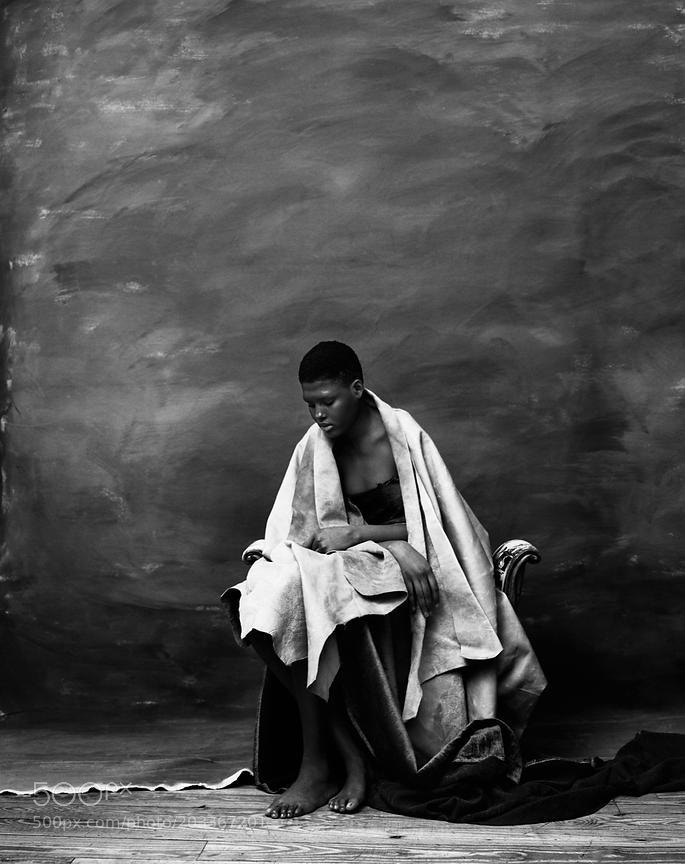
Stillness in a Captured Moment by SterlingBatson

Test shoot with Tiffany from Elite Models NYC.

Mamiya RZ67
Kodak Portra 120 Film

http://ift.tt/2ucMfmn

Modern Extension to a Home in Bucharest, Romania

This project concerns the expansion of an already-existing home. It consisted of a generous plot of land atop which a 100 square meter house was located. The home had a basement, a ground floor, and first floor, and an attic. It is located in Otopeni city, which is adjacent to Bucharest, the capital of Romania. The design was undertaken by LAMA Arhitectura, more specifically by Dan Enache and Calin Radu,..

More…

The wild beauty of the North Dakota badlands inspired a young…

The wild beauty of the North Dakota badlands inspired a young Theodore Roosevelt to build a ranch and create his personal western getaway near the Little Missouri River. Despite the failure of his attempts to raise cattle, the land enchanted and challenged Roosevelt, forever changing the way he approached life. Visitors to Theodore Roosevelt National Park can experience the unique landscape as Roosevelt did and honor his memory. Photo by Abhilash Itharaju (http://ift.tt/18oFfjl).

Home in the Mountains of Brazil Designed by ARKITITO Arquitetura

This home, located in the mountains and surrounded by thick vegetation, was designed by the architectural firm ARKITITO Arquitetura in 2014. It covers a ground area of 260 square meters and is located in Condomínio Serra dos Cristais, Fazenda Velha, Cajamar, which is 45 kilometers north of São Paulo, Brazil. The plot of land on which it sits is located on a hill, which creates a differences of level to..

More…

Changing Trends in the Way Families Buy Homes

Owning a home gives families a sense of independence and security. However, in buying a house, numerous factors influence the family’s choice. They may face economic, socio-cultural, psychological, demographic and personal issues.

In the past, all decisions related to buying a home were primarily made by the male members of the family. However, in today’s times, the same decision is now unanimously taken. All family members can voice their opinions and all needs and preferences are taken into consideration, irrespective of age or gender.

Let’s look at the some of the changing trends affecting the way families buy homes.

A Shift from Joint Family Set-ups to Nuclear Lifestyles

nuclear lifestyle

In earlier times, most family set-ups were joint, with closely-related members living in their ancestral home. But, as the population and economy of the country grew, this previously popular lifestyle saw a major shift.

Today’s nuclear family set-up created radical changes in the family’s process of buying a house. There are fewer members in a nuclear family and buying decisions have aligned in the same direction. One good example is space. Fewer family members won’t need as much space so houses tend to be smaller.

Placing children’s needs at the forefront

While making any property-related buying decision, parents and grandparents tend to consider the needs of their children to a great extent. They opt for houses which are airy, well-lit and which have a positive impact on their children’s growth, health and well-being.

Parents also put sufficient thought on their kids’ safety. They take into account the community’s recreational amenities, like parks, pools or playgrounds when buying a house. Additionally, families tend to prefer residential properties which have good schools in the vicinity along with options for extracurricular activities. Parents are more than willing to compromise on their own needs as long as they meet their children’s needs.

Compact homes over out-sized properties

Nuclear families these days prefer compact and self-sufficient homes. This justifies the large number of families opting for space-efficient apartments and flats over sprawling properties.

One good reason families prefer flats over stand-alone properties is because of better social interaction. In addition to that, maintaining a large property can also be quite a hassle, especially when the family is small. Apartments are also more secure and homey for such family size.

Accessibility and proximity

school accessibility

Most apartment complexes today offer convenience to attract more families to buy them. Malls, clubs and sports facilities are all within walking distance of these complexes so families won’t have to spend any time or money on transportation. A lot of them offer basic needs, too. Grocery stores and dry cleaning services are usually just a few feet away from them.

If a housing complex just offers apartments, then families will look for flats that are in close proximity to important facilities, like schools, healthcare, medical stores and retail outlets for added convenience. With the basic amenities within a stone’s throw from their homes, efficiently managing day-to-day activities and maintaining a good work-life balance becomes much easier for smaller families.

Properties with resale value

Families tend to move to larger homes in better locations as their financial status improves. Job changes or increase in the number of family members are also plausible reasons why families look to upgrade to a larger or better home. Thus, families prefer buying homes in prime locations that have a good resale value in the future. For instance, according to a Knight Frank survey, home buyers prefer to move to newer projects with better facilities and those that are closer to the city.

See Also: 10 Important Home Features That Home Buyers Want

To sum it up

With improvement in job prospects, purchasing power and lifestyle, families have undergone a shift in terms of how they invest in properties. There has been a considerable change in the past two decades and families have started weighing in many factors which were earlier considered unimportant while buying a home.

The post Changing Trends in the Way Families Buy Homes appeared first on Dumb Little Man.

http://ift.tt/2ubOSVt

How to Change Habits: 5 Proven Tips

Note: This post is written by Gabriel Smith

Almost half of the decisions you make are simply based on habits.

According to a paper published by Duke University, habits are neurological shorthand that frees our minds from the stress of decision making. This behavioral shorthand gives us more bandwidth to focus on unique tasks of our lives.

Most of us form habits unconsciously, wiring our brains into life-sucking routines that are seemingly impossible to short circuit. Quitting bad habits can be hard, but new research shows you can make a permanent change with the right tools.

Here are five tips on how to change habits.

1. Recognize Your Triggers

Recent research in neurobiology has changed how researchers think about habits. Past research focused on changing the routine of the habit, not on which cue triggers it. By studying triggers and rewards, researchers have gained more insight into how habits really form.

Habits are routines triggered by cues, like a time of day, and reinforced with a reward, like food or socialization. In order to change the routine, you need to become aware of the cues that create a habit and what reward you gain out of it.

Charles Duhigg, the author of “The Power Habits,” summarizes this research well:

“Scientists have explained that every habit is made up of a cue, a routine, and a reward. The cue is a trigger that tells your brain to go into automatic mode and which habit to use. Then there is the routine — the behavior itself — which can be physical or mental or emotional. Finally, there is a reward, which helps your brain figure out if this particular habit is worth remembering for the future. Over time, this loop — cue, routine, reward; cue, routine, reward — becomes more automatic as the cue and reward become neurologically intertwined.”

So, the first step to change a habit is to recognize in what context your habit is triggered. For example, is your desire to smoke increased by being around certain people, a certain place, or after a meal? Gaining consciousness of these subconscious cues empowers you to take the next step for change.

2. Rewire Your Routine

Once you are aware of what triggers your habit, the next step is to either create a plan that hijacks these old cues with a new routine and reward or find a new cue to create a routine and reward around.

After you have created a plan for the new habit you want to cultivate, you are on your way to creating your new routine. Once you are able to identify how your habits work, you have the tools to override your “bad” habits with new ones.

3. Reward Yourself

When evaluating what habit you want to change, you also have to recognize the benefit that habit provides and replicate that reward in the new habit you are creating. Choose a reward that you truly enjoy. For example, if you want to start exercising, your reward could be a small piece of chocolate.

Depriving yourself of a genuinely satisfying reward and relying on “willpower” to create a new habit goes against how your brain creates new neural pathways and habits. Or as Jocelyn Glei, author of “Unsubscribe: How to Kill Email Anxiety, Avoid Distraction, and Get Real Work Done,” puts it:

“If you want to get rid of a bad habit, you have to find out how to implement a healthier routine to yield the same reward.”

4. Sleep and Eat Appropriately

A good night’s sleep rests our brain as well as our body. A well-rested brain handles the stresses of decision making better than a sleep-deprived one. If you are sleep-deprived, your brain is tired and stressed, reducing your ability to make decisions that are not habitual. A tired brain slips into old habits quicker than a well-rested one.

Dr. Sujay Kansagra, director of Duke University’s Pediatric Neurology Sleep Medicine Program and a sleep expert for Mattress Firm, recommends, “For adults, a full night’s sleep is typically between seven and nine hours, but everyone is different. So, how do you figure out how much sleep is best for you? If you don’t have any other sleep problems (e.g. sleep apnea), you should wake up feeling refreshed in the morning after a full night of sleep.”

Low blood sugar also stresses out your body and brain. If you don’t eat good food every couple of hours, your blood sugar drops, causing you to be cranky and crave carbs. This state of mind and body inhibits your ability to make rational decisions.

To avoid a drop in your blood sugar, and thus your decision-making ability, it is recommended that you eat a snack or meal every three to five hours.

5. Forgive Relapses and Keep Going

Changing a habit is hard because you are creating new neural pathways or rewiring your brain. You are going to fall back into old habits once in a while—especially in times of stress. Don’t let a relapse discourage you. The best thing to do if you fail is to keep trying.

Remember, once you know how your habit works, you have the power to change it.

“What we know from lab studies is that it’s never too late to break a habit. Habits are malleable throughout your entire life. But we also know that the best way to change a habit is to understand its structure — that once you tell people about the cue and the reward and you force them to recognize what those factors are in a behavior, it becomes much, much easier to change,” said Charles Duhigg in an NPR interview.

– About the Writer –

Gabriel Smith is an ex-business student turned writer and health and wellness expert, finding motivation from his former life as a competitive athlete and trainer. He regularly shares insight on self improvement, self sufficiency, and how humans can better their lives.

http://ift.tt/2vm25v3