Greenfield’s raw material, materialism, is candy-colored and stimulating. It is also almost uniformly depressing. In “Generation Wealth,” she shows us the self-starved bodies of the affluent young, among their parents’ magma-flow of possessions. We see their marmoreal homes, their beauty regimes, and their fathers’ younger, heliotropic second wives. The overall affect of the exhibition’s packed two floors and the accompanying book, a dense gold brick with some 650 images, is nihilism. At times, it even feels gleefully so.
Month: January 2018
Murderous Majorities
Majoritarian politics results from the patiently constructed self-image of an aggrieved, besieged majority that believes itself to be long-suffering and refuses to suffer in silence anymore. The cultivation of this sense of injury is the necessary precondition for the lynchings, pogroms, and ethnic cleansing that invariably follow.
Walmart reveals the most bizarre top-selling items in every…

Snow clings to the jagged sides of Devils Tower National…

Snow clings to the jagged sides of Devils Tower National Monument in Wyoming. This astounding geologic feature is considered sacred to the Northern Plains Indians and other tribes, who call it “Bear’s Tipi” or “Bear’s Lodge.” Winter activities include hiking and cross-country skiing, but a word of caution: trails are not maintained during the winter months. Check out more amazing photos of public lands in winter: https://on.doi.gov/2Bt6ijV. Photo by National Park Service.
At War with a Story: The Uncanny Fiction of Barbara Comyns
There’s an insidious mood found in the novels of Barbara Comyns, an unsettling evocation of that place where the familiar falls away and reveals the uncanny, the supernatural, and the unknown. Over the course of her 1954 novel Who Was Changed and Who Was Dead — whose title gives a sense of the dread conveyed in its pages — the members of a family slowly give in to a pernicious madness that spreads like disease, turning the novel’s invocation of the pastoral charms of the English countryside into something far more menacing.
Comyns’s 1959 novel The Vet’s Daughter explores the tense relationship between a father and a daughter, but it’s laced with the latter’s supernatural abilities. By the time of the novel’s climax, they accelerate the book — which has previously fallen largely into the “chamber piece” category — into full-blown gothic horror, the repressed suddenly coming to the forefront, a host of menaces in tow.
For those unfamiliar with Barbara Comyns’s work, it’s not misleading to compare her with Shirley Jackson: both explored ambiguous spaces between psychological realism and hallucinatory revenants; both also excelled at traveling into the minds of troubled young women possessing strengths and dangers in equal measure. And like Jackson’s, Comyns’s work has plenty of contemporary champions: in a 2014 interview in The Guardian, Helen Oyeyemi spoke of her admiration for Comyns’s 1962 novel The Skin Chairs; and in 2010, Brian Evenson wrote the introduction for a new edition of Who Was Changed and Who Was Dead.
But to simply file Comyns among the practitioners of the deeply weird and the subtly uncanny is to miss something about her work. She was also capable of writing a gut-wrenching story in a realist vein: consider the 1950 novel Our Spoons Came from Woolworths, in which she wrote frankly about a woman falling out of love with her husband and experiencing the devastating effects of chronic poverty. (It’s not for nothing that the introduction to NYRB Classics’ recent edition is by Emily Gould, whose fiction excels in astute observations of how class inflects the dynamics of love and friendship.)
The Juniper Tree (1985) was the first of three novels Comyns published in the 1980s, before her death in 1991. It occupies a fascinating position in its relationship to both the fantastical and the mundane. It’s a realistic story about a single mother trying to make the best of her life in London and, eventually, navigating a troublesome marriage; it’s also an adaptation of a fairy tale — an Ur-story that takes on its own increasingly powerful role in the characters’ lives.
“My mother she killed me, / My father he ate me,” goes the song contained in the fairy tale “The Juniper Tree.” It’s an obviously unsettling piece of verse; it’s one where the voice is resigned to its fate, and it’s one in which the familial and the horrific are fully intertwined. It’s not for nothing that an award-winning anthology of contemporary fairy tales from 2010, edited by Kate Bernheimer, used this as its title.
In the case of Comyns’s novel, it serves as the epigraph and hangs disconcertingly over the proceedings, signaling that something terrible is on the horizon. Which isn’t to say that the novel doesn’t have plenty of ugliness from the outset: protagonist Bella Winter is a single mother doing her best to provide for her daughter, Marline, and make a living for herself. Marline is biracial; Bella’s mother, who can barely contain her racism (and sometimes doesn’t), is of no help to the family and frequently alienates both her daughter and granddaughter.
An early glimpse of Bella’s adolescence puts that bond into sharp focus, helps establish the novel’s theme of flawed parent/child relationships, and gives a great sense of Bella’s narrative candor.
My mother was the games mistress at a local school which I attended. At first the girls teased me and called me “teacher’s pet,” but when they saw how she treated me the teasing ceased.
Bella’s father abandoned the family when his daughter was young, causing a lasting rift between mother and daughter and setting this flawed familial dynamic in motion.
Early on, Bella’s situation seems dire: she struggles with poverty, and she bears the literal scar of an old relationship: a mark on her face that resulted from an auto accident caused when she was out for a drive with a former boyfriend. Slowly, her circumstances improve: she finds a job working at a shop and discovers that she’s quite good at it. It’s through that job that she meets and befriends Gertrude Forbes and her husband, Bernard, an affluent couple who live nearby. If Bella’s mother is a case study in alienating behavior, Gertrude is quite the opposite: a nurturing, caring figure who buoys the spirits of everyone around her.
Soon enough, Gertrude and Bernard are expecting their first child. Throughout the first half of the novel, Comyns balances these small joys with Bella’s distinctive narrative voice: sometimes self-effacing (her scar seems far worse in her own description than when others allude to it), sometimes understating some quiet horrors until the sheer scale of them trickles out. It’s an impressive way of balancing the bleaker aspects of this narrative with its moments of happiness. But lurking over everything is the fairy tale song in the epigraph and all that it portends. Besides its mention of a murderous mother and a cannibalistic father, it also alludes to a sister named Marlinchen.
All of this, then, lends a cast of inevitability to what comes next. Circumstances place Bella and Bernard together, as she does her best to raise Bernard and Gertrude’s son, Johnny, alongside Marline. On the one hand, this is a novel told in a realistic tone, about a hardworking, unflappable character making her way in the world. Under the rules of such a novel, a happy ending seems likely. On the other hand, there’s the fairy tale at the beginning, which suggests that a much bleaker outcome is on the horizon. Bella has become a stepmother; stepmothers rarely fare well in fairy tale narratives, both in terms of their actions and in terms of their fates. And as Johnny grows older, into someone who was “by nature an obedient boy, particularly when his father was not around,” he becomes a figure over whom danger hovers, solely due to his role in a narrative much older than him.
Throughout the novel, Comyns balances expectations, shifting seamlessly from one mode to the other, allowing two different sorts of tragedy to intermingle. Given that this novel subverts the trope of the wicked stepmother, it’s not ludicrous to think that it and Helen Oyeyemi’s similarly minded Boy, Snow, Bird would make for a fine literary double bill. In a recent essay by Leslie Jamison, about her own process of becoming a stepmother, Jamison described the process of reading fairy tales to her stepdaughter.
When I read her the old fairy tales about daughters without mothers, I worried that I was pushing on the bruises of her loss. When I read her the old fairy tales about stepmothers, I worried I was reading her an evil version of myself.
Everyone wants to believe they are the hero of their own story. Many people look to archetypal narratives to find one that mirrors of echoes their own life. But what happens when those archetypes suggest that you’re destined to be the villain of the story? While there are no overtly supernatural elements in The Juniper Tree, that sense of fate — of the accumulated power of hundreds of old stories taking on a malevolent form of agency — ultimately becomes the novel’s antagonist. Bella is capable of great love; her ability to protect her daughter is admirable and frequently heroic. But in the course of the novel, she’s one person; the weight of so many stories is like a force of nature.
If all of that makes The Juniper Tree sound as though it’s about a subtly waged war between ages-old stories and the shorter-lived humans who hear and retell them, that impression isn’t too far off the mark. And while this isn’t in full-blown Neil Gaiman or Jorge Luis Borges territory, it shares with the works of those writers the sense of how stories can infiltrate and influence the tactile world. One can read The Juniper Tree as a realistic tale of one woman’s shifting fortunes, or one can regard it as something more complex and almost metafictional. But what endures, besides the chilling weight of the tragic events that punctuate the narrative, is the way in which another narrative envelops this one, a ghost of a story that haunts the proceedings. Barbara Comyns could vividly depict the grit of life’s hardships just as easily as she could take readers past the border of the strange. In The Juniper Tree, she memorably did both.
The post At War with a Story: The Uncanny Fiction of Barbara Comyns appeared first on The Barnes & Noble Review.
The Barnes & Noble Review http://ift.tt/2A6jjOn
Your New Year’s Resolution: Better Recycling Practices
Beauty is in the eye of the beholder. That’s an old classic saying, but is it true?
How about garbage? Is garbage beautiful?
Maybe, if you know how to make it “un-garbage”.
Take this year as an opportunity to do the planet a great favor by avoiding the landfill in favor of recycling.
Science Weighs In
In a closed system, like the Earth, where very, very little mass ever exits orbit to enter outer space, the total amount of energy can change from one form to another, but cannot ever be destroyed.
The things we make out of any material, whether simple or complex, natural or synthetic, organic or inorganic, are going to stay right here in our neighborhood garbage dump or even in the ocean when we are done using them.
So, challenge yourself and assess your recycling practices.
Glance around your room for about 30 to 60 seconds. Try to imagine the length of time the items you see will remain in a useful condition. This length of time is called ‘the useful life of an asset’ by the United States Internal Revenue Service.
If you see a lot of things that can be used for a long time, then that’s great! However, if you see more things with lower useful life, then that’s going to be a problem.
For example, gadgets and other products of technology are great when they are new. They are useful and enjoyable to use. Once newer and more innovative devices are introduced, your gadgets become less and less useful.
Removing the old technology, sometimes called e-waste, is a huge problem in both personal and business settings.
Getting Practical
Practice makes perfect. Now, that’s not quite correct as only perfect practice makes perfect. Imperfect practice makes imperfection and that is the recycling system of today. We are, as a whole, still uneducated on the correct recycling procedures.
For example, what is the negative result that comes from single-stream (unsorted) recycling?
The answer is often unsorted trash put in the recycle bin that doesn’t end up getting properly recycled at all.
How and Why to Recycle the Weird Stuff
If you’re not sure where to start with recycling, here are a few tips you can use:
Aerosol Cans– Valuable for their steel, they may go in a bin or taken to a recycling center.
Car Batteries– Valuable for their lead, you can turn them in for money at a scrap yard.
Pet Fur– Valuable for its ability to absorb oil, you can donate them to proper institutions. Pantyhose– Valuable for its nylon, they can be repurposed as well as recycled because they are stretchy and strong.
Vegetable Peels– Valuable for making dirt, you can turn them into fertilizers.
See Also: How To Recycle Copper Scrap
Disasters Spell Disaster for Recycling
When destructive natural causes wreak havoc in a certain area, caring for survivors, preventing diseases, and restoring health and safety services as soon as possible are top priorities. The most vulnerable segments of society suffer deeply in times of natural disaster and unfortunately, there’s a disparity in the fair distribution of resources and aid. Removing damaged and dangerous remnants, even when help arrives swiftly, can still take all too long to accomplish.
Because there are so many things we have to deal with during a natural disaster, recycling isn’t given much priority. There’s not enough room to add a recycling mandate on the clean-up crews’ list of responsibilities and this can spell bad news. There’s the risk of exposure to black mold, sewage contamination or storm residues.
When times are okay and we’re not dealing with any disaster, we hardly think about access to clean water and air. We enjoy uninterrupted services and access to the goods we want to buy and use. The only time we think about and appreciate those things is during a natural disaster.
This year, don’t wait for a disaster to strike. Start doing better recycling practices to avoid regrets later on.
See Also: 10 Ways to Enjoy a Zero-Waste Lifestyle
The Future is Now
We said progress and progress we shall have.
Waste can become a resource and a path for revenue. Since the concept of recycling has improved over the years, it’s now making more of a difference than ever before.
That’s the good news.
Ecologists, environmentalists, and ordinary people who participate in increasing society’s awareness on recycling continually work hard to improve the quality of the recycling process. They put an effort to let in more types of products, process more substances, and form new goods out of old materials.
Students in college programs majoring in ecology and environmental studies in the U.S. and abroad are working hard before and after graduation to contribute to our sustainable future.
Garbage is beautiful when it is the topic of a positive problem-solving conversation. The infographic below has a number of salient talking points to get us speaking (and listening!) together about caring for our big blue and green planet.
Let’s recycle and be smart!
Source: It’s Not Trash
The post Your New Year’s Resolution: Better Recycling Practices appeared first on Dumb Little Man.
World’s Largest Street Photography Platform Highlights International Emerging Talent
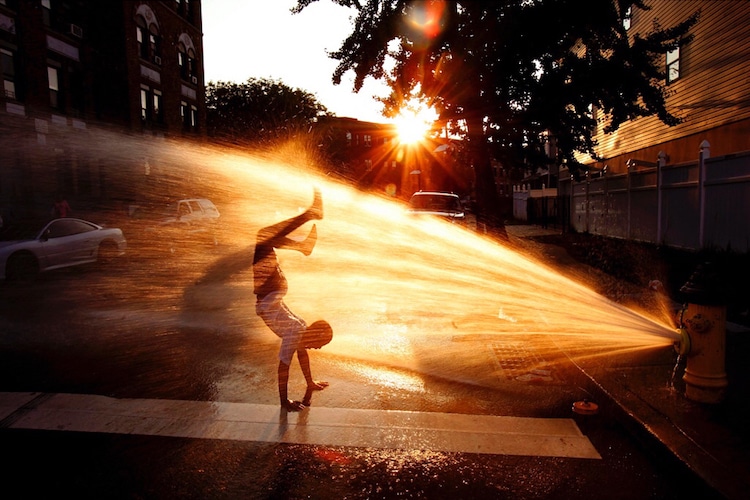
Photo: Aristide Economopoulos
Street photography, it’s a classic genre that’s taken on renewed interest over the past decade, as mobile photography has made it easier than ever to shoot and share the world around us. Taking cues from the great masters of street photography—Henri Cartier-Bresson, William Klein, Walker Evans—a new generation of contemporary street photographers are visually documenting daily life. And now, there’s a new street photography collective to help share their work with a wider audience.
Run by seasoned photographers—Walter Rothwell, Craig Reilly, Emily Garthwaite, and Alan Schaller—Street Photography International (SPi) is a platform to highlight emerging talent. With 420,000 followers and 11 million monthly views on Instagram, their carefully curated stream of images are from both member and non-member photographers.
“SPi was made for photographers, by photographers, which is why I think it is proving so popular. We wanted to build a platform for unrepresented photographers with talent,” Schaller, who we recently interviewed, shared with My Modern Met. “The majority of the photographers we have featured do not have a large following, but have at least one stellar image. We prefer to involve photographers alongside our members as we know there are so many great photographs out there that deserve to be seen.”
Photo: Emily Garthwaite
In just two years, SPi’s following has grown quickly, with more than 60,000 photo submissions a month from around the world. This has encouraged SPi to expand their project into events like the SPi Street Awards. This new photography contest was open to international street photographers, with winner Merel Schoneveld and 20 finalists getting the chance to exhibit their work at a London gallery.
For Schaller and the other founding members, SPi is a way to share the genre they love with an increasingly enthusiastic public. “People are documenting their daily lives more and more, and I think that has led to people noticing the genre and having a go themselves,” says Schaller. “Most of all it is fun and can prove quite absorbing. It can be done anywhere without the need of fancy camera gear, models or lighting.”
Indeed, a look at SPi’s Instagram account shows the incredible variety of techniques from photographers around the world. Whether in color or black and white, there’s a huge array of styles on view. From lighting to compositional choices, each of the photographers put their unique imprint on their candid photographs.
And just who are the photographers that are featured on SPi? Some non-members are professional photographers, like Aristide Economopoulo, a staff photographer for a New Jersey newspaper, while others, like Alireza Aali are still students. The common thread: a keen eye and love for documenting the world.
Street Photography International was founded as a platform to help promote emerging street photographers from around the globe.
Photo: Alan Schaller
Photo: Meryl Schoneveld
Photo: Arnaud Montagard
Photo: Alireza Aali
Photo: Emily Garthwaite
Its four members—Craig Reilly, Emily Garthwaite, Alan Schaller, and Walter Rothwell—curate SPi’s highly followed Instagram feed.
Photo: Walter Rothwell
Photo: Jeremy Perez-Cruz
Photo: Shin Noguchi
Photo: Meryl Schoneveld
Photo: Ozgur Cakir
More than 60,000 photographs a month from international street photographers are submitted for consideration.
Photo: Craig Reilly
Photo: Libby Holmsen
Photo: Navin Vatsa
Photo: Diego Herculano
Photo: Alan Schaller
Street Photography International: Instagram | Website
My Modern Met granted permission to use photos by SPi.
Related Articles:
Photographers Share Real-Life Perspective of Everyday Life in Africa
10 Street Photographers Who Are Immortalizing Our Modern World
Intimate Portraits Capture the Rarely Photographed Faces of Morocco
Interview: Photographer Captures Candid Color Images to Authentically Define City Life
The post World’s Largest Street Photography Platform Highlights International Emerging Talent appeared first on My Modern Met.
A step-by-step guide to get richer, healthier, and happier in 31…

Photographer Creates Poetic Collages by Seamlessly Blending Stock Photos
Inspired by the world around him, young digital artist Justin Peters creates surreal and serene collages that merge unexpected elements to great success. At just 22 years old, he’s carrying on a long tradition of collage art, which has evolved from Cubist masters to the contemporary age of digital art.
Using images he sources from stock photography sites, Peters blends together his surreal scenes, which often have a sentimental tinge. From a boy sitting on the beach next to a glowing moon to a girl diving underwater, transforming into a jellyfish, Peters selects the perfect combination of elements to elicit emotion.
And while he’s inspired by Surrealists like Salvador Dalí, Vladimir Kush, and Rob Gonsalves, Peters has cultivated a style uniquely his own in the short time he’s been creating digital art collages. Beginning just over a year ago during the summer of 2016, he’s already emerged as a talent to watch. Particularly drawn to elements of science and nature, he manages to instill each piece with a sense of realism that is suddenly broken upon close inspection. By keeping the emotional charge alive in each collage, he’s able to surprise and delight his viewers through the subtle details of each composition.
Artist Justin Peters makes surreal collages by merging together images found on stock photography websites.
The up and coming digital artist has only been creating his collages since the summer of 2016.
He’s inspired by Surrealist painters, as well as ordinary objects.
Justin Peters: Website | Facebook | Behance | Instagram
My Modern Met granted permission to use photos by Justin Peters.
Related Articles:
Catastrophic Digital Collage Art
Artist Uses Age-Old Technique to Create Photomontages of Surreal Indoor Landscapes
Intricately Handmade Collages Offer a Seamless View of Otherworldly Scenes
Surreal Collages Blend Vintage Elements to Create Intriguing Scenes
The post Photographer Creates Poetic Collages by Seamlessly Blending Stock Photos appeared first on My Modern Met.
Happy New Year! Start off 2018 with a public lands adventure. We…

Happy New Year! Start off 2018 with a public lands adventure. We recommend seeing a sunrise at Grand Canyon National Park in Arizona. The massive landscape, amazing layers and streaking sunlight create a moment that will whet your appetite for a year’s worth of outdoor experiences. Photo by Erin Phillips (http://ift.tt/18oFfjl).
 Sig Nordal