5 Strategies for Dividing Household Duties

There it sits. The very full, nearly over-flowing garbage can. You see it there. You know your partner has seen it there, so now the stand-off begins. Will you take it out, or will your partner? You ask yourself, “why am I the only one who does this?” “Doesn’t he/she notice it?”

Inequity in household duties can cause stress and resentment in an otherwise happy relationship. While each of you are perfectly capable of handling all the many things that need to be done, the bulk of the daily duties often falls on the shoulders of one partner more than the other.

So how do you combat a lopsided division of responsibilities? Below are 5 strategies to assist in dividing up household chores.

Begin by making a master list of all chores. You can include things like grocery shopping and dog-walking or any other dreaded duties. To ensure that nothing is overlooked, the list should have the input of both partners.

Consider Timing

dividing chores

Do your work schedules differ? Maybe one of you is an early riser and the other a night owl. Look at your list of the regular chores and see when things typically need to happen. Which day does the garbage go to the curb and who is home earliest to do that? Some things can be done more easily in the morning than in the evening.

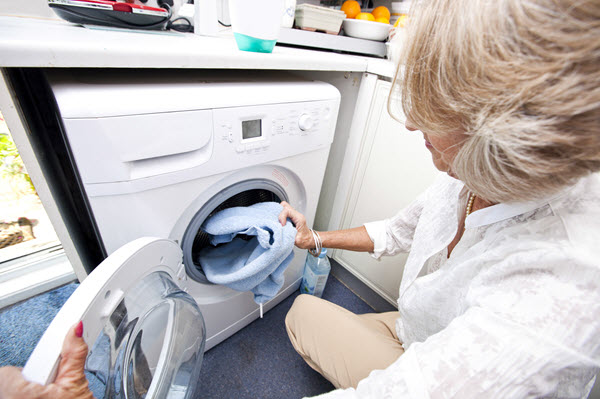
Laundry, for instance, can be started in the morning before work and finished in the evening when the first person is home. So perhaps one of you can collect and put clothes in, and the other can take out and deliver to the appropriate rooms.

Particulars

Do you like the towels folded a certain way? Will your partner get frustrated when you load the dishwasher wrong? If so, then divide out chores by the ones that you each have opinions about.

If you can’t stand the way he/she handles a particular chore then you really should do it yourself. If you would like to see the vacuum marks go diagonally then you should be the one to do the vacuuming. Same principal applies to your partner.

If/Then Method

delegating household chores

Balance it all out by using the if/then method. If I cook, then you clean. If I wash, then you dry. If I clean the bathroom, then you clean the kitchen, etc.

This can work wonderfully for many couples because it also plays into each other’s strengths. Often one partner likes to cook, so it’s only fair that the other cleans. It also creates an atmosphere of fairness and collaboration. You are working as a team in a yin and yang manner.

Old Fashioned Calendar

Do you each hate cleaning the bathroom? Is taking out the trash a stumbling block? Then, much like the chore charts of youth, set a calendar with the days or weeks that you each take turns for those responsibilities.

Perhaps you can take the trash to the curb on the week the recycle goes out and your partner takes it down on the green waste weeks. Or, bathroom duty falls to each of you every other week (or day depending upon your level of tidiness).

Keeping a calendar also ensures things get done. It is very easy to forget that the top of the refrigerator needs cleaning, or that the air conditioning filters should be changed. Writing these things down will help make sure they happen.

Division by Room

If none of the other strategies are working well, consider each of you taking responsibility for a room. For instance, if you have more than one bathroom, you can each take one. One of you can take kitchen duty and the other laundry room and laundry. Then, like it or not, those spaces and all that goes with them are the responsibility of one person. This method, however, should probably be kept track of on a calendar to ensure that who is responsible for what is clear.

Having a system to get household items handled can take stress off of each of you. Most of the day-to-day responsibilities are mundane and therefore easy to avoid. But avoiding the garbage does not mean it doesn’t need to be emptied. By working together, you are likely to find these things get done more quickly and without much additional thought. And, you will no longer have to play chicken with the garbage.

See Also: The Six Best All-Natural Cleaners for Your House


The post 5 Strategies for Dividing Household Duties appeared first on Dumb Little Man.

http://ift.tt/2upnWVG

Jo Nesbo

Every author has a story beyond the one that they put down on paper. The Barnes & Noble Podcast goes between the lines with today’s most interesting writers, exploring what inspires them, what confounds them, and what they were thinking when they wrote the books we’re talking about.

For many writers, the word “vampire” conjures visions of immortal beings of vast powers and romantic destinies. For Jo Nesbo, it meant research into the annals of abnormal psychology, into a world of delusion and obsession more disturbing than any supernatural fable. In this episode of the podcast, the bestselling Norwegian writer talks with Bill Tipper about the stranger-than-fiction cases that inspired The Thirst, Nesbo’s latest novel to feature the world-weary and painfully honest Oslo detective Harry Hole.

//html5-player.libsyn.com/embed/episode/id/5620573/height/90/width/640/theme/custom/autonext/no/thumbnail/yes/autoplay/no/preload/no/no_addthis/no/direction/backward/render-playlist/no/custom-color/87A93A/


The murder victim, a self-declared Tinder addict. The one solid clue—fragments of rust and paint in her wounds—leaves the investigating team baffled.  Two days later, there’s a second murder: a woman of the same age, a Tinder user, an eerily similar scene.

The chief of police knows there’s only one man for this case. But Harry Hole is no longer with the force. He promised the woman he loves, and he promised himself, that he’d never go back: not after his last case, which put the people closest to him in grave danger.

But there’s something about these murders that catches his attention, something in the details that the investigators have missed. For Harry, it’s like hearing “the voice of a man he was trying not to remember.” Now, despite his promises, despite everything he risks, Harry throws himself back into the hunt for a figure who haunts him, the monster who got away.

See more from Jo Nesbo here.

Like this podcast? Subscribe on iTunes or Stitcher to discover intriguing new conversations every week.


The post Jo Nesbo appeared first on The Barnes & Noble Review.

The Barnes & Noble Review http://ift.tt/2vmXTLO

Luxurious and Enchanting Hotel in Normandy, France from the Seventeenth Century

It seems like something out of an old tale, this wonderful construction located in the high parts of the pretty coastal town of Honfleur in Normandy, France. It was originally built in the 17th century as a traditional Norman house with slate roofs and half-timbered walls. The structure is now a charming Relais & Châteaux hotel, offering a gourmet restaurant and a fabulous spa, complete with an indoor pool, fitness..

More…

Roof Issue: Why Metal Is Better Than Asphalt Shingles And Tiles

Just as there are so many types of houses, there are also just as many types of roof. Materials, design and quality vary from one roof to another. In fact, roofs can differ from one country to another.

Japanese people like edgy and pointed tiled roofs that elicit an elite vibe. There are straw roofs in the Philippines as well that can help regulate room temperature in spite of the scorching heat in the country.

In some areas of South America, some houses use the old roofing method with clay tiles. Meanwhile, Great Britain and Ireland have so many gabled roofs that look elegant.

Each roof requires different materials and these materials have distinct maintenance needs.

Roofs may be difficult to maintain because, for one, you need to climb the top of your house just to fix it. On the other hand, for some types, you have to call for a roof repairing shop and pay them just to get your roof done.

Maintaining a roof may be quite a bane but, as homeowners, we should know how to find out when it is damaged and what we need to do to keep it in good shape. If you think asphalt shingle and tiled-roof are easy to maintain, think again.

Metal roofing is currently a name to remember in the roofing industry, and this article is proof that it is much better than Asphalt Shingles and Tiles. Below, we break down the advantages of metal roof.

Asphalt Shingles

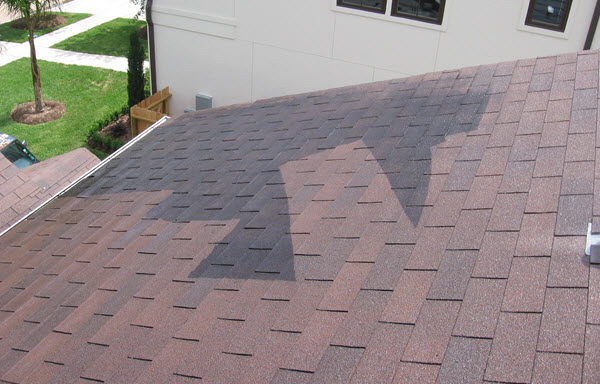
asphalt roof shingles

Asphalt shingles are very common to single houses and other small residential properties. It is almost one of the standard roof materials in all of America. Shingles may vary in color, texture and type, depending on the customer request and the manufacturer.

There are namely two kinds of Asphalt Shingles: organic and fiberglass.

Papers coated with asphalt are the basic composition of the organic shingles. Because of the asphalt, it becomes waterproof. Fiberglass shingles, on the other hand, can provide better protection, being fireproof and waterproof at the same time.

Just like the organic shingle, asphalt also coats the fiberglass shingle, which makes it waterproof, while its fiberglass nature made it fireproof.

Asphalts are very budget-friendly at $90 per square meter. In maintaining the roof, just check the roof flashings, shingle and the gutters and watch out for the decayed parts. Asphalt shingles are not that sturdy to withstand changing climates.

Tile

tile roof

Tile is another competitive material in the field of roof materializing. It is one of the oldest materials for roofing. It is so old that archaeologists found out that Greek people in the third Millennium BC first used it.

One of its most famous kinds is the traditional clay tile that is still in the market. Nevertheless, the traditional clay tile evolved which caused the birth of other types of tiles for roofing. The list includes metal, slate, concrete and other synthetic creations.

It is undeniable that tile roofs are attractive and have many aesthetics. Traditional houses in Japan, for example, use tile flooring which makes the structure of the house appealing to the public. However, despite the aesthetic, its durability against the storms and other natural calamities may be questionable.

High winds, cyclones and tornadoes can most probably blow the tiles away if they are not as heavy as they need to be. Needless to say, tiles are weighty. With this heaviness, the foundation supporting the weight must be sturdy enough to support them. A strong base sufficient to support a tiled-roof might be costly.

The maintenance of a tiled-roof is also just as expensive as the makeup of it. You cannot clean the roof on your own since it is very fragile and you cannot walk over it. To be able to clean a tiled-roof, you may need to seek the help of experts that can do the job efficiently.

Metal

metal roof


One of the rising names in the roofing industry is Metal. Houses exposed to harsh climates should have metal roofing to help them stand against calamities.

Metal is one of the safest materials to use for roofing purposes. Metal, unlike the asphalt shingle, can stand stronger against cyclones and tornadoes. Experts call the metal roof weatherproof, knowing that it can stand against almost all odds.

Metal roofing is also highly customizable. There are varieties of metal roofing designs that can fit the uniqueness of your house. Aside from these advantages of metal roof, it is also energy-efficient and affordable.

Metal roofing’s life expectancy is around 30 to 50 years, that is more than thrice the durability of asphalt shingles. As for maintenance, you have to check the roof and clean it annually. You have to make sure that the gutters are clean and there are no clusters on it. If there are some troubles, call someone who does metal roof repair so you can get satisfying services.

Takeaway

Highly consider the type of materials you’re going to use for the roof of your house. The roof is more than just a shade for your home. It serves as the ozone layer of your humble abode.

Asphalt shingles are cheap roofing materials with a life expectancy of around 16 years or less. This type of roof is also not very advisable in places with unstable climates. Tiles, on the other hand, can add some aesthetic to your house and can last to at least 50 years. However, this roof cannot assure the life expectancy of your wallet since it is very hard and expensive to maintain.

Metal roofing is the best choice among the three materials presented. Most residents should consider it, knowing that the life expectancy of metal roofing is also enough to witness your kids transcend from infancy to the adulthood, at least. Other than that, it is weatherproof, energy-efficient and affordable.

Cities that experience cyclones, most often, must consider metal roofing. Therefore, it is safe to say that metal roofing is the best choice to protect your home from the savage of nature.

See Also: Simple Guide To A Green Roof


The post Roof Issue: Why Metal Is Better Than Asphalt Shingles And Tiles appeared first on Dumb Little Man.

http://ift.tt/2vNxIAo

Apostle Islands National Lakeshore’s protected bays, pristine…

Apostle Islands National Lakeshore’s protected bays, pristine beaches and natural beauty provide outstanding water recreation. Public docks are found on 12 of the islands in the Wisconsin national lakeshore, and visitors can explore this area of Lake Superior by boat, kayak or canoe. Use safe boating practices and you’ll enjoy fun times and stunning scenery. Photo by Jasmine Wilhelm (http://ift.tt/18oFfjl).

Modern Residence in Thailand designed by Julsamano Bhongsatiern

This modern residence, an example of design in a very tropical climate country, is located in a residential area of Khet Suan Luang, Krung Thep Maha Nakhon (Bangkok), Thailand. It was designed by the architectural firm Julsamano Bhongsatiern in the year 2017 and covers a ground area of 1100 square meters. The process to build a modern architecture in this particular area had to deal not only with from, not..

More…

4 Investment Tips to Protect Your Future

Almost everything in our daily life revolves around money. We go to work to earn money and we use that money to pay for food, gas, our homes and all our necessities. It can seem like a never-ending cycle, especially if you are still trying to establish yourself.

However, there are some smart financial choices that you can make that will allow you to make money from your money without having to do much at all. Investing your money carefully can help you increase your income substantially with only a little oversight on your part.

There are a variety of methods that you can utilize to see a good return on your money. You should make sure that you consider what is best for you and your finances before making any major decisions.

Here are a few things that you should consider before looking for the best investment ideas.

Pay Off Your Debt

If you want your investments to succeed, you need to be making smart choices in all of your financial affairs. No matter how well you invest your money, if you are spending more than you can pay back, you are going to lose money.

Debt has a nasty way of catching up to us when we least expect it, and it is never forgiving. It would be very difficult to finally start seeing a return on your investment and then have to use all of that and more to pay off debts that you have incurred.

Additionally, no matter how well you invest, there is no guarantee that your investment will be successful. You might get a lot of money, you might only get a little or you could lose your money. Spending more than you have in anticipation of receiving money from your investments could come back to haunt you.

You could also lose your investments if you have to declare bankruptcy before you see returns. If you do end up in this position, talk to a legal professional about filing for bankruptcy to see if there is a way to protect your investments.

See Also: Staying Out Of Debt: 3 Money Habits You Should Be Doing

Keep Track of Your Money

keeping track of money

While it might not take a lot of work, taking the time to keep track of your money is one of the most important things that you can do. Knowing where you are spending and how that money is doing will help you understand how to best manage your investments.

Gone are the days when you can keep track of everything in a notebook or on a piece of paper unless you are a financial wizard. Find a software program or spreadsheet that fits your needs and use that to keep track of your income, your expenses and your investments.

It is important that you keep your records up to date and that you regularly review how your investments are performing. Find a schedule that works for you, but make sure that you are reviewing this information at least once a month.

Buy Low

buying low

This may seem like an obvious piece of advice, but it is repeated often for a reason. If you are investing in a company, it doesn’t make sense to spend a lot of money on stock in a moderately successful company when you could spend a little money on a company that is growing.

If you manage to find and invest in a company that is newer but growing strong, then you have a pretty decent chance of making a lot of money off of your investment. It may be helpful to look at companies that have had financial troubles recently but are doing well again. Their growth reassures you that your investment is sound.

Consider Mutual Funds

Mutual funds are probably one of the best and easiest investments for new investors. When investing, the more diverse your portfolio is (or the more variety you have in types of investments), the better chance you have of getting a good return on your money.

Mutual funds can provide you with a diverse portfolio with professional management. There are also many variations of mutual funds to best meet your particular needs. Make sure that you choose someone that you trust to manage your mutual fund.

See Also: 7 Common Money Mistakes to Avoid (And their easy Solution)

Wrap Up

Every investor wants to earn high returns, but that always isn’t possible. Immerse yourself in financial markets and literature well before you decide to invest or before you put all your money in your best investment ideas. Talk to a financial adviser to make sure that you are aware of what you are getting into.

It’s easy to get taken advantage of if you don’t know much about investing, not to mention fail to gain money on your investments.


The post 4 Investment Tips to Protect Your Future appeared first on Dumb Little Man.

http://ift.tt/2uFD7p6

Fantastic Pavilion in Milan, Italy Designed by MAIO Arquitects

In 2017, MAIO Arquitects created this marvelous design which forms part of a project defined by a set of geometric elements that can be freely assembled and recombined. A set of simple geometric frames allows an infinity of possibilities and spatial reconfigurations as well as using different finishes, textures and colors. The system, consisting of 5 basic elements, allows to create reusable, self-supporting and simple-to-build structures. It is located in..

More…

Heretics!: The Wondrous (and Dangerous) Beginnings of Modern Philosophy

Say you went to college. Furthermore, say you went to a college that required you to take a two-year ride through Contemporary Civilization, or Philosophy I and II, or The World According to Dead White Men. They were called survey courses, but they didn’t simply scan the horizon from a comfortable distance — two years with a gin-and-tonic in an Adirondack chair. They were more like two years of what aspirants to enter the Navy SEALs only have to endure for seven days: Hell Week. Many students fell mortally wounded on the punji sticks of Gottfried Leibniz’s sentences; Bento Spinoza did his best to slaughter the survivors. Still, you look back on those years fondly, upon the few weeks when you covered Renaissance philosophy and were asked to read Dialogue Concerning the Two Chief World Systems, Discourse on Method, Leviathan, Pascal’s Pensées, Spinoza’s Ethics, An Essay Concerning Human Understanding, and, if you were lucky, Novum Organum and The Principia. Right. Fondly.

Enter Steven and Ben Nadler’s slenderized and tenderized intro to Renaissance philosophy by way of comics: Heretics! For those of us who hope to revive in memory what our liberal arts educations were supposed to leave us with for life, it is with pleasure that I can say that Nadler père, a professor of philosophy and humanities at the University of Wisconsin-Madison, and Nadler fils, a graduate of the Rhode Island School of Design, have collaborated on a fine formula in which the narrative zip (and overall entertainment value) of the cartoon format lend critical aid to the project of introducing — or reintroducing — readers to philosophy’s revolutionary era. Steven deciphers many of the big ideas of the gentlemen named above, plus, glory be, a woman: Princess Palantine Elisabeth of Bohemia, who may have influenced Nicolas Malebranche, Henry More, Descartes, and Leibniz in ways untold. His work is epigrammatic, but not without polychrome and humor. He has employed the header of most panels to set the scene: political, historical, philosophical. The panel itself serves many purposes: to enlarge upon an idea, to poke fun at some dullard, to convey the excitement of unearthing something wholly new.

Although not strictly chronological, the story has both forward motion and specific gravity: the panels smoothing transition one to the next, building on ideas, introducing counterarguments, hitting high notes: Galileo on sun spots, the Transit of Venus, the movement of the moons of Jupiter; Descartes searching for a “body of knowledge that had the same degree of certainty as the truths of mathematics” (and his wonderful mindbender: “How can I know that I can know if I don’t know what it is to know?” which Steven deconstructs); the extension of Hobbes’s materialism: “Our ideas, our sense perceptions, our feelings, our imaginings, our volitions — they are all just motions in the body”; Viscountess Conway swerving uncannily close to today’s creationists; Locke’s appreciation that we have laws even in the state of nature; Spinoza’s struggle with passion and reason; Hobbes trying to reconcile popular consent with absolute sovereignty. What makes the lacunae acceptable — other than this being a short, graphic history — is that Steven is the kind of teacher who would make a good scoutmaster: he knows how to kindle a fire from unlikely sources. You want to keep building this flicker into something transformative; not a sea of flames, but a light by which to expand your worldview.

Ben is a natty, amiable cartoonist. His characters strike the right emotional response — I couldn’t help it that many reminded me of a weird old friend, Carl Anderson’s character Henry — and Ben gives the story heft and movement with an easy use of guiding gutters between panels and full-page splashes. What takes the cake is his choice of colors. They have an antique quality — pale rose, madder, lake, ocher, sienna — well in keeping with the seventeenth century. Princeton has invested serious resources on the book. The paper is as weighty and tactile as card stock, and the design and construction feel like a fancy car.

The book provides much in the way of where, how, and when, and even, for its limited introduction, aspects of why. Why this blossoming of radical thought, this turning on its head of received opinion; why this faith in the raw science of the familiar, and this lack of faith in religious authorities? This was revolutionary thinking. This thinking was — ready for it? — heretical. Giordano Bruno was sentenced to death by burning in 1600 for his heliocentric views (insubordination didn’t help his case). Here we see thinking’s heavy lifting being done at peril — thinking as elemental as the periodic table. And we are given that friendly nudge to familiarize ourselves with these people, not only to grasp how we arrived at our way of comprehending and being in the world, but to keep on questioning.

The post Heretics!: The Wondrous (and Dangerous) Beginnings of Modern Philosophy appeared first on The Barnes & Noble Review.

The Barnes & Noble Review http://ift.tt/2uoFj4M

August 9th

Life is like a prism. What you see depends on how you turn the glass.

http://ift.tt/1OYSxsB