Author: signordal

It’s not too late! These 11 states have same-day voter…

Mario Romano creates rippling aluminium skin for California home
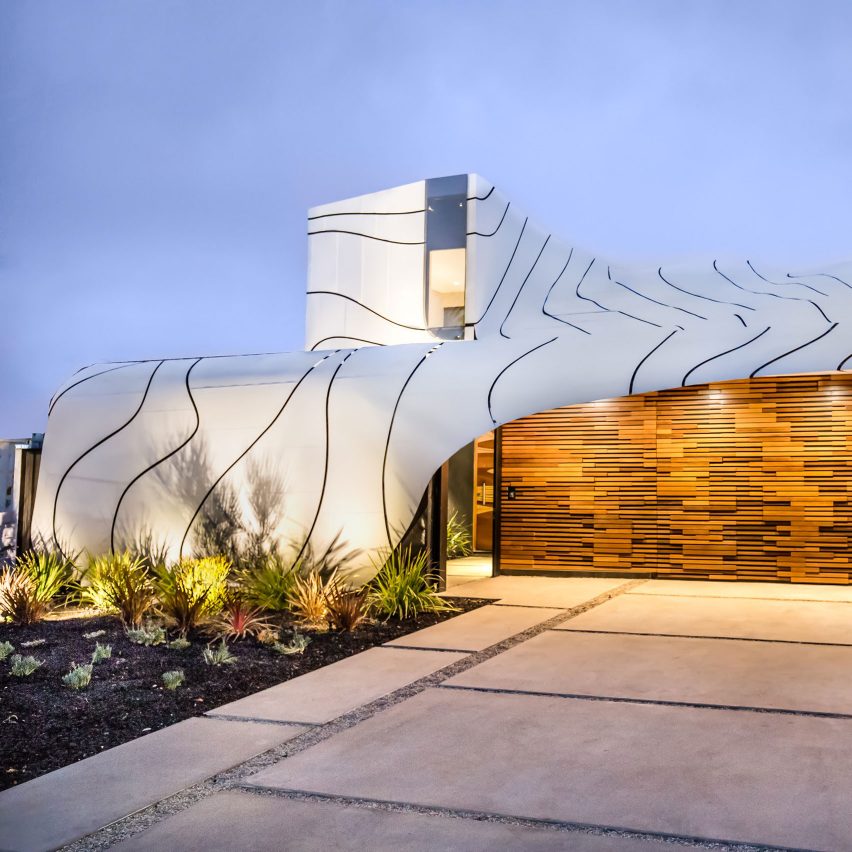
The undulating metal exterior of this family home by Los Angeles designer Mario Romano takes its cues from the movement of the ocean. Read more
Winners Announced in Competition to Design Copenhagen’s First New Church in 30 Years

Courtesy of JAJA Architects
JAJA Architects has been announced as the winners of an open international competition to design a new parish church in the Sydhavnen (South Harbor) district of Copenhagen. When completed, it will be the first new church built in Copenhagen since 1989.
The competition, organized by The Danish Association of Architects, sought proposals for a 3,200 square meter church to be located on a waterfront site in the revitalized district of Sydhavnen that could be used for a range of religious, social, cultural and musical events. Construction of the church is expected to be completed in 2019.
Continue reading to see the winning proposal as well as several additional entries.
Winner
Courtesy of JAJA Architects
Project description via JAJA Architects. Designed as an upward-moving spiral walkway of ramps, the harbor landscape merges with the church roof, inviting the city dwellers to ascend to the top and enjoy the view. A gathering point for the congregation as well as for the whole city, the church space with its view of the city skyline becomes common property.
Courtesy of JAJA Architects
Courtesy of JAJA Architects
A colonnade following the movement of the façade from the bottom to the top forms a soft transition between inside and outside, accentuating the building entrances along the way. The spiral walkway enables direct access to all the church functions without passing through the main entrance. Various terraces form little havens along the walkway, inviting people to pause for a while and let thoughts flow freely.
Courtesy of JAJA Architects
The more ‘extrovert’ church functions are located on the ground floor, such as the main entrance, the café and the lively cultural spaces towards the harbor, providing active façades along all sides of the building. The nave is placed on the top floor, its inner spiral form reflecting the outer shape of the church.
Courtesy of JAJA Architects
Water is a universal element to the church – both by its Christian reference, but in as much as a reference to the harbor and the location by the waterfront. Architecturally, the water becomes an integral part of the church experience by letting a water spring create a flow of water basins and water gardens, as it trickles down the building from a source on top of the church to the harbor. The water experience will vary as a reflection of the weather throughout the day. Heavy rain will cause the water basins to overflow, creating a dramatic series of smaller waterfalls along the church façade. The colonnade offers shelter for the rain, allowing for poetic experiences in all weather.
Courtesy of JAJA Architects
Courtesy of JAJA Architects
Courtesy of JAJA Architects
Additional Proposal
Courtesy of Studio David Thulstrup
Project description via Studio David Thulstrup. As part of Folkekirken (The Danish National Church), the new Sydhavn parish has an important role in Danish society and it’s immediate surroundings. The new church in the harbour district called “Sydhavn” is to house all the necessary framework for the parish daily service as well as an abundance of cultural activities for it’s citizens. The aim was to have the right balance between the public-, holy-, and a ceremonial atmosphere. It was therefore important for us that the church had the visual qualities that make it recognisable as a church, both from the street and in the church itself.
Courtesy of Studio David Thulstrup
Courtesy of Studio David Thulstrup
A church space has been intended as a place where the church guests have an opportunity to form a bond with the parish and celebrate some of their lives momentous occasions. From baptism, weddings and funerals, the church is designed to accommodate the full range of human emotions.
Courtesy of Studio David Thulstrup
Relatively early in our design process, we took the decision that the building’s appearance should communicate its programme. The combination between a church and a culture house was very interesting to us and we felt that it should be very clear which is which. Depending on where the building is seen from, one would be able to read the programme of the building. This gives the building a juxtaposed, but a very dynamic appearance.
Courtesy of Studio David Thulstrup
Courtesy of Studio David Thulstrup
The choice of light bricks as the church’s facade material is chosen based on its natural and welcoming nature and connection to the greater Sydhavn context. The brick is strongly represented throughout the building, both inside and out. Other selected materials, for example, concrete, glass, metal and wood. All chosen materials mature beautifully, hold a great tactility and durability.
Courtesy of Studio David Thulstrup
Additional Proposal
Courtesy of Architects of Invention
Project Description via Architects of Invention. This design proposes a church with a vertical emphasis, creating a distilled space for religious ceremonies, and an accessible venue to the community for a variety of activities both day and night. The proposal reflects the industrial past of the site, taking one of Copenhagen’s landmarks – Masterkraanen – as an inspiration.
Courtesy of Architects of Invention
Analysis of traditional church architecture (in Copenhagen especially) suggests that the organization of church buildings is mainly horizontal. Although churches themselves may be tall, there is no functional use made of the verticality of the church (except in a notional or spiritual capacity).
Courtesy of Architects of Invention
Taking this as a starting point, we developed the concept of a Vertical Church. This new church would be able to provide operational space for a full range of activities (mass, concert, lecture, etc.) – but as a vertically inhabited space, the building becomes more intense as well as more flexible. The skin of the building is designed as an exterior structural skeleton with a fractal pattern creating sharp shadows inside. From a distance, it appears as a blurry abstract cloud with a distinctive silhouette.
In using raw materials (wood, concrete, etc.), we preserve the stature of the building as well as making it a more sustainable project.
Courtesy of Architects of Invention
Courtesy of Architects of Invention
Competition Brief via the Architectural Review. News via JAJA Architects, David Thulstrup Studio, Architects of Invention.
5 Ways to Harness and Maintain Your Determination
“Enclose your heart, in times of need, with the steel of your determination and your strength. In doing this, all things will be bearable.”
― Lora Leigh, Broken Wings
In every success story, the longest chapter is the one on Determination. While success demands many things from us, willpower and determination always come up at the top of the list. Many people believe that we are born with determination and those that succeed are simply the fortunate ones who are born with an abundant supply. However, ask any successful person and they will tell you they were not born with more determination, they always found a way to harness and use what they have more effectively.
Here are 5 Ways to harness your determination.
Set up your day the night before
Before you go to sleep, make some basic decisions about what you will do tomorrow, such as what you will wear, have for lunch and the route you will take to work. It is easier to pack a healthy lunch the night before than to decide what you are going to have with a hot dog vendor parked in front of your workplace. The same applies when it comes to spending money. Decide on a budget and stick to it. Make a decision the night before that you won’t check your emails or surf the net before you have finished the more important tasks that need to be completed. Stick to your schedule and at the end of the day close your eyes for a few minutes and take in how good you feel to be in charge of your day. Getting into the habit of planning your day in advance will remove your easiest decisions off the table, making it easier to avoid getting sidetracked and wasting time and energy on small unimportant things. While spontaneity can be fun when you are on vacations, dating or hanging out with friends, it is an inefficient way to plan our workday or move towards achieving our goals.
Do the most difficult things first
The most difficult duties will not get easier the more we fret about or put them off. We will only waste energy that would be better spent by just digging in. Get after the hardest job right away while you are still fresh and have the energy. Research has shown that our minds are sharpest in the morning and that is when we should tackle the tough jobs. After these are out of the way, we can relax and take care of the more routine work that doesn’t require much in the way of mental strain, ability and energy. Becoming disciplined and getting the hard jobs done sooner rather than later, gives us a sense of satisfaction and frees up energy that we might otherwise spend thinking or worrying over having to do them. Since we are going to have to do them anyway, we might as well do them as efficiently as possible with a minimum of energy expended.
Eliminate distractions and time wasters
Real emergencies come up and we will have to deal with them. The majority of situations that do come up to distract us, are not emergencies and do not require us to respond right away. Many of these situations will resolve themselves in their own with time. When we are working on a difficult task, it is tempting to jump to something that is easier. Responding to these requests immediately will only set you up to receive more. By not responding, you are sending a message that you are a strong willed, focused person who is very busy and over time you will be bothered less by trivial, time wasting matters. Successful people have found the willpower to stay focused on the most important work first until it is completed.
Regenerate and keep up your energy
Take a quick break when working on something if you feel your energy fading. Take a brisk walk, run, stretch or whatever creates results for you to take a brief retreat from the work and regenerate. Instead of trying to force yourself when ideas stop coming, it is usually better to get away and take your mind off what you are doing. You will come back to your task with renewed vigor and a sharper mental focus. Instead of eating a large meal at lunch, snack on healthy food, such as fresh fruit and vegetables during the day. Drink plenty of water and get into a regular exercise program. Arrange a routine with these matters, so that you don’t have to think about them, they just become part of your daily regime.
Constantly remind yourself of your ultimate goals
Create a vision board, a mind movie or some system that serves as a constant reminder of what you are working towards. The “why” behind the goal is crucial as it will serve as a motivator. Suppose the reason that you want to earn ten million dollars is to start a school in a third world country. Have a clear vision of what the school would look like so you can imagine it on a regular basis. Set aside regular time daily, if only five minutes, to visualize this goal. The more details you can put in, the better. Become emotionally involved with the visualization by putting music, videos or anything that provides you with an emotional charge. The emotional connect is hugely important, as this will motivate you to keep moving towards your goal.
The post 5 Ways to Harness and Maintain Your Determination appeared first on Change your thoughts.
Why 10AM Is the Most Magical Time to Be Productive as Adults

You’re reading Why 10AM Is the Most Magical Time to Be Productive as Adults, originally posted on Pick the Brain | Motivation and Self Improvement. If you’re enjoying this, please visit our site for more inspirational articles.
Good news, fellow late risers: no need to feel guilty about NOT getting out of bed until 8.30AM. According to an English sleep scientist, it’s ideal to start the day at 10AM for most working adults and even students.
In a 2015 speech for the British science festival, Dr. Paul Kelley noted that working later instead of the usual 8 or 9AM should help boost cognitive performance, battle against sleep deprivation, and enhance productivity. That’s because late mornings are typically in line with our natural circadian rhythms, or the body’s own internal clock.
10AM is in fact, the most magical time of the day to do your toughest cognitive work. Not only is your body temperature warmer, you’re also more fully awake. Think of all the costly mistakes people do because they’re still groggy from sleep (e.g. road accidents, errors on reports, lower exam scores, etc.).
Want to shift into a 10AM schedule? Here are more reasons why it’s the best time to be productive – at anything.
Why 10AM Is the Best Time to Start Work for Adults
Sleep is a complex matter. More than simply plopping yourself on a pillow, this is the time when your body restores itself and analyzes the memories of the day. Thus, getting the required hours is essential for overall health and optimum performance.
It’s long been known that our bodies follow what is known as a circadian rhythm. Think of it as internal biological alarm clock that tells us when to sleep and wake up. For children for example, their wake-up time is usually before 7AM, while adults at around 10AM. But as we age, our sleep patterns reverse. This explains why folks older than 55 feel sleepy before 8PM, but can wake up before 6AM.
Going against your circadian rhythm will affect your mood once you wake up. It’s not really HOW LONG you slept, but more of HOW WELL you did. That’s why most adults struggle to the office even at 9AM. It’s because their bodies are not supposed to be awake yet.
Another issue for setting wake schedules is our current society. We no longer just go home after 5PM. We’re out with friends, investing on hobbies, or networking way into the night. Some have second (or more) jobs they still need to attend to. Then there are family and personal matters to take care of.
With so much going on, a lot of adults today don’t sleep until midnight. It’s no wonder many are feeling irritable at the office by 8 or 9AM. Not only is it hard to be productive around this time, many people also spend the early hours on mundane tasks, such as opening emails.
Caffeine alone is NOT going to be a fix. The best solution to combat fatigue and be productive is to follow your circadian rhythm. For adults, this means starting the day preferably at 10AM.
Do you wake up at 9AM? Then you have at least an hour to have breakfast, exercise, and plan your to-do list. Don’t need to be at work until noon? Use that time to catch up on world news or meditate. Once you reach the office, you’ll feel more alert and ready to tackle any task.
Successful People Who Start the Day at 10AM
You may think that all successful people are early risers – but that’s NOT true. Here’s proof that you CAN be productive even at 10AM.
Believe it or not, the likes of statesman Winston Churchill, fashion designer Karl Lagerfeld, and Buzzfeed CEO Jonah Peretti, start their day at 10AM (or much later).
Winston Churchill was known to wake up at around 7.30AM, but didn’t get out of bed until about 11. After having breakfast and reading national news, he’ll be dictating to his secretaries until it was time for a bath (which was usually noon). This odd routine certainly didn’t stop him from becoming Prime Minister of the United Kingdom.
German fashion designer, artist, and photographer Karl Lagerfeld on the other hand, doesn’t get up until he’s had seven solid hours of sleep. So if he sleeps at midnight, he gets up at 7AM. If he sleeps later than that, you can expect that he’d be up once the seven hours are over.
Jonah Peretti likes to sleep in until 8.30AM. Now most people won’t consider this ‘late’, but in terms of business, it is. The Buzzfeed CEO and cofounder of The Huffington Post also has the habit of bringing news with him when he takes the subway to work.
Other popular figures who are late risers include: New Yorker writer and TED speaker Kathryn Schulz, New York City mayor Bill de Blasio, Box CEO Aaron Levie, writer and poet Gertrude Stein, and author J.R.R. Tolkien.
Find YOUR Own Magical Time To Be Productive
Are you at your best at 9AM? Or do you prefer to brainstorm with coworkers at 10AM? Not in the mood until 11?
Find your best times to be productive. It’s different for everybody. While 10AM is ideal for most adults, it’s not a fixed rule. Feel free to discover your own rhythm based on your body clock and habits. What matters is that you use the hours in things you truly care about.
—
Cristina Antonio is the EIC of scoopfed.com and a writer of all things related to world news, movies, real estate, health, or social media. She’s currently focused on helping healthcare workers find better career opportunities through Locum Tenens. Cris also enjoys painting, collecting toys, reading German novels, and lurking the Web.
You’ve read Why 10AM Is the Most Magical Time to Be Productive as Adults, originally posted on Pick the Brain | Motivation and Self Improvement. If you’ve enjoyed this, please visit our site for more inspirational articles.
Bracketed Space House / Matt Fajkus Architecture

© Charles Davis Smith
- Architects: Matt Fajkus Architecture
- Location: Austin, TX, United States
- Design Team: Matt Fajkus, AIA; David Birt; Travis Cook; Jayson Kabala
- Area: 450.0 sqm
- Project Year: 2016
- Photographs: Charles Davis Smith , Spaces & Faces Photography
- Project Manager: Travis Cook, Jayson Kabala
- General Contractor: Brodie Builders
- Interior Designer: Joel Mozersky Design
- Landscape Designer: Open Envelope Studio
© Spaces & Faces Photography
From the architect. Incorporating the site’s dynamic landscape into the daily life of its residents, the Bracketed Space House is designed as a meaningfully-framed procession through the property with nuanced natural lighting throughout. A continuous and jogging retaining wall from outside to inside embeds the structure below natural grade at the front with flush transitions at its rear facade. All indoor spaces open up to a courtyard which terraces down to the tree canopy, creating a readily visible and occupiable transitional space between man-made and nature.
© Charles Davis Smith
Site + Main Level
© Charles Davis Smith
The courtyard scheme is simplified by the common and private wings – connected by a glass dining “bridge.” This transparent volume also visually connects the front yard to the courtyard, clearing for the prospect view, while maintaining a subdued street presence. The staircase acts as a vertical “knuckle,” mediating shifting wing angles while contrasting the predominant horizontality of the house.
© Charles Davis Smith
Selected: West Fjords Commute by ChrisBurkard

Not every commute is by car. In the West Fjords of Iceland, some surf is only accessible by other means of transportation.
Here’s some serious cute to get you through the day! It’s…

Here’s some serious cute to get you through the day! It’s afternoon playtime for this bear at Denali National Park in Alaska. Photo by Jacob W. Frank, National Park Service.
“The only woman who ever voted to give women the right to vote”
Jeannette Rankin, the first woman to hold a federal political office, was elected to the House of Representatives on November 7, 1916 — almost exactly a century before the first time Americans at the ballot box would encounter a woman as a major party candidate for President. While Rankin is still the only woman to have been elected to Congress from Montana, there are currently 104 women in office, representing just under 20 percent of the congressional total (75 percent of them Democrats, a disproportion that has prevailed since the early 1990s).
A prominent figure in the women’s suffrage movement, Rankin said after the Nineteenth Amendment passed in 1918 that she was proud to have been “the only woman who ever voted to give women the right to vote.” But Rankin is also remembered for another vote, one that became influential in unintended ways. Elected just as America was poised to enter WWI, Rankin was a pacifist as well as a feminist, as was the more famous Alice Paul. In A Woman’s Crusade: Alice Paul and the Battle for the Ballot, Mary Walton recounts how Paul made a point of visiting Rankin in Washington on April 5, 1917, the two women sitting together in solidarity in the visitors’ gallery just hours before the vote to enter the war was taken. Walton describes how Rankin, torn between her patriotism and her pacifist principles, rose in the House to say, in a strained voice, “I want to stand by my country, but I cannot vote for war,” her no vote then uttered “with what many thought a sob”:
Although 50 legislators opposed the resolution, against 373 in favor, headline writers singled out the congresswoman from Montana. She was the one who had cried, who had covered her face in her hands, who had left the chamber immediately afterward to applause from pacifists in the galleries. The war was now a reality. But so, too, was the impression that women could not be relied upon when the nation was under siege.
Whatever the damage to the women’s movement, Rankin went down to defeat in the next election. That her statue on Capitol Hill today is inscribed with “I cannot vote for war” is surely a disservice to her role in suffrage history and to her wider legacy, says Cokie Roberts. Herself the daughter of a congresswoman, Roberts has a handful of books — Ladies of Liberty, Founding Mothers, and most recently the Civil War history Capital Dames — on women who, though not elected, held great political influence. In We Are Our Mothers’ Daughters, Roberts notes that while in office Rankin worked on many underrepresented issues relating to women and children, as did those who came after her:
When you call the roll of women in Congress in the twenties, thirties, forties, and fifties, you find that they toiled in the corridors and the cloakrooms of the Capitol pressing their colleagues on equal pay, tax relief for single parents and working mothers, school lunches, consumer safety, food stamps, and the place of women in the military. Equally important, they came to the table of government with different sensibilities. Women simply experience life differently from men. And these mothers, sisters, daughters, and wives brought and continue to bring the perspectives of those roles to governing.
In her memoir My Beloved World, Sonia Sotomayor, the first Latina Supreme Court justice, says that the perspective she brings to the bench was shaped by her upbringing in an immigrant Bronx neighborhood that offered life lessons in support, empathy, and tolerance. Of paramount influence, writes Sotomayor, were the two women who raised her:
If I try to imagine my most immediate examples of selfless love, instinct leads me first to those who were closest: Abuelita [grandmother], healer and protector, with her overflowing generosity of spirit; and my mother, visiting nurse and confidante to the whole neighborhood . . . Suffice to say, somehow a synergy of love and gratitude, protection and purpose, was implanted in me at a very young age. And it flowered in a determination to serve. My childhood ambition to become a lawyer had nothing to do with middle-class respectability and comfort. I understood the lawyer’s job as being to help people.
The Barnes & Noble Review http://ift.tt/2eAxzDZ

