“Those who deny freedom to others, deserve it not for themselves”
― Abraham Lincoln
Month: May 2017
“America will never be destroyed from the outside. If we falter and lose our freedoms, it will be because we destroyed ourselves.” ― Abraham Lincoln
“America will never be destroyed from the outside. If we falter and lose our freedoms, it will be because we destroyed ourselves.”
― Abraham Lincoln
Happy 80th birthday to the Golden Gate Bridge. On this day in…

Happy 80th birthday to the Golden Gate Bridge. On this day in 1973, this iconic bridge first opened. With towers extending 700 feet into the sky and over 100 feet beneath the San Francisco Bay, the bridge is an engineering marvel. In addition to driving, you can walk or bike the entire length of its 1.2-mile expanse, bounded on either side by spectacular scenery. Photo from Golden Gate National Recreation Area courtesy of Bruce Getty.
Get US Address for cheaper shopping
Do you know that a lot of products are much more cheaper in the US than in other countries? For example Apple iPhone. In 2017 price of iPhone 7 is $1.115 in Brazil which is one of the highest price in the world! On the other hand you can buy it in the US just for $815! There is an idea that you can buy your iPhone in United States and then ship it to your home country, for example Brazil. The problem is that a lot of US shops like Apple, Amazon, Bestbuy and so on don’t ship their products internationally but with Planet Express you don’t have to worry about it.
Planet Express is Mail and Package Forwarding Service. After sign up you get your own US address where you can ship for example iPhone from Apple store or any other packages from US shops. Then you can just forward your package anywhere in the world with one of shipping methods that Planet Express offers. They have clear pricing without any hidden fees so you can easy calculate if shopping in US shops pays of.
One thing which I like the most is that you can consolidate your packages so if you have for example 4 packages at Planet Express, they consolidate all your packages into one just for $5 and thanks to it you can save a lot of money on shipping. Cool, right? 🙂
How to get things done GTD http://ift.tt/2s6KPYa
Links for 05-27-17
- The Future of Education and Lifelong Learning – Brad DeLong
- The Question Is Why is Wage Growth So High – New York Times
- Proliferation of hate and intolerance – Understanding Society
- Algorithmic Pricing and Competition: – Tim Taylor
- May's groupthink – Stumbling and Mumbling
- The New New Deal – INET
- American Economic Needs – Noah Smith
- Trump is Right and Wrong about Germany – Gloomy European Economist
May 27th
I’ve been homesick for countries I’ve never been, and longed to be where I couldn’t be.
How to Build Your Side Business While Working Full Time

You’re reading How to Build Your Side Business While Working Full Time, originally posted on Pick the Brain | Motivation and Self Improvement. If you’re enjoying this, please visit our site for more inspirational articles.
Building a business is hard.
What about building a business on the side while working full time?
I built a freelancing business while studying dentistry, and I’m just 20 years old.
And I forgot to mention that my GPA was 3.92 during my first 2 years.
It seems impossible to a lot of people, but I did it.
And the secret is rather simple. I know what I need to do, and I do it. But there’s a bit more to it than that.
In this post, you will discover the 3-tier planning method I use to know what I need to do and how I carry out focused actions to get more done in less time.
The result? You can build your business even if you don’t have a lot of spare time.
The “3-Tier Planning” Method
Your time is limited. That’s why planning is very important.
Because planning can be complicated and because of specific problems I’ve faced from time to time, I’ve developed a simple process to help me plan things out and keep moving in the right direction. I call it the “3-tier planning” method.
The 3-tiers are:
- The 100,000-foot view
- The 10,000-foot view
- The 100-foot view
Let’s go into more detail about each of these.
Note: I have created a simple checklist to help you apply this planning method, so make sure to grab your checklist, then continue reading this post.
The 100,000-foot view
Here you look at the big picture. I like to make it for every quarter or every 100 days.
So you set a goal that you want to achieve in the next quarter and write out a detailed plan about how you want to achieve it.
Let’s take an example:
Goal: Create a product and start selling it in 90 days
Steps:
- Brainstorm product ideas
- Validate the idea by interacting with people on a FB group
- Outline the course
- Record every module
- Setup a membership site
- Setup an order form
- Create a sales page
- Offer a discount for my email list and get the first 10 customers
Now, we have the100,000-foot view. This will give you a clear big picture and ensure that you’re going to finish on time.
The 10,000-foot view
After you have the big picture, you need to know what tasks you need to accomplish in the next 2 weeks. I like this time frame because it’s not so long as to cause you to lose focus yet it leaves enough time for you to iterate as you go.
So you set the tasks you need to accomplish in the next 2 weeks so that you’re not overwhelmed by the big picture plan.
Continuing the example above, here is a simple 10,000-foot view plan
- Brainstorm product ideas
- Validate the idea
- Have a simple outline for the first 2 modules
The reason I added this tier is that it ensures that you don’t take too much time doing the first tasks, which would result in a situation where the deadline would be approaching yet you would still be a long way from your main goal, causing you to take a lot more time to achieve that goal.
The 100-foot view
Now you set your daily tasks. You see what you need to do from the 10,000-foot view and plan your day around it.
For the example above:
- Brainstorm product ideas
- Start interacting with a group to know what they want
Now, you know what you need to accomplish by the end of the day.
So when you returns from your job, you know the tasks you need to accomplish. Your job now is to do them.
You’ve seen what the planning method consists of, now I’d like to share a tip about how to actually finish your daily tasks. This is how I get more done in less time:
The “Up Pomodoro” Technique to Get More Done
Now, after you know the exact tasks you need to work on, your job now is to actually do them.
The Pomodoro technique is a great way to help you get more done in less time with greater focus.
If you’re not familiar with the Pomodoro technique, it’s a technique where you spend 25 minutes focusing on a task and then take a 5 minute rest and then repeat this cycle 4 times and then take a bigger rest.
This enables you to eliminate distraction, which is the most important element to getting more done.
But what does the “Up” in “Up Pomodoro” mean?
The people at the Muse discovered something they call the rule of 52 and 17.
They found out that the people who work for 52 minutes and take a break of 17 minutes are the most productive people.
So I started applying it and the results are astonishing. For simplicity’s sake I now work for 50 minutes and take a break for 10-15 minutes. The thing is that you combine 2 cycles of the Pomodoro technique.
By using the 3-tier planning process and the Up Pomodoro technique, I’ve able to know what I need to do and work on it without getting distracted. This is the simple process that helped me build my business while studying dentistry.
And to help you accomplish the same results, I’ve create a simple checklist for you to help you apply the techniques I’ve shared in today’s post and to increase your productivity by 300%. Grab your checklist here.
You’ve read How to Build Your Side Business While Working Full Time, originally posted on Pick the Brain | Motivation and Self Improvement. If you’ve enjoyed this, please visit our site for more inspirational articles.
Do You Have The Right Mattress For Your Body Type?

If you have been frequently waking up with back pains and a bad mood, it’s probably your mattress to blame.
In general, we spend as much as a third of our lives in bed so it’s only right that we invest in the right mattress. It should be able to give you both comfort and support so your spine, ligaments and muscles can relax during the only time your body gets to relax.
So, should you get a new mattress? Check out these telltale signs:
- If your mattress is already sagging, it’s high time you give it a rest. Over time, springs can break down, fibers can wear out and foams can get softer. These things can mean lack of support to your most vulnerable parts.
- The presence of lumps can mean uneven density and this can lead to uncomfortable pressure points.
- Ideally, you should replace your mattress every 7 to 10 years. If yours is more than that, you’re compromising your sleep.
- The presence of more pains and aches than you had before you went to bed is a clear sign you already need a replacement.
- Most mattresses can accumulate allergens, particularly mold, dust mites and mildew. If you find yourself sneezing whenever you get close to your bed, consider assessing your mattress.
See Also: 10 Things You Never Knew About Bed Bugs
What Is The Best Mattress?
The best mattress is the one that will work best for your body type. As your body has its own contours and needs, you have to know exactly what your options are. There several types of mattresses you can choose from.
Here are some of them:
Memory Foam
The memory foam, particularly the visco elastic foam, is conceptualized by NASA scientists. It’s patterned from the material that was supposed to absorb the effects of G forces during the take-off process.
Compared with other mattresses, this one is special in that it follows the contour of the sleeper’s body. It helps distribute weight to eliminate pressure points. This makes memory foam great for those who suffer from back problems and other body aches.
There are different formulations when it comes to memory foams. There’s the standard memory foam that is temperature sensitive. There’s also the plant-based memory foam which is more breathable and has a faster response. The last type is the gel-infused type which is commonly marketed as a cooler.
Latex Mattress
Latex mattresses are more expensive than other types because of their materials. Despite the cost, this type has one of the simplest constructions. They are highly durable and can last for over 15 years. They feature low-pressure support and can contour to your body’s shape without the heat or chemical odors. latex mattress provide great bounce, responsiveness and cooling, too.
Waterbed
Waterbeds can provide average pain relief. They are designed to mimic conventional beds but with low heat and odor complaints.
There are two main types of waterbeds: the hard-sided and soft-sided. Both feature a water chamber which can either be waveless or free flow.
Airbed
Airbeds are nothing like the ones you use for camping. This type comes with an adjustable air chamber which works as its support system. The good thing about airbeds is that you can adjust their firmness according to your body’s needs.
Specialty foam mattress
This type is a bit unique in that it uses one or more types of foams. It can either be latex, polyurethane, memory or gel. Specialty foam mattresses come in different densities and shapes to ensure you get both comfort and support. If you are wondering what specialty foam mattresses look like, check out this two in one mattress.
How To Choose A Mattress Properly
Know how old your mattress is
In general, if your mattress is already 8 years old or older, you should consider getting a new one. Take note that this doesn’t apply to all types of mattresses since there are some that can extend beyond that time.
If you are unsure about how long your mattress type should last, you should decide based on your sleeping patterns. If you’re restless or you find yourself frequently waking up in the middle of the night, just go buy a new one.
Determine what type of mattress you’ll need
The type of mattress you’ll need will depend on your preference, body type and sleeping positions. Consider the following:
- If you sleep your side, you’ll need a mattress with lots of pressure relief. It should be able to support your body weight and conform to the shape of your body.
- If you are a stomach sleeper, choose a mattress with a firm top surface. It’s the best one for support.
- In case you like sleeping on your back, invest in a mattress that can provide support while keeping your spine in its proper alignment.
- If you tend to toss and turn at night, go for an innerspring mattress with latex, memory foam or pocketed coils. These materials are great for isolating motions, like when you don’t want to disturb your partner with your movements.
- If you like a lot of the features of the different mattresses and can’t make up your mind, pick a hybrid style mattress. This type can provide the motion isolation feature of memory foams and the buoyancy of a mattress with an innerspring core.
- For allergies, stick with mattresses that are resistant to dust mites and molds. Pick foam and latex since they have inherent antimicrobial properties. If you choose an innerspring mattress, you can enclose it in an allergen-resistant cover to make sure you don’t wake up sneezing at night.
See Also: Have a Child with Skin Sensitivities? Here’s How to Deal with it
Set your budget
Mattresses don’t go cheap, particularly those in the luxury end of the market. The good thing is that there are lots of options now that will enable you to find the right mattress at the right price.
In choosing, keep in mind that expensive doesn’t always have to mean better, but don’t go ultra cheap, too. Since the quality of your sleep will depend on your bed, make sure you don’t skimp on your mattress.
The post Do You Have The Right Mattress For Your Body Type? appeared first on Dumb Little Man.
5 Important Tips Before Traveling Overseas
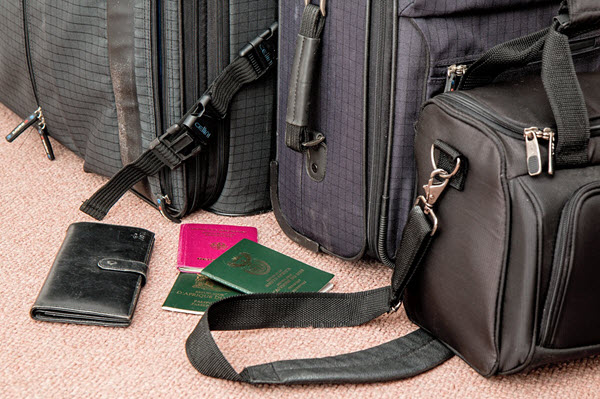
Flying overseas, particularly if it’s your first time, can be a nerve-wracking experience.
Regardless of which country you are traveling to, there are things you can do and prepare to make the trip not only hassle-free but safe, too. To give you an idea, here’s the best international travel checklist you’ll ever need.
Tip #1 Check Your Passport And Other Travel Documents
Before making any travel plans, you must first know where your passport is. Although you don’t necessarily have to memorize every detail (but that could sure help), you should, at least, check its expiration date.
Your passport should be valid for at least six months before you travel overseas. There are countries that deny travelers if their passports expire in less than six months so check beforehand. If you get stuck for some reason in one of those countries, you’d want to make sure they’ll let you get away with no problems. If possible, try to renew your passport about 9 months prior to its expiration date.
Tip #2 Know How You’ll Get Cash
One of the easiest ways to get money is through an ATM. However, making withdrawals from ATMs that are outside the network of your US bank can mean very steep fees. To cut the cost, you can withdraw a certain amount of money from the ATM at the airport so you’ll only have to pay once for the fees.
This, however, isn’t really advisable since you’ll be carrying a big sum of cash while traveling. There’s also the chance that you’ll be left with too much local currency after your trip. A checking account with no minimum balance is a better option.
Before you actually leave, you should also give your bank a call to tell them which country you’re going to. If your bank sees any unusual foreign charges without any prior notice, it can put your cards on hold which can be quite annoying if you’re in the middle of your shopping.
Tip #3 Prepare Your Devices
Electrical outlets aren’t the same in all countries so make sure you have adapters that can work with foreign sockets. Apart from that, you should also know the strength of the electrical current of the country you are going to and make sure that it’s compatible with your devices.
You can invest in a transformer or just leave any incompatible devices at home. For convenience, you should also pack extra batteries and portable chargers.
Tip #4 Pack Your Things
Packing is probably one of the most tedious things you need to do before going out for a trip. Aside from what to carry, you also need to know how much you can bring.
If your trip is short, consider packing lightly. Invest in the best carry on duffel bags for traveling, especially if your trip involves switching airports or walking in lots of terrains. They are easy to carry and can fit so many items inside.
Once you have selected your luggage, it’s time to pack your things. Organization isn’t the only thing you need to consider when packing; accessibility matters, too. Remember, airport authorities will still inspect your bag.
Instead of folding, roll your clothes along the length of your luggage. When they are organized in rows, they are easier to check and inspect. It’s a good way to maximize space, too.
Liquids, aerosols, and gels that measure beyond 3.4 oz should be packed in your checked luggage. If the total volume of your liquids and gels is below that weight, store them in clear, zip top bags. Tools, sharp objects and sports equipment go into the same luggage.
The first layer of your luggage should be the heavier items. Spread them evenly to distribute the weight. Your shoes, for example, should be at the bottom of your bag. Pack as many socks as you can in your shoes.
Your jeans and sweaters go over your shoes. Roll and pack them in tightly to prevent them from getting undone while traveling. For fragile items, place them in the middle of your bag, on top of the heavier rolled items.
The next layer should be the lighter clothes, like your shirts and undergarments. Over this layer, place your folded items so you can easily get them out and hang them upon arrival. To prevent wrinkling, you can put them inside a dry cleaner bag.
For additional items, like your belt, fit them in any available nook. For your toiletry bag, you can place them on top of your folder layer.
See Also: How to Pack Your Suitcase Like George Clooney
Tip #5 Prep Your Home For Your Vacation
There are a million things that can happen at home when you’re on a vacation, so it’s only right that you keep your home security as part of your international travel checklist. Before you actually leave the house and go straight to the airport, make sure you’ve secured your property.
Avoid advertising that you’ll be out of the house, especially on your social media accounts. Burglars and criminals can use the Internet to spy on potential victims.
As much as possible, make it look like there’s someone at home. Unoccupied houses are vulnerable to attacks since they pose less threat of confrontation.
Do not leave your spare keys at your front door or under your door mat. Instead, leave them with a trusted relative or consider upgrading to smart locks. They are convenient to have whether you’re a frequent traveler or you’re away most of the time for work.
Don’t close the blinds in every room. Just keep things as they normally are.
Put the newspaper and mail delivery on hold while you are gone. If they pile up, it’s a sure sign that no one is at home.
If your house is monitored by a security company, don’t forget to notify them. Arm your alarms, too and make sure that every device is working. Check and replace batteries as necessary.
Unplug all small appliances. They can still suck up power even when not in use.
You can leave your lights on to deter burglars. However, lights that are constantly turned on won’t trick any attackers. Instead, leave your lights on a timer and set them to turn on and off at the same time each night.
The post 5 Important Tips Before Traveling Overseas appeared first on Dumb Little Man.
Saul Steinberg’s View of the World
As a cartoonist myself, I am dismayed that there’s little of Saul Steinberg’s that I can steal, the crossover in the Venn diagram of the image-as-itself versus as-what-it-represents being depressingly slim. I am painfully aware that in comics, stories generally kill the image. But Steinberg’s images grow and even live on the page; somewhere in the viewing of a Steinberg drawing the reader follows not only his line, but also his line of thought.
 Sig Nordal