
7 Strong Reasons to Learn a Foreign Language

Nelson Mandela once said: “If you talk to a man in a language he understands, that goes to his head. If you talk to him in his own language, that goes to his heart.”.

This quote couldn’t be more precise.

As humans, we are attracted to other humans with whom we have something in common. If there’s something that two persons both like, hate or want, a rapport will suddenly grow and their connection instantly grows stronger.

One of the most common things that bonds people together is the language they speak. Obviously, if someone talks to you using your native language, you’ll be treating him differently compared to someone who speaks a foreign one.

Yet, even though learning a new language is extremely beneficial for several reasons, very few of us are really taking action. We’re somehow afraid of the hustle and work that comes with the process.

We can change our attitude by simply acknowledging the strong reasons of learning a foreign language. In today’s post, we’re going to convince you to pick a foreign language and start learning it immediately. Without further ado, let’s begin.

More Professional And Personal Opportunities

“One language sets you in a corridor for life.  Two languages open every door along the way.” ‒ Frank Smith

You’ve obviously seen a lot of employers looking for individuals who can speak more than one language. If you know more than just your native language, you’ll find more job opportunities along with better payments.

Moreover, the personal opportunities will be more numerous, too. You can communicate with more people, build new relationships and learn from different mindsets.

So, you see a hot person in the bar and you want to get in touch. You can use a foreign language to get a better chance of capturing the stranger’s attention.

Improved Cognitive Performance

When we learn new things, we’re using different cognitive functions, like our memory and problem-solving aptitudes. It’s no secret that learning a new language will make you a “smarter” person.

It doesn’t really matter what language you’re learning, how old you are or how smart you are. Your attention span will be improved. You’ll have a better memory in time and you’ll develop a strong resistance to age-related diseases, such as dementia and Alzheimer’s.

Ability to Establish Strong Connections with Other Nationalities

As mentioned earlier, grasping a basic understanding of a foreign language should open the gates of communication between you and other nationalities. It will not only help you in asking for specific information during your traveling journeys, but it can also help you build a friendship out of a small talk.

Connecting with people from other countries and cultures is truly important because it’ll help you become more open minded and tolerant. It’ll help you acquire tons of knowledge that would otherwise be impossible to gain.

Better Traveling Experience

traveling on a foreign place

Every one of you probably likes to travel. After all, all of us are curious what life looks like in different places. While grasping a foreign language, you can certainly enjoy a more intense experience while traveling abroad. That’s because you won’t just sit quietly and travel alone.

Instead, you can find travel buddies, talk to locals, hook up with beautiful men/women, build a lasting relationship and much more.

See Also: 10 Wonderful Benefits of Traveling

Better Self-Control and Smarter Decisions

It has also been proven that bilingual brains are much better at self-controlling. Even though self-control also represents a cognitive function, it’s still worth noting how helpful such skill is in our daily lives.

Moreover, another study shows that learning a second language can help you make better decisions in life. The study emphasizes the fact that when a person speaks a foreign language, his tendency towards loss aversion significantly decreases.

See Your Own Culture from an Outsider’s Perspective

traveling

“You can never understand one language until you understand at least two” – Geoffrey Willans

Learning a second language will give you a lot of new insights. You’ll be able to understand how other foreigners perceive your country and culture. You’ll also see a lot of differences in your own perception, too.

Better Learner & Better Problem Solver

When you learn a new language, you keep solving problems. When you listen to a foreigner – or even better, if you talk to him – your brain continuously works. It works hard in order to make things clear. This type of ‘brain exercise’ is extremely beneficial in the long term because you’ll advance into a better learner.

Moreover, you’ll solve your problems faster and more efficiently. The reason is that by learning that foreign language, your brain has already “grown muscles” that allow you to “lift” your problems without a lot of hustle.

See Also: 5 Tips to Learn Languages by Reading Foreign Books

Takeaways

To learn a new language isn’t rocket science, yet it’s not that simple either. It all depends on your linguistic talents, the work you put in and the mindset you develop. Do this now, and you’ll praise yourself later.

The post 7 Strong Reasons to Learn a Foreign Language appeared first on Dumb Little Man.
http://ift.tt/2wArFR3

What You Need To Do To Protect Your Ears From Deafening Urban Noise

Noise pollution is becoming a pressing global issue more and more each day especially in the urban setting. Studies have shown that due to urban noise, city dwellers experience an average hearing loss equivalent to a person who is around 10 to 20 years older than them. Seniors are in more danger because sudden and violent changes in volume can result to heart attacks and strokes.

With a projected annual urban population growth of 1.85 percent until 2020, we get to forecast an increase in a portion of the world’s population that gets exposed to noise pollution and its ill effects.

The same study also showed a 64 percent positive correlation between hearing loss and city noise pollution levels. That means hearing loss could likely be a direct or indirect result of modern city living.

Here are some useful hacks to protect your ears from the ever-growing noise of the city.

Minimize your personal environment noise

If you live in a noisy building or neighborhood, talk to the landlord and your fellow residents about the enforcement of a noise management plan to cover entertainment venues, commercial sites or construction activities around your area.

You may also apply acoustical adaptations, like a soundproof wall, double glazed windows and a quieter ventilation.

Try to keep your tone low when talking to elderly people. Hearing difficulties come with age. Don’t shout or raise your voice when talking to them. Instead, try whispering or coming closer to them while talking.

Music is life, but you need to limit the volume

We all need music in our lives. Without it, life would be a deafening silence. However, to enjoy music, we must listen to it at 60 percent of the maximum volume without going over 60 minutes per day.

Just as seniors love their music, it’s a good idea to tone it a bit down when they’re around. People with advancing age tend to block out other important sounds, such as cars honking or dogs barking, when loud music is playing.

It is also best for our health if we avoid using our personal music player as a tool to drown out background noise. Yes, that sounds like a bummer. But, when music that goes through your headphones becomes louder than any external sound, then it is too loud and can affect your sense of hearing negatively.

See Also: How To Choose Headphones That Best Suit You

Be proactive about caring for your ears

You shouldn’t have to wait until you observe hearing problems before you even start to care for your ears. The good side to most hearing problems is that most are preventable. With the right behavior, practice, environment and early detection, you get to prevent most hearing impairments.

Also, you shouldn’t just be taking care of your health, but other people’s as well. We have to be mindful of our surroundings and the noise we create that has the potential to harm other people.

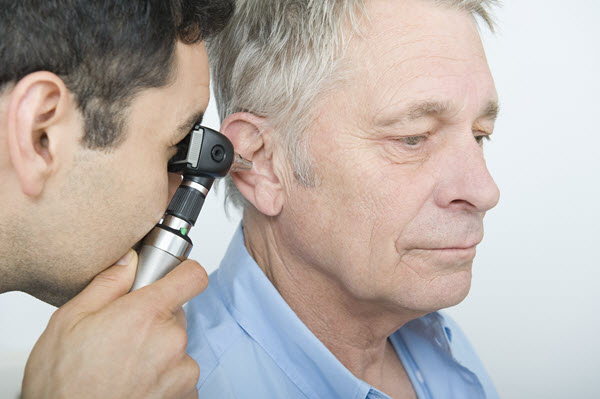
Seniors should also have regular check-ups concerning their hearing as problems in the ears often develop into severe conditions. One good example is vertigo wherein balance gets affected.

ear checkup

Paying close attention to your ears is important, especially when there is still a stigma surrounding hearing problems and the deaf community. The truth is, everyone hears things differently and we can all benefit from some love and respect for each other.

When necessary, use earplugs

Earplugs are valuable in a world where people drown each other with noise. The use of earplugs can reduce sound levels by around 15 to 35 decibels. So, when you’re in a place with loud noise or music, use earplugs for protection.

If you’re at a concert scene, you can still enjoy live music with earplugs on as it only decreases the sound to a level that isn’t harmful. If you’re in a firing competition, you might want to use earplugs, too, since the blast of guns can be ear-splitting.

Find time to rest your ears

If you think you’ve overused your ears already, you must take the time to rest. Let your ears recover after exposing them to harmful decibel levels for a period.

According to a study, you would need at least 16 hours of rest, as a recovery period for your ears, after spending about two hours in an environment with a 100dB level of sound. An example of such place is a club. So, if you’ve been clubbing all night, try to rest and stay in a quiet place the following day.

loud music

Takeaway

There are certain steps for you to follow so you can protect your ears from irreparable noise damage. You can avoid listening to loud music for a set time. You can also visit an audiologist near you for a checkup so you wouldn’t have to wait for signs of impairment.

And while you cannot personally turn the volume from a construction site at a minimum and neither can you mute the sound of traffic, you can, however, show your support for local initiatives that regulate noise pollution.

The post What You Need To Do To Protect Your Ears From Deafening Urban Noise appeared first on Dumb Little Man.

http://ift.tt/2vikgS2

How to Get Out of a Bad Mood

You know the feeling well. Come on, don’t deny it.

The mounting frustration, the sense that nothing works as it should, everything is irritating and time-consuming. You have no patience, you feel knotted up inside and there’s a slowly enveloping cloud of blackness developing over your head like your own little personal black storm.

Yes, you’re in a bad mood and there’s nothing you can do about it. The day’s ruined and your life’s just a bit crap and why oh why does nobody understand the terrible burdens you, and only you are suffering?!

You rattle on in a cantankerous fury, muttering on under your breath and bemoaning your lot in life.

We all get into a bad mood from time to time and it can be, at best, just inconvenient and annoying. However, at worst it can ruin your day, put a strain on your relationships and, in the longer term, affect your self-esteem and well-being.

When we are in a mood it’s hard to see a way out, difficult to see the wood for the trees and it can become all enveloping and a self-perpetuating cycle of irritation and fury.

Here are nine tips on how to get out of a bad mood:

1. Admit It and Get It Out of Your Head

The first stage is to admit to yourself, and to others, that you are actually in a bad mood. How often has someone gently pointed out to you (possibly out of annoying concern!) that you seem to be in a bad mood only for you to bark back, through a clenched smile and gritted teeth “No, I’m fine!”?

Our default stance often seems to be one of self-martyrdom and we try to just get on and ignore our mood hoping it will go away and no one will notice. It takes quite a lot of willpower to be objective about yourself in this sort of situation. It’s hard to bypass this default pathway and to literally say to yourself “Right, you’re in a really bad mood. Let’s get this sorted out now!” However, if you can do this you are at least half way to quickly getting your mood back on track.

Another strategy that will help at this point but will scream against every fiber of your natural instinct is to reply to your concerned friend “Yes, I’m in a really bad mood. In fact, I’m really annoying myself never mind you – I’m sorry!” I can pretty much guarantee that, if you pull that one off you will gain control of your mood pretty quickly!

If the opportunity doesn’t occur, you can also try just bringing it up in conversation. The point is that admitting firstly to yourself and then externalising the fact that you are in a mood gets it out of the pressure cooker of your head. It works like a safety valve. Letting off steam is good and is the primary step to getting back on track. Once you have identified the problem, try one or more of the strategies below to get back on an even keel.

2. Make or Mend Something

Try doing something practical, constructive and creative. You don’t need to spend 10 hours completing a scale model of the Empire State Building but mending something, using your ingenuity and problem-solving skills will take your mind into a more positive area. Make sure that you do something quick, quantifiable and achievable and the sense of satisfaction that you get from it will start to work wonders.

Doing a boring, simple, menial task that you have been putting off for ages can also work well. This type of activity has a good return on the amount of effort required to carry it out. It will probably be simple to achieve and not require much brain power. However, being able to tick its long standing presence off your “to do” list will give you a positive boost.

Whenever you are in a mood, setting yourself very small, achievable goals and tasks rather than looking too hard at the over view is a good strategy. Set yourself up for success rather than failure.

3. Watch TV Comedy/Stand Up

You can’t really be in a bad mood and laugh at the same time. You really won’t feel like doing it but, if you can take even a few minutes and watch a TV show or a video of a comedian that you know makes you laugh, your mood will probably dissolve away.

If you feel you can’t take time out then what about listening to something funny and entertaining whilst you work or try to get on with being in a bad mood? Having a few “anti mood” tracks on your phone ready to go can be a great way of preparing for the worst. When you feel your mood coming on, you can just plug in your headphones and hopefully pull yourself out of it.

The point is that you are making an intervention. You recognise that you are in a bad mood and, rather than indulging in it, you take action to direct yourself out of it. Laughter is known to be a great remedy, it relaxes you and relieves tension for up to 45 minutes afterwards. It’s even known to boost the immune system!

4. Create and Eat Some Healthy Food

Giving your body some great, high-quality nutrition has a calming and cleansing effect that can also powerfully affect your mood. There’s something therapeutic about thinking about what to create, then actually taking the time to make it and finally consuming it.

Eating is often comforting and, if you’re eating something that just feels good and healthy, it will put you in a better mood. There’s also something very empowering about indulging in some self-care as well. Taking the time to fuel your body properly will make you physically feel good which has a knock-on effect on your mood too.

5. Dance Like an Idiot

This one works wonders and, if you can pull it off, will snap you out of a bad mood in minutes. Basically, you need to pull the curtains, put on some loud and crazy music and dance yourself back into a good mood!

Musically, you need your guilty feel-good indulgence tracks then close your eyes, imagine you are at a massive gig and just let yourself go! There’s no one watching, no one need ever know you did it but, if you can make the mental transition effectively, you will be back in a good mood in a matter of moments.

6. Get Outside and Dig the Garden

There’s something incredibly therapeutic about gardening. It’s the combination of fresh air, being at one with nature and nurturing plants that can give an almost instant sense of well-being.

Digging the garden has the added advantage of being a physical exercise as well as a very positive “back to basics” activity. Clearing away weeds and preparing the ground for planting for new growth has obvious positive connotations. Simplistic as it may seem, these types of activities tap into a fundamental part of our psyche and can give an almost instant sense of well-being.

7. Get Off Screens and Social Media

Passively absorbing information can stupefy the brain and social media often has the effect of just making us feel inadequate as we compare ourselves to others. Blankly staring at a screen will not help get you out of your mood, blindly scrolling through social media updates is depressing.

If you know you are in a bad mood then I would go as far as suggesting that you switch your phone off. Get away from your computer screen if possible and try to do something practical and physical instead.

8. Do Something Nice for Someone Else

It’s very easy when you are in a bad mood to become introspective and self-absorbed. If you can turn this around and help someone else out, you will also be helping yourself get out of your mood.

It doesn’t have to be anything grandiose or complicated but simply the act of thinking about someone else rather than yourself and putting someone else’s needs before your own can have a very positive effect on your mood.

9. Shout and Lose Your Temper

The natural conclusion for a bad mood is probably most likely that you will completely lose your temper. Often, the pressure just builds and builds. Sometimes it might take several hours to reach a climax but often there will be a trigger point, maybe something completely trivial that will be “the straw that broke the camels back” and you will just let rip!

I’ve lost my temper many times over the years and it’s never really achieved anything positive. If we are not careful, losing our temper can put us in all sorts of potentially destructive situations. We can quickly and painfully damage relationships and put ourselves in all sorts of danger.

The point is that there’s nothing actually wrong with losing your temper. Sometimes it just has to be done. It’s the way that you do it that’s important.

So, firstly give yourself permission to “go into one” but, most importantly prepare for it. You need to do it in a safe space, with safe people who know what’s going on and at a safe time.

Personally, I find throwing things and shouting is a great stress reliever! I look like a 49-year-old toddler having a tantrum and it’s potentially frightening to watch. However, if I manage to warn the family, go into the garden, shout at myself and jump up and down on the lawn it usually does the trick as I basically quickly start to feel like an idiot!

You will find your own method!

The important thing is that it is planned and controlled. If you can’t do yourself or anyone else any harm when you lose your temper it can be a quick and effective way to get your self back on an even keel!

***

I hope you have found the above tips helpful! Have you found any other quick and effective ways to get yourself out of a bad mood? If you have, leave a comment below, I would love to hear from you.

– About the Writer –

Andrew Hind is a Dad to three teenage girls, photographer and musician as well as a keen cyclist. He is also the blogger at The Road Cyclist’s Guide, a blog about cycling, life and thriving. You can also connect at Facebook.

http://ift.tt/2w0uby9

5 Daily Habits That Will Transform Your Life (And How To Adopt Them)

You’re reading 5 Daily Habits That Will Transform Your Life (And How To Adopt Them), originally posted on Pick the Brain | Motivation and Self Improvement. If you’re enjoying this, please visit our site for more inspirational articles.

Peter Economy is quoted as saying that “habit building (and breaking) is one of the hardest things we can do, but it’s also (very) important for our long term success and happiness”. He’s not wrong. When you’re trying to escape from old habits the road can be a long one. With the right mindset, however, your life will undoubtedly be filled with successes. You’ll be able to attribute those successes to new habits in your life.

But where do you even start with habit building? There are lots of places to start that can get you set off in the wrong direction and with the wrong frame of mind. That’s why we’ve come up with 5 habits for you to perform each day that are easy to start and easier to keep up with.

Make a Morning Routine

One of the simplest things you can do to pre-emptively improve your life is to make a morning routine. The 2018 diary from Saint Belford is a big advocate for this. This could involve waking up earlier and writing 500 words (on no set topic), taking a stroll, making a to-do list for the day, taking an icy shower to wake up, or quietly meditating. We often get sucked into the snooze alarm vortex, which can throw off entire days of positive energy if we aren’t careful. Making a new morning routine is as easy as setting your alarm to go off 30 minutes earlier tomorrow morning.

Set Daily Goals & Review Them

This is a nice addition to the first habit. As mentioned, it’s good to try and set a to-do list up right when you rise in the morning. This doesn’t take a long time at all. Maybe 5 to 10 minutes at the most. Be sure to take the time each morning to set up what you need to accomplish each day. With a concrete list, you’ll stay on task and get the satisfaction of stroking off a goal once it’s completed.

At the end of each day – before bed – go over your list of goals again. Whether they’re your goals for today, for the week, the month, or the year, you should take some time to look over them. If you want to achieve them, you need to focus on them as much as you can. Set your mind to “achieve mode” so that these goals are always on your mind – whether consciously or unconsciously.

Focus on One Goal At a Time

It can be tempting to try and do many things at once – especially if you’re on a deadline or you’re stressed out. Working on more than one goal at a time can spread thin your focus and energy, which you need to achieve a goal in the first place.

Instead of multitasking, try single-tasking and work on one goal at a time. You can break that goal into smaller parts in order to achieve it, but be laser focused on that specific goal. By doing this, you’re more likely to accomplish it and stroke it from your list of goals.

Exercise

When making a monthly, yearly, or 5-year plan, many people will include something about “getting in shape” or “losing X amount of kilograms”. Exercise is one of the best daily habits you can form. Just ask Mark Zuckerberg and Richard Branson.

The only thing stopping you from making exercise a daily habit is you. Daily exercise comes in many forms and can start very small. Take a walk as part of your morning routine, or join a weekly or bi-weekly class at the gym. Stretching and yoga are excellent options too. Surfing tends to cleanse the soul as well (if that’s what you’re into of course). Regular exercise clears your mind and reduces stress, making it an excellent daily habit to form.

De-Clutter

Lastly, having a clean workplace makes thinking and working a lot less stressful. Get in the habit of thinking minimally when it comes to your workspace. A notepad, a pen, your laptop, your phone…you don’t need much more to get work done. Invest in a program like Evernote to store your important files, keeping them handy without them taking up any desk space.

Old Habits Die Hard, New Habits Live Long

These are just 5 daily habits that have worked for us. By making them part of your daily routine you’ll be surprised just how full of positivity your life will be. With a new set of habits under your belt, your goals will be accomplished faster than you’d imagined, and your headspace will be clearer than ever.


You’ve read 5 Daily Habits That Will Transform Your Life (And How To Adopt Them), originally posted on Pick the Brain | Motivation and Self Improvement. If you’ve enjoyed this, please visit our site for more inspirational articles.

http://ift.tt/2vZCKt6

5 Daily Habits That Will Transform Your Life (And How To Adopt Them)

You’re reading 5 Daily Habits That Will Transform Your Life (And How To Adopt Them), originally posted on Pick the Brain | Motivation and Self Improvement. If you’re enjoying this, please visit our site for more inspirational articles.

Peter Economy is quoted as saying that “habit building (and breaking) is one of the hardest things we can do, but it’s also (very) important for our long term success and happiness”. He’s not wrong. When you’re trying to escape from old habits the road can be a long one. With the right mindset, however, your life will undoubtedly be filled with successes. You’ll be able to attribute those successes to new habits in your life.

But where do you even start with habit building? There are lots of places to start that can get you set off in the wrong direction and with the wrong frame of mind. That’s why we’ve come up with 5 habits for you to perform each day that are easy to start and easier to keep up with.

Make a Morning Routine

One of the simplest things you can do to pre-emptively improve your life is to make a morning routine. The 2018 diary from Saint Belford is a big advocate for this. This could involve waking up earlier and writing 500 words (on no set topic), taking a stroll, making a to-do list for the day, taking an icy shower to wake up, or quietly meditating. We often get sucked into the snooze alarm vortex, which can throw off entire days of positive energy if we aren’t careful. Making a new morning routine is as easy as setting your alarm to go off 30 minutes earlier tomorrow morning.

Set Daily Goals & Review Them

This is a nice addition to the first habit. As mentioned, it’s good to try and set a to-do list up right when you rise in the morning. This doesn’t take a long time at all. Maybe 5 to 10 minutes at the most. Be sure to take the time each morning to set up what you need to accomplish each day. With a concrete list, you’ll stay on task and get the satisfaction of stroking off a goal once it’s completed.

At the end of each day – before bed – go over your list of goals again. Whether they’re your goals for today, for the week, the month, or the year, you should take some time to look over them. If you want to achieve them, you need to focus on them as much as you can. Set your mind to “achieve mode” so that these goals are always on your mind – whether consciously or unconsciously.

Focus on One Goal At a Time

It can be tempting to try and do many things at once – especially if you’re on a deadline or you’re stressed out. Working on more than one goal at a time can spread thin your focus and energy, which you need to achieve a goal in the first place.

Instead of multitasking, try single-tasking and work on one goal at a time. You can break that goal into smaller parts in order to achieve it, but be laser focused on that specific goal. By doing this, you’re more likely to accomplish it and stroke it from your list of goals.

Exercise

When making a monthly, yearly, or 5-year plan, many people will include something about “getting in shape” or “losing X amount of kilograms”. Exercise is one of the best daily habits you can form. Just ask Mark Zuckerberg and Richard Branson.

The only thing stopping you from making exercise a daily habit is you. Daily exercise comes in many forms and can start very small. Take a walk as part of your morning routine, or join a weekly or bi-weekly class at the gym. Stretching and yoga are excellent options too. Surfing tends to cleanse the soul as well (if that’s what you’re into of course). Regular exercise clears your mind and reduces stress, making it an excellent daily habit to form.

De-Clutter

Lastly, having a clean workplace makes thinking and working a lot less stressful. Get in the habit of thinking minimally when it comes to your workspace. A notepad, a pen, your laptop, your phone…you don’t need much more to get work done. Invest in a program like Evernote to store your important files, keeping them handy without them taking up any desk space.

Old Habits Die Hard, New Habits Live Long

These are just 5 daily habits that have worked for us. By making them part of your daily routine you’ll be surprised just how full of positivity your life will be. With a new set of habits under your belt, your goals will be accomplished faster than you’d imagined, and your headspace will be clearer than ever.


You’ve read 5 Daily Habits That Will Transform Your Life (And How To Adopt Them), originally posted on Pick the Brain | Motivation and Self Improvement. If you’ve enjoyed this, please visit our site for more inspirational articles.

http://ift.tt/2vZCKt6

Take a Hike!

To the uninitiated it can be hard to understand why anyone would go hiking. Today’s fleece- and Gore-Tex–clad masses may take for granted the attraction of spending weekends doing what, for most of human history, qualified as grunt work: trudging through the wilderness, surrounded by dangerous animals, a heavy pack on your back. Earlier advocates had to be more candid. “This is very hard work for a young man to follow daily for any length of time,” wrote John Meade Gould in a popular guide in 1877. “Although it may sound romantic, yet let no party of young people think they can find pleasure in it for many days.”

http://ift.tt/2tNgwv0

Guilty Until Proven Innocent


Number fatigue. It’s as insidious as it is understandable. Besieged as we are by ever-more media, numbers numb, even when they are attached to human lives. But take the number 2,000. That’s good and big, and when it represents the number of men and women who have been exonerated by DNA testing since 1989, after years in prison — for dreadful crimes such as murder and rape — it is appalling (as well as, in its own twisted way, wonderful). When that 2,000 number represents innocent people sentenced to prison because of racism and ineptitude, the problems in our justice system take on the sort of significance that is — finally — hard to shrug off. Our criminal justice system is simply criminal.

Ghost of the Innocent Man, a fine debut effort by Boston-area freelance journalist Benjamin Rachlin, and Surviving Justice, also fine and edited by the writer Dave Eggers and the executive director of the Life After Exoneration Program, Lola Vollen (both founders of the Voice of Witness publishing endeavor) examine, from an intimate ground’s-eye view, instances of wrongful incarceration. Ghost takes on the story of a single man, Willie J. Grimes; Surviving, the first-person stories of twelve men and one woman. Besides their subject matter, the books share other qualities: they are plainspoken — frank, yes, but even more potently, unadorned — either when Grimes is speaking, Rachlin is writing, or the other exonerees are telling their stories. The stories are clean and tight, emotionally and psychologically expressive and expressionistic, and easily visualized by the mind’s eye, which fashions the proceedings in Technicolor or black-and-white, whichever pertains.

From one corner comes the argument, from district attorneys and judges and law enforcement, which can be couched as “Let’s see you do better.” Or from former Supreme Court justice Sandra Day O’Connor, who wrote, “Our society has a high degree of confidence in its trials, because the Constitution offers unparalleled protections against convicting the innocent.” That’s the what-all-schoolchildren-learn approach: innocent until proven guilty.

In the other corner is a squadron of civil rights lawyers explaining the cracks in the system: the persuasive, and incorrect, reliance on eyewitness testimony; poorly paid, overworked, sometimes incompetent public defenders; cherry-picking juries; social indifference to the plight of indigent defendants, “particularly non-white defendants.” Haunting the middle are the somewhat runic words of appeals court judge Learned Hand in 1923: “Our dangers do not lie in too little tenderness to the accused. Our procedure has been always haunted by the ghost of the innocent man convicted. It is an unreal dream.” Unreal until it isn’t.

Of promise is the gladdening story about the Actual Innocence Commission, a mixed group of prosecutors, defense attorneys, and conservative and liberal judges, most of whom wished to draw up a mandate of change to aspects of the legal process, including lowering barriers to DNA testing, testing defense attorney competency, modifying the prominence of eyewitness testimony, banning snitch testimony, eliminating junk science (handwriting analysis, fiber techniques), and “postconviction, nonadversarial process for innocence review.” One wrongly accused man convicted of multiple rapes only got wind of DNA testing from The Oprah Winfrey Show.

Change is difficult, especially when egos get bruised. “Law enforcement, it turned out, didn’t like what DNA testing had done to recast the public’s view of its investigative work.” Little wonder. The circumstances under which these wrongly accused came into the investigative field of view are considered: wrong place, wrong time, wrong skin; had an attitude that didn’t sit well with a sheriff; was wearing a green sweater, matching eyewitness account; was tongue-tied, just like the rapist. It’s so flimsy, impulsive, and rushed-to — one can hardly say “justice.” And why all the deceit and manipulation in the precinct houses as well as the courtroom?

Both of these books bring the wretchedness of this situation to a boil. Which is nothing to the rage many of the wrongly accused feel every day, less so with Willie Grimes, more so with the storytellers in the Surviving Justice collection: “I tried my best to get the death penalty. I had already been down a long time and I’d seen a lot of other guys there who had life and fifty years without parole — they didn’t have no lawyers or nothing. So I’m thinking, rather than spend the rest of my life in prison, I’m gonna take my chances getting the death penalty for a murder I didn’t commit. If nothing else, I’ll have a lawyer.” (Surviving Justice also has a series of blow-by-painful-blow appendices on the causes of wrongful convictions, the prison experience, and life after exoneration — and if you think that exoneration comes with routine compensation, you have another think coming.)

There are Learned Hands all through these books, people who have been in and out of the lion’s mouth, getting an education in the social contract and human nature, even if it takes them twenty-seven years. And what is the final verdict of these two implacable books? Not only are our prisons overcrowded, they are overcrowded with the wrong people.

The post Guilty Until Proven Innocent appeared first on The Barnes & Noble Review.

The Barnes & Noble Review http://ift.tt/2v7n8VF

What Makes a Terrorist?

Changes in patterns of recruitment to ISIS show that profiles of recruits reveal more about changes in conflict dynamics than about the psychological vulnerabilities of certain demographics. Even when we focus on a narrow range of times and locations it is hard to detect a pattern among recruits to ISIS or al-Qaeda. But field studies show that it is the combination of holding a sacred value and being closely connected with your group of friends that motivates people to fight and die for their values.

http://ift.tt/2vfPXeK

Remodeling Completed by Raúl Sánchez in Barcelona, Spain

This project is located in Castelldefels, a city and municipality located in the province of Barcelona, in Spain. It covers an area of 180 square meters and was designed by Raúl Sánchez in 2017. The intent was to renovate the structure with the minimal amount of demolition to the original building, as the budget for the project was fairly limited. In order to do this, the architects took advantage of..

More…

At the National Park of American Samoa, you can see amazing…

At the National Park of American Samoa, you can see amazing tropical animals, learn about the culture of Pacific Islanders and enjoy snorkeling in gorgeous blue water. Or you can just find the perfect place to lay on the beach and do nothing. No judgment. Photo by National Park Service.