 It was August 2004, and the Iraqi insurgency was raging in Anbar province. Major General James “Mad Dog” Mattis of the Marines, who is now the Trump administration’s defense secretary, called a meeting with a group of religious leaders outside Fallujah. His division was coming under daily fire from both local militants and foreign terrorists associated with al-Qaeda’s affiliate in Iraq, and he hoped to persuade the leaders that it was misguided of them to encourage local young men to pick up rifles and shoot at American forces rather than trying to throw out al-Qaeda, whose bombings and beheadings were transforming their province into a hellscape.
Month: January 2018
Lebanon: About to Blow?
 Most of the Syrian refugees I met in Lebanon do not want to be there—or in Turkey, Jordan, Iraq, or Egypt. They are fleeing intense fighting, ethnic cleansing, starvation, chemical attacks, and Russian air strikes that devastated Aleppo and other rebel-held areas. It is clear that they are not welcome in Lebanon, where they are increasingly seen as disrupting the country’s delicate sectarian balance among Shia Muslims, Druze, and Christians and as vulnerable to Islamist radicalization.
The Air Force awarded Boeing a contract to replace two “chillers,” or refrigerators, on Air Force One. The total cost will be $23.6 million…

The Air Force awarded Boeing a contract to replace two “chillers,” or refrigerators, on Air Force One. The total cost will be $23,657,671. The refrigerator contract came at the end of a year of turmoil for the Air Force One program. In December, the Air Force awarded Boeing a contract to replace two “chillers,” or refrigerators,…
via Air Force One needs new refrigerators — that’ll be $24 million — Business Insider
360° Aerial Photos of Barcelona Transform the City Into Small Planets

Currently living in Barcelona, Brazilian photographer Bruno Alencastro wanted to capture his experience in Europe by photographing the city from a different perspective. The task wouldn’t be easy, considering millions of travelers flock to the city each year to photograph some of the city’s most well-loved monuments. Thus, Alencastro took to the sky, creating a set of 360-degree aerial photographs that transform areas of Barcelona into small globes.
Alencastro began with Gaudí’s iconic Sagrada Familia, which he just so happened to live next to, giving him a first-hand view of the tourists that poured through the monument daily, all snapping photographs. “I had been looking for a different angle, not to repeat the thousands of almost equal photos that are posted every day on social networks,” Alencastro tells My Modern Met.
Taking to the sky, he captured 46 aerial photographs, which he then composited together and transformed into a stereographic projection. A stereographic projection allows a sphere to be projected onto a plane—just imagine how flat maps are placed onto spherical globes. In this manner, different neighborhoods and monuments in Barcelona become “small planets” unto themselves.
After tackling the Sagrada Familia, Alencastro was so inspired that he made his way across 9 other sections of the city, from beachy Barceloneta to the Montjuïc hilltop. By going up high with these 360 photos, the Brazilian photographer manages to gain a unique perspective of the streets of Barcelona.
Follow along with Alencastro as he documents his time in Barcelona via #168daysinbcn.
Bruno Alencastro’s 360-degree photos of Barcelona transform the beloved Spanish city into small planets.

Las Ramblas

Barceloneta

Tibidabo

Palacio

Agbar

Bunkers of Carmel

Ciutadella

Palacio

Montjuic
Bruno Alencastro: Instagram
My Modern Met granted permission to use photos by Bruno Alencastro.
Related Articles:
100 Photos Merge to Form Swirling 360-Degree Landscapes
360-Degree Panoramic Photos Celebrate the Majestic Beauty of Grand Libraries
Amazing 360 Degree Panoramas (9 photos)
Beautiful Kaleidoscopic Photos of Abandoned Buildings in 360 Degrees
The post 360° Aerial Photos of Barcelona Transform the City Into Small Planets appeared first on My Modern Met.
The craggy arms of a large, red mangrove stretch out to greet…

The craggy arms of a large, red mangrove stretch out to greet the morning sun at Florida Keys National Wildlife Refuges Complex. Rising above the water line on aerial prop roots and thriving on tropical coastlines, mangroves provide shelter for plants and animals. They’re just one of the many interesting sights you’ll see near the continental United States’s southernmost point. Photo by U.S. Fish and Wildlife Service.
Personal Line of Credit: From Basics to Benefits
Even in a fluctuating financial market, you can always find a way to avail credit and access funds. The catch lies in choosing the right lender or financial product. If you are looking for a relatively flexible option with a lower interest rate, consider a personal line of credit.
What is a Personal Line of Credit?
A personal line of credit allows the borrower to use only the money he/she needs. Its variable rate of interest is typically lower than the interest rates on fixed loans.
While the lender approves your entire loan amount at once, the borrower only pays interest on the amount transferred for use. A personal line of credit lets you maintain a maximum loan balance account and gives you instant access to funds. This is a continuous revolving credit account and includes a maximum borrowing limit.
The credit limit will depend on the CIBIL score, which reflects the borrower’s creditworthiness. It’s based on his income and credit history. As the borrower repays a part of the amount, the interest is then charged on the remaining balance, which keeps reducing every month.
Personal Loan vs. Personal Line of Credit

A personal loan provides the borrower access to a fixed amount of cash for a predefined period where the repayment timeline remains fixed and pre-payment attracts an additional fee.
A personal line of credit, on the other hand, is available for use at any time. Its interest is not charged on the entire amount allocated to you. In a personal loan, the lump sum amount is disbursed to the borrower for one-time use and the interest is charged on the entire amount, regardless of the amount used.
Another major difference between a loan and a line of credit is the rate of interest.
The interest rate of a personal line of credit is generally higher than a personal loan. Yet, if you compare the closing costs of both, a personal line of credit would prove to be an affordable option. A personal line of credit is flexible, open-ended, and can be used for any purpose.
Interest Rates and Processing Fees
Banks and non-banking financial businesses are now offering financial products with the benefits of a personal credit line.
The generic charges and fees of such funds typically include:
Activation Fees – This is a one-time joining fee that lending institutions charge at the time of approving a personal line of credit or on withdrawal of funds.
Interest Rates – A line of credit has a variable rate of interest that depends on the borrowers’ CIBIL score and typically ranges between 16-25% annually.
Processing Fees – The lender may charge an annual maintenance fee of 1 to 2% of the approved amount. Certain lenders don’t charge an annual fee, but they do charge a processing fee every time the borrower withdraws money.
Applicable Taxes – Government taxes are levied on a personal line of credit wherever applicable and they include the interest rate.
Who Should Leverage a Line of Credit and When
Having a line of credit helps when you don’t need a fixed amount. It’s also useful when your monetary needs are spread over a timeline of a few months. It proves beneficial in case of medical emergencies, home improvement, vacation or a family wedding where you can never be certain of the amount you would need.
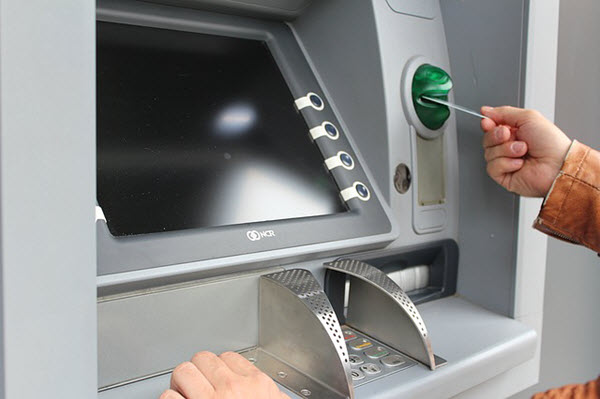
Both self-employed individuals and professionals who do not have a fixed income can benefit greatly with a line of credit. Borrowers can instantly access cash through the ATM, mobile banking or checkbook and get the needed amount any time, anywhere.
The Benefits of Using a Personal Line of Credit
Fast and Flexible– Borrowers can tap into funds as and when the need arises with a personal line of credit. While they have access to a large credit amount, they also have the freedom to use only what they need and pay interest on that amount only. Also, the repayment terms are relatively flexible for both part and lump sum payments.
Affordable– Since borrowers don’t need to pay interest on the entire amount that is disbursed, the cost is reduced significantly if the funds aren’t utilized completely.
No Charges on Withdrawal– Generally, there are no charges for withdrawing money.
Higher Limits– A personal line of credit usually comes with a higher limit as compared to personal loans and credit cards. This makes it a perfect solution for funding large expenses.
No Collateral Required– A personal line of credit needs no collateral backing. Even if you don’t have any financial reserve, you can make use of a line of credit.
The Limitations
Fluctuating Interest Rates– Being an unsecured product, the interest rates of a personal credit line keep fluctuating as bank interest rates go up and down. Borrowers may end up paying much more than what they had expected.
Revolving Account– This means that borrowers need to keep track of the amount due.
Stringent Approval– A personal line of credit is approved on the basis of the borrower’s CIBIL score. Those with a poor credit history may not be able to take advantage of it.
Maintenance Cost– Some banks and NBFCs levy closing costs or maintenance charges on a personal line of credit.
No Tax Deductions– The interest charged on a personal line of credit is not tax-deductible. A line of credit is a flexible instrument fulfilling the dreams of many professionals today. So, if you are planning to make the most of this financial product, make sure you are well-informed with the right knowledge.
The post Personal Line of Credit: From Basics to Benefits appeared first on Dumb Little Man.
What Happens If You’re A Passenger In An Uber Accident?
Travel has recently undergone quite a revolution and Uber is one of the most visible trends to have sprung up in the past decade. The rideshare app allows individuals to request rides from nearby drivers through their phones. It’s much cheaper than conventional taxi services and often much quicker due to the proximity-based matching system and state-of-the-art GPS technology.
Despite those features, however, Uber is not free from criticism and its drivers are not infallible. Accidents can still happen.
As a passenger in an Uber car, what do you do if you get in an accident?
Uber’s Insurance Policy
Uber will probably give you a refund for your trip if you inform them of the accident. You can do that by leaving a comment, submitting a feedback report or alerting the company through the “Help” option. Once they receive your feedback, an insurance agent will contact you to verify the details.
If you didn’t suffer any physical injuries, the process will be easy. However, if you were hurt, you should be aware of your next move.
First, it is important to understand the system of insurance at play with Uber rides. The Uber driver must have his own personal auto insurance policy in order to drive for the company. However, Uber provides all its drivers with a policy that varies depending on the status of the driver.
When the driver has the app on and is waiting for a customer to request a ride, he is covered for up to $50,000 in liability damage. From the time a customer requests a ride and until he reaches his destination, the policy increases to $1,000,000 and that also extends to you as a passenger.
James River Insurance is the carrier for Uber. The reason Uber provided its drivers with this policy is because personal auto insurance coverage will not honor claims that occurred during commercial or paid driving.
Initially, Uber claimed that its drivers were independent contractors and the company wasn’t responsible for any of their actions. This changed after the introduction of a law in the wake of an accident involving a 6-year-old girl.
A New Danger

What makes Uber dangerous for passengers?
It’s the potential for distraction.
The Uber app can only work on a smartphone. This means that a driver must routinely take his eyes off the road and his hand off the wheel to use the app. He needs to do this every time he has to accept customers, reroute a location, change settings or call a rider.
There is also a chance that an Uber driver will not report the accident to the company. This can confuse passengers, particularly when they expect to receive a certain compensation only to find out that there’s no record of the accident.
Filing a Claim
If an accident happens while you’re in an Uber vehicle, you’ll receive compensation for your injuries. If another driver caused the accident, you can file a claim with his insurance company. In case the crash was the fault of your Uber driver, you would be able to pursue compensation from him or from Uber.
It doesn’t really matter who was at fault for the accident. Whether it was your Uber driver or another driver, the passenger is protected.
“A passenger is considered an innocent party and it does not matter who caused the crash,” said Kevin Adkins, an Uber accident attorney based in Los Angeles.
But this rule is subject to a caveat:
“If the passenger was somehow responsible for the accident, his compensation might be reduced based on how much his negligence caused the accident,” continued Mr. Adkins.
Imagine this:
A drunk and unruly passenger somehow distracts the driver to the point that the driver loses control and gets into an accident. Without those exceptional circumstances, the passenger is protected.
Uber offers a small section on what to do in the event of an accident but not for passengers. Fortunately, the protocol is similar.
You should immediately seek medical treatment even if you feel like you didn’t suffer any injury. Adrenaline can waylay a lot of the pain and you may have invisible or internal damages that only a healthcare professional will be able to identify.
Additionally, take photos or videos of the accident and of your injuries. Those photos will be useful when submitting a claim.
What You Can Pursue

By filing a claim, you’ll receive payment for your hospitalization expenses, surgery fees, medication costs, and physical therapy.
Lost income from days you weren’t able to work because of the injury or recovery time will be paid, too. This includes both past and future days’ wages. Any personal items you had that may have been damaged or lost in the accident are covered as well.
Because of the rise of Uber and other rideshare companies, legislators are starting to craft new laws. Those laws are more accurate and easier to understand.
See Also: Do You Know What To Do In A Ride Sharing Accident?
The post What Happens If You’re A Passenger In An Uber Accident? appeared first on Dumb Little Man.
Munich

During the first hour of Robert Harris’s new novel, Munich, a young British civil servant, lunching with his wife, is summoned to the prime minister’s office by news of impending war. “It looks as though the talking’s over,” Hugh Legat is told. “Our man is flying home.” Hanging up the phone, Legat wonders, “Was this what History felt like? Germany would attack Czechoslovakia. France would declare war on Germany. Britain would support France. His children would wear gas masks. The diners at the Ritz would abandon their white linen tablecloths to crouch in slit trenches in Green Park.” It is Tuesday, September 27, 1938. In Berlin, Adolf Hitler has told the British emissary that German forces will mobilize at two o’clock the next day. In London, Prime Minister Neville Chamberlain prepares to address the nation. And in Munich, Robert Harris recreates the four days that follow in such penetrating detail that each moment of the drama holds us captive. A suspense thriller within a historical drama, Munich is one of Harris’s leanest and most dexterous novels. It is also a welcome return to the historical period that inspired, most memorably, the outstanding Fatherland (1992), which imagined Nazi-occupied England after an Allied defeat, and Enigma (1995), which revolved around the breaking of German codes during the Second World War. (Harris is also the author of the excellent Cicero trilogy set in ancient Rome and of contemporary thrillers such as The Ghost Writer.)
At the core of Harris’s novel is the Munich Conference of September 1938, the now-infamous example of an exhausted Europe’s weakness in the face of fascism. We know the outcome. But that knowledge only intensifies the sense of contained desperation that Harris creates in a narrative that is, from the outset, both airtight and charged with menace; a menace heard before it is seen. “He had listened to it on the BBC as it was delivered,” Legat notes of Hitler’s September 26th speech, “Metallic, remorseless, threatening, self-pitying, boastful . . . it had been punctuated by the thumps of Hitler’s hand pounding the podium and by the roar of fifteen thousand voices shouting their approval. The noise was inhuman, unearthly. It had seemed to well up from some subterranean river and pour out of the loudspeaker.”
As the novel’s plot uncoils and as the action moves from London to Berlin and Munich, Hitler comes gradually into focus — on the Chancellery balcony, in a roomful of generals, at the conference negotiations, terrorizing dinner guests — and here, as with Chamberlain, Harris conjures up a character rather than a cliché. This, for example, is Hitler receiving a foreign press summary: “He took the two sheets and started reading, rocking gently up and down on the balls of his feet. Hartmann had the impression of great energy barely suppressed . . . When he reached the bottom of the first page he stopped and flexed his head as if he had a crick in his neck, then read aloud in a tone of intense sarcasm: ‘Mr. Chamberlain’s description of his last meeting with Herr Hitler is agreeable proof that his strong candor was rewarded with liking and respect.’ He turned the page back and forth. “Who wrote this shit?” Paul von Hartmann, the civil servant delivering the summary, contemplates Hitler’s “fragile head — bent oblivious, reading. If he had known, he would have brought his gun.”
Soon he will. A German military coup seems imminent, and when Legat receives a secret message from Hartmann, a friend from their student days, he too is drawn into the web forming around the Munich Conference. “A car was driving slowly down North Street . . . ” Legat observes from his London flat. “The glow of its headlights lit up the ceiling, projecting an outline of the window frame across the opposite wall; the dark lines swung like the shadow on a sundial.” The stench of fear — for oneself, for the world — swiftly pervades the civilized, the everyday. And Hartmann, contemplating his office mates, sees how this has happened. “He had mixed with their type all his life: patriotic, conservative, clannish. For them, Hitler was like some crude gamekeeper who had mysteriously contrived to take over the running of their family estates: once installed, he had proved an unexpected success, and they had consented to tolerate his occasional bad manners and lapses into violence in return for a quiet life. Now they had discovered they couldn’t get rid of him.” Hartmann is the conscience of Munich and Legat its innocent heart, but Harris is too subtle a portraitist to draw them, or the history they embody, in bold colors. Here the past bleeds into the present and those maimed by the last war will soon face the next.
The post Munich appeared first on The Barnes & Noble Review.
The Barnes & Noble Review http://ift.tt/2rHHGmw
Peter Hujar’s Downtown
 Peter Hujar’s photographic subjects were not specimens of American male perfection; his nude figures were idiosyncratic yet erotic. In one of his signature nude studies, Bruce de Ste. Croix (1976), the subject is seated in a chair, contemplating his erection. This portrait represents Hujar’s conscious attempt to reintroduce male genitalia into Western art, and he was taking it a step further: the erection had never before been photographed with such aesthetic regard.
We are only poor…
We are only poor if we have nothing to give from within ourselves.
 Sig Nordal