The B&N Podcast: Laura Lippman

Every author has a story beyond the one that they put down on paper. The Barnes & Noble Podcast goes between the lines with today’s most interesting writers, exploring what inspires them, what confounds them, and what they were thinking when they wrote the books we’re talking about.

Laura Lippman’s new novel Sunburn begins with the arrival in a Delaware town – the kind of town most people pass through on their way to the beach without a second glance – of a woman who is definitely going to be noticed. But for all its film noir atmosphere and slow-kindling unease, in this story of ill-starred lovers readers of the author’s addictive and unique works of mystery and suspense will find all the hallmarks of a Lippman classic: a precise sense of place, a love for certain aspects of the past, and a wry, captivating voice. The author joins us on the podcast to talk about Sunburn, and how the work of James M. Cain inspired this intoxicating tale.

//html5-player.libsyn.com/embed/episode/id/6277708/height/90/theme/custom/autoplay/no/autonext/no/thumbnail/yes/preload/no/no_addthis/no/direction/backward/render-playlist/no/custom-color/87A93A/


New York Times bestselling author Laura Lippman returns with a superb novel of psychological suspense about a pair of lovers with the best intentions and the worst luck: two people locked in a passionate yet uncompromising game of cat and mouse. But instead of rules, this game has dark secrets, forbidden desires, inevitable betrayals—and cold-blooded murder.

One is playing a long game. But which one?

They meet at a local tavern in the small town of Belleville, Delaware. Polly is set on heading west. Adam says he’s also passing through. Yet she stays and he stays—drawn to this mysterious redhead whose quiet stillness both unnerves and excites him. Over the course of a punishing summer, Polly and Adam abandon themselves to a steamy, inexorable affair. Still, each holds something back from the other—dangerous, even lethal, secrets.

Then someone dies. Was it an accident, or part of a plan? By now, Adam and Polly are so ensnared in each other’s lives and lies that neither one knows how to get away—or even if they want to. Is their love strong enough to withstand the truth, or will it ultimately destroy them?

Something—or someone—has to give.

Which one will it be?

See more books by Laura Lippman.

Like this podcast? Subscribe on iTunes or Stitcher to discover intriguing new conversations every week.

Author photo of Laura Lippman (c) Lesley Unruh.

The post The B&N Podcast: Laura Lippman appeared first on The Barnes & Noble Review.

The Barnes & Noble Review http://ift.tt/2BJ6wpy

Tips for New Entrepreneurs: What You Need to Know Before Starting A Business

Walking on the path of entrepreneurship can be a difficult task as there will always be obstacles and challenges. As someone who’s new to entrepreneurship, you should be prepared to face them.

As you embark on your journey, you will encounter issues about legal matters, finances, product development, intellectual property, and much more. The list can easily overwhelm new players.

This makes it important that you fully commit yourself to your business. If you feel that you cannot handle things on your own, there are teams of entrepreneurial finance assignment help that can assist you in getting organized.

And to make sure that you are completely prepared, here are some of the best tips for new entrepreneurs.

Always Keep Cash Handy

As an entrepreneur, you must remember that the money you prepared as capital may not be enough. For your business to function smoothly, there needs to be a consistent flow of cash.

Find investors and venture capitalists who can help fund your ideas and business. Convince them and make them believe in your vision.

Take note that they will likely ask about the expected returns on their investments.

Focus on people and their needs

Stay focused on what your employees need. Make sure to invest in their training.

The skills and knowledge that they’ll learn will be really valuable to the success of your business.

Ask yourself on what business model fits you

If you have started a business just for the sake of earning money and you don’t have any interest in it, don’t expect that business to last long.

Before you start a business, make sure that it’s something that goes in line with your passion and interest. When you are passionate about something, you’ll work really hard to make it successful.

Now, this doesn’t mean that passion is everything. There are factors and situations that can also influence the result you’ll get.

Keep your personal life away from your professional life

work-life-balance

As an entrepreneur, you will spend at least 12 to 13 hours a day working on your business.  As a result, you may not have time to socialize anymore.

As an entrepreneur, you need to know how to balance your work and personal life. Spending too much time on work can result in burnout and that can make you less productive and focused.

Take a break when you need to. It will not only refresh your mind but it can also give you better ideas that can improve your business.

See Also: 5 Ways to Balance Work and Family Time Even if You’re a Workaholic

Don’t let your debt pull you down

When you are starting a business for the very first time, remember not to lose yourself in debt. You have just started your business and you need money for many things.

Credit should not be one of your worries. Moreover, it is incredibly risky to take debts in the initial phase.

If you are in debt and your business skyrockets to success, it’s all well and good. However, if your business fails, you would still have to pay your debt off since you’re the designated personal guarantor of the loan.

If you really need to borrow money, make sure that it’s within manageable limits.

Jot down your ideas and what you learn

journaling

As an entrepreneur, you will have a million things running inside your mind. With so many ideas, there’s a good chance that you’ll forget them in a snap.

The best way to avoid that from happening is to write down your thoughts and lessons in a notebook. You can look back at your notes whenever you need to recall your ideas.

See Also: 5 Benefits of Journaling To Inspire and Motivate You

Take some, leave some

Wise words from someone experienced can be an asset to your business. However, to ensure the success of your business, learn to sieve good advice from the bad ones.

Once you’re able to do that, you’ll be off to a good start. If you are unsure about what to do, just trust your instinct.

Conclusion

The 7 tips for new entrepreneurs can make you a smarter player in the business arena. If there is one thing on that list you haven’t implemented yet, then it’s time that you do.

Small changes can make a big difference. So, keep your mind fueled with positivity and stay healthy and happy. Success will follow shortly.

The post Tips for New Entrepreneurs: What You Need to Know Before Starting A Business appeared first on Dumb Little Man.

http://ift.tt/2EIj1o1

Scientific Studies Show How Nutrition Influences Our Creativity

You’re reading Scientific Studies Show How Nutrition Influences Our Creativity, originally posted on Pick the Brain | Motivation and Self Improvement. If you’re enjoying this, please visit our site for more inspirational articles.


It is widely known that eating a healthy diet benefits our physical health. But less is acknowledged about the psychological benefits. We have all tried exotic ingredients or foods that make us feel happy. But, how is our mood actually affected by what we eat? And, how can it end up influencing our creative thinking?

Pay attention to your body and your mind right now. Are you working at your maximum potential? Now recall what you had for lunch or breakfast and how it may be affecting your productivity. Now put this into perspective. Because this is something that is happening over an extended period of time and not instantly.

The role of glucose as our brain’s fuel

The award-winning psychologist, Ron Friedman, explains in one of his articles for Harvard Business Review how “food has a direct impact on our cognitive performance, which is why a poor decision at lunch can derail an entire afternoon.”

And this happens because “about everything we eat is converted by our body into glucose, which provides the energy our brains need to stay alert. When we’re running low on glucose, we have a tough time staying focused and our attention drifts. This explains why it’s hard to concentrate on an empty stomach”.

The problem is that our body does not handle all foods at the same rate. Renée Leonard-Stainton, qualified Naturopath, Nutritionist, and Western Medical Herbalist, explains how our body processes glucose and how to eat for mental energy. “Eating foods with a low glycemic index (meaning that they release glucose more gradually into the bloodstream) may help you avoid the lag in energy that typically occurs after eating quickly-absorbed sugars or refined starches.”

Turning fruits and vegetables into well-being

Research conducted by the University of Otago in New Zealand recruited 400 people aged between 17 and 25 years old, to try to define the association between fruit, veg and well-being. For 13 days, participants reported their consumption levels of fruit, vegetables, sweets, and chips, as well as their well-being, curiosity, and creativity. Researchers discovered a correlation between higher fruit and vegetable intake and higher average well-being, curiosity, and creativity levels among the participants. But what is more interesting, is that their fruit and vegetable consumption on one day, didn’t improve their well-being the following day. This therefore emphasizes the need to eat a healthy and well-balanced diet consistently.

Foods that boost creativity

The studies mentioned before, prove that foods that are rich in vitamins and minerals promote well-being, curiosity, and creativity. But what specific foods should we consume to improve our productivity and consequently our creative thinking?

Vitamin C is an essential factor in the production of dopamine, the neurotransmitter that underlies motivation and promotes engagement. Foods with vitamin C are not only oranges but also strawberries, pineapple, mango, kiwis, papayas, brussel sprouts, bell peppers, and broccoli.

B vitamins influence feelings of vitality and engagement. You will find a source of vitamin B in tuna, Swiss and cottage cheese, shrimp, sardines, mussels, oysters, clams, salmon, crab, trout, herring, beef, chicken, turkey, whole-grain oats, and milk.

Antioxidants such as vitamins E help reduce bodily inflammation, improve memory, enhance mood, and may help prevent depression. Ingredients with vitamins E include almonds, spinach, sweet potato, avocado, wheat germ, sunflower seeds, butternut squash and olive oil, among others.

Finally, spices are such an important part of our daily diet. Cinnamon, for instance, makes your neurons stronger for a longer period of time. Research from the University of California at Santa Barbara shows that a sprinkle of cinnamon in your meal can help blood flow and stabilize proteins in the brain, improving blood glucose.

In conclusion, our creative thinking is affected by a number of external elements, but the food we eat is such an important part of it. Choosing a diet with ingredients that are gradually processed by our body are crucial to staying productive. At the same time, our diet will also affect mental energy and positivity, and the combination of these factors will determine our levels of creativity.


You’ve read Scientific Studies Show How Nutrition Influences Our Creativity, originally posted on Pick the Brain | Motivation and Self Improvement. If you’ve enjoyed this, please visit our site for more inspirational articles.

>

Luther vs. Erasmus: When Populism First Eclipsed the Liberal Elite

Erasmus was an internationalist who sought to establish a borderless Christian union; Luther was a nationalist who appealed to the patriotism of the German people. Where Erasmus wrote exclusively in Latin, Luther often used the vernacular, the better to reach the common man. Erasmus wanted to educate a learned caste; Luther, to evangelize the masses. For years, they waged a battle of ideas, with each seeking to win over Europe to his side. But in a turbulent and polarized age, Erasmus became an increasingly marginal figure: the archetypal reasonable liberal.


http://ift.tt/2FfHlKN

Protecting Yourself From Fake Social Media Accounts

Fake news.

You’ve probably been hearing a lot about it lately.

What is fake news and why is it so important that you know how to spot it?

Fake news is not someone saying something you don’t agree with. It’s not one political party pointing out facts that happen to be inconvenient to the opposition.

It’s made-up stories disseminated with the sole purpose of creating divisiveness and spreading misinformation.

The widespread availability of the Internet has led to an openness in the exchange of information that humanity has never before experienced. Unfortunately, this has also led to folks taking advantage of this openness to spread divisiveness. The greatest tool in their shed? Social media.

Fake Social Media Accounts Spread Fake News

During the election cycle in 2016, Stanford University conducted a study of fake news circulating on Facebook and the results were shocking.

Researchers found 115 fake pro-Trump stories circulating on Facebook that had been shared 30 million times at that time. They also found 41 fake pro-Clinton stories that had been shared 7.6 million times.

We’ve all seen them- implausible headlines, questionable websites, and recycled photos.

The problem is that people do believe them and fake social media accounts use this fact to spread such stories like wildfire.

How Big Is The Problem Of Fake Social Media Accounts?

Between 2014 and 2016, the number of fake social media accounts grew 11 times, a shockingly sharp uptick. While as a percentage, fake social media profiles don’t seem especially prevalent.

However, by volume, there are way more fake profiles than you may think. Check out these numbers:

  • 2-3% or 60 million fake Facebook accounts
  • 9-15% or 48 million fake Twitter accounts
  • 8% or 24 million fake Instagram accounts

How Can You Spot Fake Social Media Accounts?

fake social media account
Via skstechnologies

Have you ever received a friend request from someone you are already friends with that has the same profile picture and everything? That was probably a hacker trying to gain access to your or your friend’s personal information.

In addition to looking for duplicate accounts of people you know, there are a few other ways to spot fake social media accounts.

Here are some great examples:

  • Profile pictures that are of celebrities or objects
  • Accounts with almost no followers or have thousands of followers
  • Public figures who aren’t verified
  • Accounts with little user engagement

What Should You Do If You Are Being Impersonated?

Impersonators wield a lot of power in today’s open social media society.

Just setting up a social media account and pretending to be a real person can gain you a lot of trust right off the bat. So, what do you do when someone is impersonating you?

Start by reporting the impersonator. Know that reporting the impersonator may or may not work and even if you get one account shut down, there’s always the possibility that another one will be created.

Impersonator accounts can be used to gain access to personal information or to publicly shame, embarrass, or humiliate the person they are impersonating. If you are a target of either, make sure to monitor all social channels regularly to find and report them immediately.

Why Does Any Of This Matter?

Social media is the new telephone.

Instead of calling our friends and catching up one by one, social media has allowed us to catch up with all of our friends at once, multiple times a day.

Logging off is one way to avoid fake news but is that really a reasonable solution?

We didn’t get rid of telephones when telemarketers became a problem.

Plus, most people aren’t going to log off anyway.

Fake news and fake social media profiles are a real problem and you can only solve them with education and awareness. Learn more about where fake social media accounts come from by checking out this infographic.

Where do fake social media accounts come from?
Source: SocialCatfish.com

The post Protecting Yourself From Fake Social Media Accounts appeared first on Dumb Little Man.

http://ift.tt/2HxYksK

Winter has Tetlin National Wildlife Refuge in its icy grip. For…

Winter has Tetlin National Wildlife Refuge in its icy grip. For countless generations, the Upper Tanana Valley of Alaska has served as a natural travel corridor – for wildlife, native people and explorers. Despite the blanket of snow, many animals live here year round – including the Great Grey Owl, which preys on small rodents. Photo by U.S. Fish and Wildlife Service.


Why Strategy Is Important In Business

Being an entrepreneur is not a cakewalk. Far from it!

When the responsibility of fulfilling your dreams lies on your shoulders alone, you find yourself burdened and clogged by fear and uncertainty.

The easiest way entrepreneurs free themselves from fear is by creating strategies and plans. Entrepreneurs are aware what a gold mine a successful and comprehensive strategy can be for their business.

business strategy

Why Strategy is Important In Business

If you are wondering why you should pay close attention to your strategy, check out the following benefits.

  • Planning pays

Tracking your progress according to a set of criteria can help make sure that you are on track and growing. With a clear picture of what you expect your future to look like, you will always be aware of your priorities.

  • Helps in recognizing strengths and pain points

A good strategy can help you recognize your business’ selling points and pain points so that you can have a holistic view of what you are doing. It can help you stay updated on your progress, too.

  • Aids in assessing skills and talents

When you have a clear idea of your business’ growth, you will know what talent you need to work on. Strategically planning a business takes an unbiased and open mind.

  • Helps in managing resources

Businesses should realize that their resources might run out. With a great and complete strategy, you can prioritize the utilization of your resources. This way, the important things in your business are given priority over less important things.

See Also: Top Lessons From Successful Entrepreneurs You Need to Know Now

entrepreneur success

Tips for Building A Successful Strategy

If you’re convinced about making a strategy but not sure how to do that, here are some of the best tips you can use:

Throw away the losers

As an entrepreneur, you are regularly bothered by fresh and novel ideas popping up in your head.

What you need to do is leave the ideas that seem to be too good to be real. Not all business opportunities will work for you, so you need to screen them. Look for the market potential in your business idea and then lay out a plan.

Analyze your idea

A good strategy is a result of a lot of analysis.

While big corporations can put in massive amounts of resources for researching ideas, as an entrepreneur, you would need to balance your research for resource optimization. Only do as much planning as necessary for starting up.

Merge action and analysis

Since you are just starting out, try to separate your analysis and action for a clearer picture of what needs to be done next. Do more analysis or swinging into action.

Define your objective

Define what your business does in clear and concise words. Know what problems you exclusively solve for the society.

Target your market and create an approach that will give more focus on them than your products.

These simple steps in building strategy can ensure you get started on the right track and that you’re heading in the right direction.

See Also: Best Tips For Young Entrepreneurs

The post Why Strategy Is Important In Business appeared first on Dumb Little Man.

http://ift.tt/2HvGFlf

When They Call You a Terrorist

The first time Patrisse Khan-Cullors, a founder of the Black Lives Matter Movement, was arrested she was twelve years old. A police officer appeared at the front of the classroom at her school in Van Nuys, California. He called her name — when she walked up to him he cuffed her in front of all the students present, students gathered to study sixth-grade math and science. The not-yet-teenage girl, her “stomach dropping the way it does on one of those monster roller coaster rides,” was marched off to the principal’s office, where her bag and person where searched: pockets turned out, shoes checked. No drugs were found, but dignity had been duly extracted from a little girl, and no apologies would ever be offered. Finding drugs is not the point. Searching, patting, stripping, violating are acts in law enforcement’s pageant of subjugation and dehumanization. Black bodies, we learn from the pages of When They Call You a Terrorist, Khan-Cullors’s memoir written in collaboration with co-author asha bandele (the writer does not capitalize her name), make up the terrain on which white supremacy parades its power.

The onslaught, as Khan-Cullors documents with empathy and acuity, is unrelenting. Before she is in double digits in birthdays, she is witness to the “War on Drugs,” which is in truth a war on African Americans. Her brothers are “trained and tracked,” thrown in and out of juvenile detention, “readied for longer stretches in prisons far away.” They return from prison hardened, different people: a “human testimony to other little boys” of the future that awaits them. Nor is home a refuge; in one search of the small apartment Khan-Cullors shares with her siblings and single mother, the police go through every drawer and tear apart every room, their ruthlessness unchecked despite the presence of small children. Another lesson, to the children, of how their lives are valued.

As the ’80s march on, a War on Gangs is declared. Kids hanging out with friends in Khan-Cullors’s Van Nuys barrio, where “there are no parks, no green spaces, no community centers,” are now labeled “gangs.” The tax dollars thrown into fighting this never-defined phenomenon fund an advancing army of law enforcement. Helicopters now hover over their homes “at all hours of the day and night,” shining lights, “circling and surveilling, vultures looking for prey.” Their targets, their “enemy,” is anyone “Black or Brown who moved.”

The personal histories that constitute When They Call You a Terrorist highlight the architecture of an all-encompassing surveillance, which sets the stage for the subjugation and removal of those being watched. The black bodies that are rounded up and taken to prison are “disappeared,” both figuratively and literally. When Khan-Cullors’s brother is taken away to Los Angeles County prison, the family, despite her mom’s desperate efforts, does not find out where he is for nearly a month. When the author’s mother finally does get to see him, he is drugged and drooling. In prison, Monte Cullors has been diagnosed with schizoaffective disorder. It is only later, much later, that his sister will discover the extent of the torture he has faced behind bars. After being digested by the system, he is broken in all the ways a man can be.

The losses contained in the pages of When They Call You a Terrorist are acute, but they are rendered with lucidity and lyricism; the endings of many chapters have a lilting, almost incantatory rhythm. The chapter in which Khan-Cullors tells of the impunity with which black children are violated ends with “Twelve and childhood already gone / Twelve and being who we are can cost us our lives / It cost Tamir Rice his life / He was a child of twelve.” In a later chapter, she tells of her brother’s relapse into schizophrenia and the gentleness with which her older brother and her boyfriend come to his rescue, and concludes with the lines: “This is what the love of Black men looks like / This is what our Black yesterday once looked like / And I think: If we are to survive this is what our future must look like.”

It is this effort to reclaim a lost communal love for her generation that radiates through When They Call You a Terrorist. It stands by in moments of uncertainty and in moments of desperation; as a teenage Khan-Cullors struggles with coming out as queer, her cousin Naomi — who has already declared herself — is there to comfort her. When she finally graduates high school but has no real plan for her future, a patient high school teacher takes her in. Then there is Strategy Partners, the nonprofit where she eventually works, which gives her a solid base; and the “intentional family” of friends and lovers she creates carries her through the darkest hours of her life.

It is unsurprising, then, that it is in the strength of communal action — as opposed to only the individual — that When They Call You a Terrorist situates its hopes for the future. In its early pages Khan-Cullors says, “We lived a precarious life bordered at each end by the politics of personal responsibility that Black pastors and then the first Black President preached more than a commitment to collective responsibility.” It is this disproportionate emphasis on individual responsibility, in Khan-Cullors’s view, that imprisons black men like her biological father, Gabriel. Unable to contextualize their own failings against a society that degrades and excludes, they remain engulfed in a shame that never leaves. Struggling with drug addiction, Gabriel swallows the whole prescriptions of his twelve-step counselors, who disconnect his condition from collective failures that surround him. Trailing him into meetings, the author listens to the stock rhetoric of individual responsibility but comes to a different conclusion. As she says at his funeral, he “died of a broken heart in a nation of broken promises.”

Hardship can birth tenacity more formidable than fear, and Patrisse Khan-Cullors’s story, told so evocatively in When They Call You a Terrorist, is proof of it. Even as she acknowledges the dire character of the present, she refuses to bow before it. As she says: “So yes, yes, it is a terrifying time, as an organizer, as a new mother, as the wife of an immigrant living in a Queer relationship to be in this nation.” But for all the terror of it, she also admits, “I can’t leave the work here.”

The post When They Call You a Terrorist appeared first on The Barnes & Noble Review.

The Barnes & Noble Review http://ift.tt/2Cximjk

4 Small Business Tips for Women

Every day, 849 small businesses across the world are launched by women and the number has gone up by 3% in the past year. In the last two decades, there was a whopping rise of 114% in the total number of women-owned small businesses. This clearly indicates that women are rocking the small business industry.

Although a large number of women entrepreneurs have already established themselves, there are others who are just getting started. Unfortunately, the process isn’t that easy.

Women have to face many challenges in launching, establishing, and expanding their business.

If you are still in the planning stage, here are really helpful business tips for women.

Give Your Passion A Rational Twist

‘Follow your passion’ is the best advice anyone could give a small business owner. For women, that won’t be a problem as females are more sensitive and passionate.

However, blindly following passion without analyzing the market and its demands can turn out to be a roadblock to your success.

With that, it is important that you give a rational twist to your passion. Examine it closely against various parameters, like market study, competition, current trends, resources required, and funds available.

You have to build a strong foundation for your small business empire. Using a rational approach while following your passion can help ensure that.

Line Up Multiple Sources of Funding

business tip for women

Sourcing funds is one of the most crucial challenges for every entrepreneur, be it a male or a female. However, various studies have proved that women entrepreneurs find it more challenging to arrange funds for their business endeavors.

A research stated that women-owned business receives only 7% of the venture capital investment money. Female loan approval rate, on the other hand, is 15% to 20% lower than males.

So, instead of solely relying on a single source for all your small business funds, line up multiple sources of funding. This will ensure a constant flow of finances throughout the growth of your business.

But there is a brighter side of the picture as well.

There are some funding schemes and minority grants offering funds, especially for women. Groups and grants like Elizabeth Street Capital, Eileen Fisher Women-Owned Business Grant Program, and InnovateHER Challenge can be a great source of funds for women-owned businesses.

Other economic development programs, like certification by Women’s Business Enterprise National Council, can also help in arranging easy funds.

Invest in Compassion for Effective Team Management

team management

“The hardest thing for women has been the human capital side,” says Maria Coyne, Executive Vice President of Business Banking at KeyBank and founder of Key4Women, a program dedicated to assisting women business owners.

She believes that women business owners can have more compassion towards her employees as compared to men, which can be used both for and against small business management.

Owning a small business, you should know how to balance emotional quotient and not let it rule over your instincts. Don’t let compassion limit you from making lucrative staffing decisions. Instead, use it for positive investment and management in human capital.

Instead of full-time hiring, you can hire on a contract basis or work-from-home basis. Those two approaches cost way lesser and add well to the profit.

You can look for women who are searching for work from home opportunities and empower them. Bring together a team of professionals who share the same enthusiasm and offer a positive and flexible working environment for effective management, execution, and operation.

See Also: The Importance Of Emotional Intelligence For A Leader

Take Notice of Accounting and Tax Benefits

There are many perks of being a woman and one of them is getting tax benefits.

You can register your small business at Women-Owned Small Business and get it certified by the WBE or Woman’s Business Enterprise. This will open new doors to various tax incentives and other waivers. Take a note of your accounting and taxes and do not miss out on the tax benefits offered in your state.

Conclusion

Start giving a rational twist to your passion and finding multiple sources of funding. Use your emotions and compassion for effective team management and do not forget to avail all the tax benefits. These things will help you become a successful small business owner.

Invest equal energy in raising and building a brand for your small business as you would invest in raising your family. Once you’re able to do that, you’ll find that nothing can stop you from becoming the next role model for women business owners.

See Also: 5 Women Entrepreneurs Who Failed Before Becoming Millionaires

Author Bio:
Ankit Gupta heads the content team at ExporteresIndia.com, India’s leading B2B marketplace. His passion towards his profession and his loyalty towards his organization compel him to read and write about small business trends, tips, to-dos, and not-to-dos. You can follow Ankit on his Google+, LinkedIn, and Twitter handles to read other insightful blogs written by him.

The post 4 Small Business Tips for Women appeared first on Dumb Little Man.

http://ift.tt/2EFeWNc

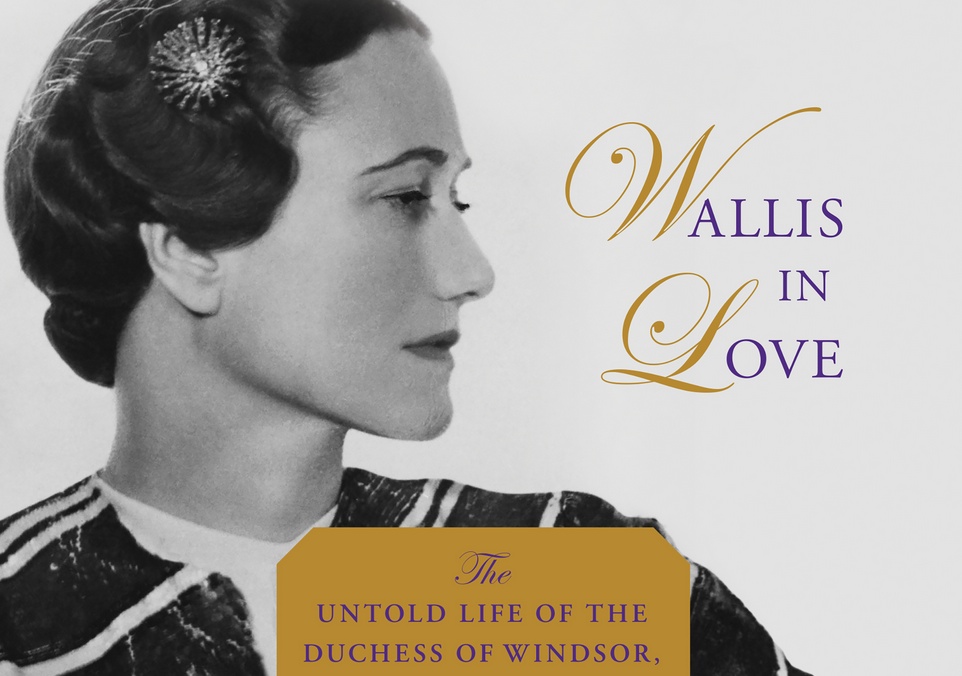
Wallis in Love

If you’re feeling sardonic, a frame of mind that veteran crowned-heads chronicler Andrew Morton’s Wallis in Love does a lot to encourage, it’s tempting to see Wallis Simpson as 1930s Britain’s tabloid equivalent of Lee Harvey Oswald. At a literal level, the comparison doesn’t hold water, since no British monarch has died by violence since Charles I’s beheading in 1649. But until the Baltimore-raised divorcée who ended her days as the duchess of Windsor came along, no British monarch had voluntarily quit the throne either.

As fans of The Crown already know, all Wallis had to do to end the brief reign of Edward VIII was to get him besotted with her. Because ardor wasn’t her thing, she never reciprocated, leaving her stuck for the rest of her life miming the charade of a “great romance” with a man she often privately treated with contempt. Yet her public performance was so convincing that you can’t help wondering how she might have fared if she’d turned actress for real. She might be remembered today as a great one, not the termagant most Britons never forgave for existing.

((EAN1}}Putting Prince Charles’s, Princess Diana’s, and Camilla Parker-Bowles’s later soap-opera hijinks in the shade, Edward’s decision to abdicate in 1936 for the sake of “the woman I love” was both a genuine national trauma and the climax of Britain’s worst constitutional crisis of the twentieth century. To her credit, Wallis realized the idea was cuckoo and tried to derail it, but that wasn’t widely known at the time. During the abdication drama, public hostility to her was intense enough that she even incited her own would-be Jack Ruby: an Australian who wrote letters threatening to find her in France — where she’d fled to wait out the hullaballoo — and “put a bullet in her.” For that matter, Australia itself threatened to leave the British Empire if Edward had the gall to try making her queen.

Then and later, rumors flew that she was a paid Nazi agent, or had seduced the king with the arcane sexual tricks she’d learned in a Chinese brothel, or was a hermaphrodite. (Why not all three?) Anticipating their American counterparts after That Day in Dallas, the Brits were seemingly ready to believe almost any explanation for their young, popular ruler’s abrupt vamoose — preferably, one that didn’t involve accepting that he’d fallen head-over-heels for a pushy Yank whose attractions were confined to a pair of piercing blue eyes and a minor talent for spiteful wit.

Coming closer to the mark, maybe, were the insiders who guessed that Edward had seized on marrying Wallis as a terrific excuse to get out of a job he hated. Aside from that scenario, Morton can’t explain what goaded him either, but Wallis in Love isn’t the kind of book you read for its psychological insights. You read it because the duke and duchess of Windsor were two of the weirdest gargoyles of their era and because their story is such a dotty combination of historical consequence and unspeakably charmless triviality.

Morton marches his readers briskly through Bessie Wallis Warfield’s shabby-genteel Baltimore upbringing. Its details read like a rejected draft of an Edith Wharton novel: The House of Mirth‘s gloom crossed with The Custom of the Country‘s satire, say. After her father died of tuberculosis during her infancy, she and her mother, Alice, were often dependent on relatives for their upkeep — and, no less important, their social status, such as it was. Wallis went to posh schools, but her clothes were often hand-sewn by Alice.

By late adolescence, her verve was attracting any number of would-be beaux. But you hardly get the impression that she was susceptible to romance for romance’s sake. From the start, attracting male attention was, quite relentlessly, her career: the only means available to her to move up in the world. By contrast, her sometime Baltimore neighbor, Gertrude Stein — whose novel Ida, about “publicity saints,” was partly based on Wallis — at least tried her hand at becoming a doctor, although Stein gets dragged into Wallis in Love, mostly because Morton likes hinting at lesbianism as his protagonist’s never-acknowledged Rosetta Stone.

Her first marriage, to naval aviator Earl Spencer, hit the skids quickly, thanks to his drinking and her apparent allergy to sex. (She later told a confidant that she’d never slept with either of her first two husbands, leaving us wondering whether that was also true of her third.) An affair with an Argentine diplomat in Washington, D.C., was her first “grand passion,” and also her entrée to international political elites. Once that ended, an attempted reconciliation with Spencer took Wallis on a long jaunt to China, where he was then stationed. Hence the bogus story about her Oriental-brothel sexual education, which was quite possibly inspired — though Morton doesn’t say so — by lurid 1930s movies like Josef von Sternberg’s Shanghai Express rather than anything Wallis actually did.

In reality, the lasting value of her “Lotus Year” was her introduction to American expat Herman Rogers, who stayed loyal to her for decades and functioned as her “de facto husband” in crises. Wallis called him “the only man I’ve ever loved,” and it typifies her astounding self-centeredness that she chose to tell this to Rogers’s second wife shortly after their wedding in 1950. In fact, his new bride had pushed for a speedy ceremony after his first wife’s death, fearing that Wallis — by then the duchess of Windsor — would toss the poor old duke aside like stale fish guts once her Herman was suddenly available.

After her return from China, she was back on the prowl, eventually divorcing Spencer to marry businessman Ernest Simpson: “to all intents and purposes,” Morton writes, “Herman Rogers Lite.” An Anglomane so inveterate that he’d given up U.S. citizenship to become a naturalized British subject, Simpson was Wallis’s ticket to London — a place she instantly loathed. “I’m sick of seeing old things,” she was soon complaining. “I want to see something young.”

In his mid-thirties by then, the prince of Wales just barely qualified. But Wallis soon got intrigued with his press coverage and promptly began scheming to insinuate herself into his social circle. Exactly what she was hoping would happen isn’t clear, but she presumably didn’t anticipate what did. Happy to dally with a series of mistresses, the heir to the throne had never indicated any interest in marriage, no doubt to the anxiety of His Majesty’s Government as the succession loomed. There may be no better proof of the adage to be careful what you wish for.

Carried on with her complaisant husband’s help, Wallis’s pursuit was well enough known to her family that she wrote “Mission accomplished” to an aunt once they finally met. But then he got smitten, phoning her constantly and sending her puppyish love letters. On her end, his thirty-eight-year-old paramour was enjoying herself: “I might as well finish up any youth that is left to me with a flourish,” she wrote, implying that a permanent union was the farthest thing from her mind. Once she realized he was serious about forging one, she tried to warn him off — predicting, quite accurately, “I am sure you and I would only create disaster together.”

Even so, the situation might have been resolved much more tranquilly if Edward had surrendered his right to the throne for Wallis’s sake before George V’s death turned him into Edward VIII. Making matters worse, the new king insisted on marrying her before his scheduled formal coronation the following spring. Morton’s fresh angle on the ensuing crisis is to tell the story exclusively from Wallis’s point of view. Stranded in France, barred from seeing Edward until her divorce from Simpson was final, she was unable to sway him in their frustrating long-distance phone conversations. When he called to tell her the die was cast, her reply was succinct and, once again, accurate: “You God-damned fool.”

Wed at long last in June 1937, the newly minted duke and duchess of Windsor didn’t need much time before their behavior made Edward VIII’s former subjects catch on that they might be better off without him. The couple’s ill-considered visit to Nazi Germany in 1937, including tea with Adolf Hitler and too many “Sieg Heil” salutes, was a blunder from which they never recovered, and the duke seems to have remained a more or less unrepentant Nazi sympathizer even after the war began. The Nazis themselves certainly thought so, plotting to kidnap him from his Riviera exile for propaganda purposes once Germany invaded France in 1940. Instead, Winston Churchill packed the pair off to Bermuda for the duration after appointing the duke its governor, largely to keep him — or them — safely offstage.

It was the last even semi-serious post the former king ever held. Afterward came decades of vacuous society life in Paris, Cannes, New York, and elsewhere until his death in 1972, followed by Wallis’s own a dozen years later. While the duke never quite came to despise her, she certainly came to despise him, sending him home early from nightclubs with an ungracious “Buzz off, mosquito.” Notoriety was all they had, and not much else bound them together except bitterness at the way they’d been treated.

Considering what she’d come up from, Wallis’s unmitigated self-pity was remarkable. At her worst, she was capable of saying that she couldn’t feel sorry for the British people’s sufferings during World War II after what they’d done to her. One ongoing source of resentment was the royal family’s refusal to let her call herself “Her Royal Highness,” although the duke was allowed the male equivalent. Beyond that, says Morton, their later lives were consumed by only “two issues: their image and their bank balance.” Despite the author’s occasional (and glib) speculations that Edward enjoyed playing the submissive to Wallis’s metaphorical — well, let’s hope — dominatrix, whatever submerged emotional or psychosexual complexities figured into the marriage stayed largely hidden by the two peculiar wax dolls that several generations of magazine readers grew wearily familiar with over the years.

In our time, both The Crown and The King’s Speech have turned the couple into fascinating reptiles, always good for a laugh whenever they intrude on the royal dullards. Morton knows better than to attempt the fool’s errand of trying to make Wallis sympathetic or even pleasant. Yet it seems charitable to think of her as thwarted. In a less gynophobic age, her brains, drive, and cunning could have been put to better use than seducing an idiot with an impressive title. She probably spoke her truest epitaph when a photographer asked her to smile during the abdication brouhaha: “Why smile?”

The post Wallis in Love appeared first on The Barnes & Noble Review.

The Barnes & Noble Review http://ift.tt/2EH2fph