Accelerate your Happiness with these 14 Steps

You’re reading Accelerate your Happiness with these 14 Steps, originally posted on Pick the Brain | Motivation and Self Improvement. If you’re enjoying this, please visit our site for more inspirational articles.

Happiness in the Sunset

1. Message Your Family and Friends Often

It’s so easy to let our social and familial lives slide down into a small corner of our lives in favor of our work lives. Because of our goals and “responsibilities” we’ve been taught that it’s okay to focus on staying “busy”.

Yet, strong relationships have been shown in numerous studies, to be the strongest predictors of life satisfaction. When you express yourself with a couple of different friends every week, you give yourself the best chance of being happy.

Life then doesn’t seem like it’s all about this solitary pursuit, but more like an experience, you’re cultivating to the benefit of everyone around you.

Based on the longest study on happiness by a group of Harvard researchers, a major finding was that the quality of your relationships — determine the quality of your happiness. According to positive psychology, that means you’re likelier to move in the right direction in every other area of your life.

2. Laugh Whenever You Can 

Based on a whole library of research documented by Shawn Achor, author of The Happiness Advantage, people who laugh often are happier, and likelier to achieve more in their lifetimes. As children, we used to laugh hundreds of times per day. As adults, that number got whittled down significantly.

Humour is our primordial philosophy, but we only cultivate it through being mindful of the looking-glass we navigate our lives with.

3. Love More of What You Do 

Each day is precious, finite, and fleeting. Yet, because it is given to us freely, it’s easy to forget that. It should be our aim to suck the marrow out of each day, quietly embellishing ourselves in its full possibilities.

A day spent in drudgery is a day that hasn’t been lived fully. While a day that’s been experienced with an underlying sense of play can make the most seemingly ordinary days an adventure.

In the myriad responsibilities of work and life, you can make the most out of your day by imbuing as much of what you do with a sense of love. And you can go further by cultivating your creativity through an art form each day.

4. Make Yourself Feel Good Every Morning

Your daily morning routine is the foundation for your life. If you start off each day by cultivating the mental, spiritual, physical, and emotional areas of your life you’ll head into your day with a spring in your step.

Whether you read, exercise, journal, meditate, take a cold shower, or else — a sign that you’re moving in the right direction is that you practice what puts you in peak mental and physical state each day.

5. Travel Somewhere Every Year

While life may partly be about the hustle, it’s also about having a holistic life that makes you feel energized to be the best person you can be. Going away allows you to come back home renewed, ready to fire on all cylinders.

Travelling is about much more than taking the time to have some fun and relax. It’s about going on adventures that disconnect you from your existing culture — so that you see yourself with a little more clarity.

It’s about enriching your life, with unique, memorable experiences. If you’re not able to travel abroad due to circumstances, even trips to different cities in your country can have the same sort of positive effect. A change in the environment creates a change in perspective.

6. Realize That Everyone is your Teacher

Everyone you meet knows something you don’t. Every person you come across is a potential teacher or mentor.

Marcus Aurelius, the famous Roman Emperor, in his book, Meditations wrote:

“the span we live is small — small as the corner of the earth in which we live it.”

To make your view of the world clearer, and life larger, you have to: be open, ask the right questions, and continually test out new ideas. You need to reach out to potential teachers, and look for the gems in what they share with you.

7. Read Books that Broaden your Horizon

If you realize that everyone is your teacher, you’ll naturally gravitate to books. Reading them will shape and mold your character. They’ll make you consider possibilities you would have never otherwise considered. And they’ll allow you to lead a more intentional and aware life.

Sometimes, the most profound insights you have in your life will come through reading one sentence, one quote, in one book.

8. Invest in Yourself

Countless people similar to you have made mistakes and often pass on their decades of experience — so that you don’t have to always learn things the hard way.

Warren Buffett, the world renowned investor, once said:

“It’s good to learn from your mistakes. But it’s better to learn from other people’s mistakes.”

Having the willingness to let go of your ego, by investing in yourself through education, will cut your learning curve. Just because you’ve finished your degree doesn’t mean your life education is over. In fact, it’s always just getting started.

If you don’t invest in yourself, then who will?

9. Reflect on the Direction you’re taking

You only ever have so much energy to give, and every once in a while; you need to take a pit-stop to reflect. You can do this by writing a journal, or simply calling a friend or family member to reflect on your year so far.

Your reflections will give you the clarity needed to act on hard truths — so that you can make huge strides in your development.

10. Save Money Every Month

If you don’t have money under control, you don’t live as freely as you can — and you’re not preparing for the future. Brian Tracy, one of the most prominent self-improvement authors, in his book, the 21 Secrets of Millionaires, wrote:

“If you don’t save money, the seeds of greatness aren’t within you.”

Making a saving plan doesn’t have to be complicated. You just need to calculate how much you automatically spend every month, and then set a monthly saving goal that you can easily commit to.

11. Mostly Eat Healthily

Anyone can eat a couple of fruits and vegetables per day. Anyone can eat one protein-rich meal per day. Anyone can skip the soda and make sure they drink enough water.

Eating healthy is not a pursuit of perfection, it’s just about feeding your body more of what it needs, and less of what it doesn’t.

Yet, in a world where companies are spending billions of dollars on marketing processed foods, it’s okay to slip up on occasion. But by feeding your body more nutritious foods most of the time, you’ll down-regulate part of the lure processed foods have over you.

12. Exercise Daily

Exercise isn’t just about accelerating your physiques development; it’s also a way to improve your physiology. Similarly to fine-tuning a car, your body needs the right intervention to operate at its best.

If you’re exercising in some form every day (even if it’s just taking a long walk), then you’re also leveraging all the areas of your life closer to their full potential.

13. Be Mindful of your Media Consumption

Be the director — by being mindful of the quality and quantity of information you allow to flow into your life. You decide whether you want to experience the better part of the thrills you seek, through a screen, or your life.

With a flick of your fingers, you can get access to a whole variety of entertainment on streaming services such as Netflix and Amazon Prime. Based on a 2015 International Communications market report, the average person in America consumes an average of five hours of Television per day!

Zig Ziglar, in his book, How to Stay Motivated, mentions that the average Chairman of a board only consumes four to eight hours of television per week. Even if you’re not chairman of a board, you can apply the same principle.

14. Put Yourself out of your Comfort Zone Each Day

The Stoics practiced a form of voluntary discomfort in their routines. They would take fasts on occasions, wear “the scantiest of fare”, and sleep on the floor — to absolve themselves of everything they feared from being taken away. Ryan Holiday, in his book, the Daily Stoic, mentions:

 “We must fight our biases and preconceptions: because they are a liability.”

Doing what may seem unfathomable to the average person, whether it’s part of your routine or something that you muster up the courage for, will open you to up to a new dimension of gratitude and fulfillment.

Summary

There’s this underlying sentiment, subtly propagated through media that we first need to achieve something notable, to prove that we’re enough.

But the biggest breakthrough we could ever make in our lives is to cultivate the habits, which allow us to move deeper into embracing the present.

It’s only then, that we’ll be in a better position to experience great breakthroughs.

Are you Ready to Upgrade?

I’ve created a short guide to help you create your best week ever, right now.

Click here to get the guide!

You’ve read Accelerate your Happiness with these 14 Steps, originally posted on Pick the Brain | Motivation and Self Improvement. If you’ve enjoyed this, please visit our site for more inspirational articles.

>

“A nation can survive its fools and even the ambitious. But it cannot survive treason from within. An enemy at the gates is less formidable, for he is known and carries his banner openly. But the traitor moves amongst those within the gate freely, his sly whispers rustling through all the alleys, heard in the very halls of government itself.” -Marcus Tullius Cicero. Year 63 BC

quote-a-nation-can-survive-its-fools-and-even-the-ambitious-but-it-cannot-survive-treason-marcus-tullius-cicero-78-77-83

A kakistocracy is a system of government..

A kakistocracy is a system of government which is run by the worst, least qualified, or most unscrupulous citizens. The word was used as early as the 17th century.

He asked his North Korean friend…

He asked his North Korean friend how he liked living there, his friend replied “I can’t complain”

The Evolution of Picasso’s Painting Style and What Each Artistic Choice Represents

Pablo Picasso Periods Picasso Famous Paintings

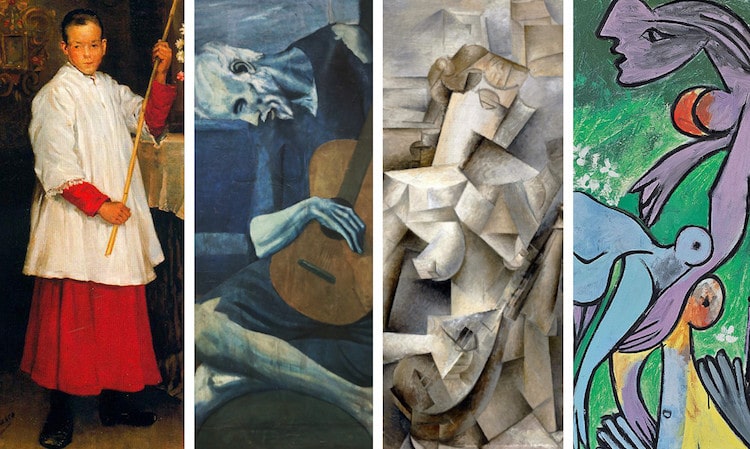
Throughout an artist’s lifetime, changes in approach, subject matter, and even style are to be expected. This phenomenon is apparent in the evolution of modern art‘s most beloved painters, from Monet‘s move toward abstraction to Van Gogh‘s brightened color palette. Though prevalent among most master painters, it is particularly emphasized in the paintings of Pablo Picasso (1881-1973).

With a career that spanned 79 years and included success in painting, sculpting, ceramics, poetry, stage design, and writing, his tendency to experiment with his craft is unsurprising. However, the extent to which his style changed in each discipline—particularly, in painting—is unlike that of any other artist. Therefore, in order to trace his stylistic evolution, his body of work is often divided into periods: early work, Blue Period, Rose Period, African Period, Cubism, Neoclassicism, Surrealism, and later work.

Here, we explore these changes, beginning with a phase that is often widely overlooked or even unknown: Picasso’s roots in realism.

Early Work

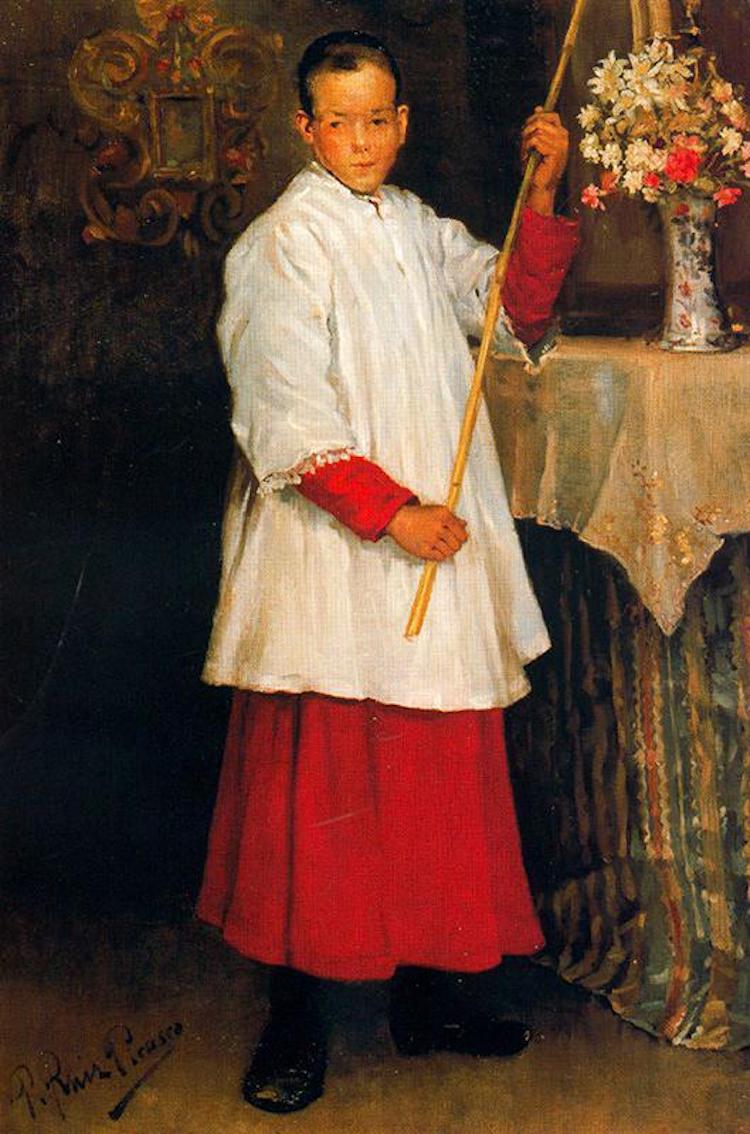
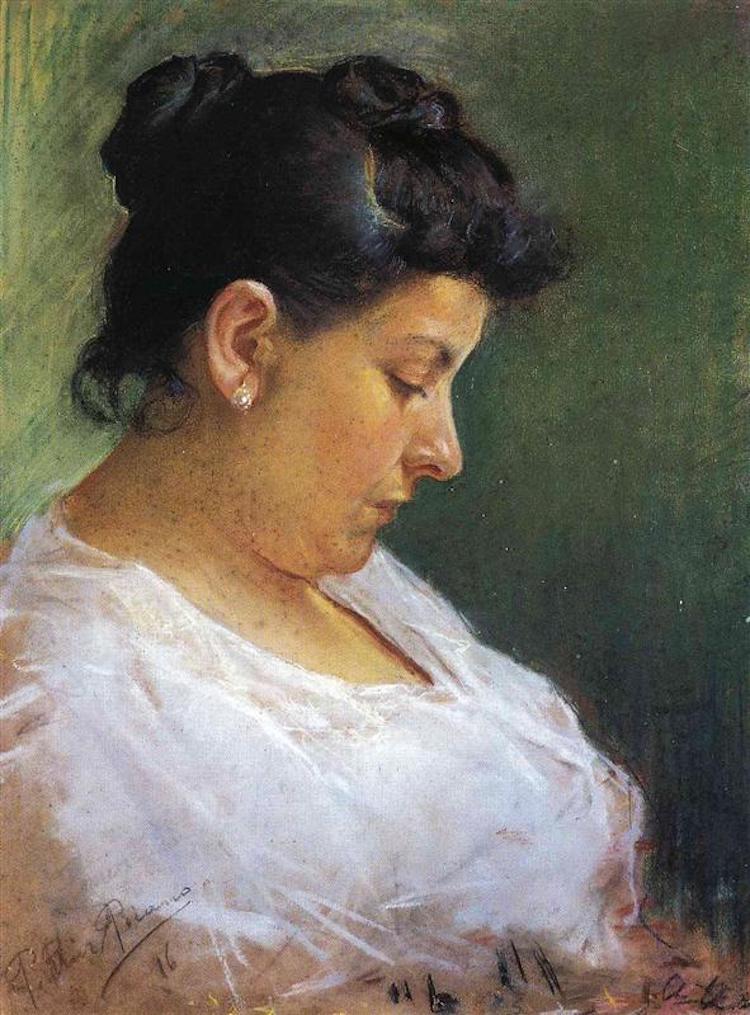
When Picasso began his career as an artist in 1894, he worked in a realist style. He depicted subjects authentically, and employed a true-to-life color palette. This traditional, academic approach is evident in his church-inspired paintings and his portrayals of loved ones, like The Altarboy and Portrait of the Artist’s Mother, respectively.

Pablo Picasso Periods Picasso Famous Paintings

‘The Altarboy’ (1896) (Image via Wiki Art)

Pablo Picasso Periods Picasso Famous Paintings

‘Portrait of the Artist’s Mother’ (1896) (Image via Wiki Art)

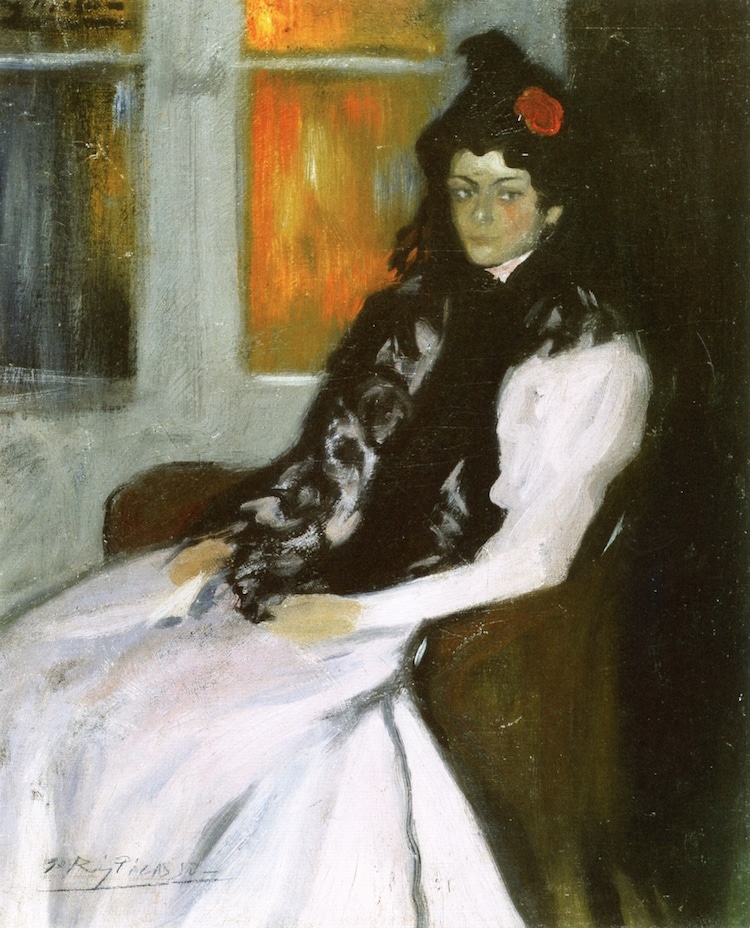
Beginning in 1897, however, his paintings took on a less lifelike quality. Undoubtedly influenced by Expressionist Edvard Munch and Post-Impressionist painter Toulouse-Lautrec, these pieces—like The Artist’s Sister Lola—convey Picasso’s growing interest in experimenting with a more freeform, avant-garde style.

Pablo Picasso Periods Picasso Famous Paintings

‘The Artist’s Sister Lola’ (ca. 1899-1900) (Image via The Athenaeum)

Blue Period (1901-1904)

In 1901, Picasso appeared to have entirely abandoned realism. This is particularly clear in his preference for color, which evolved from naturalistic hues to cooler tones. This change in pigment lasted until 1904, and is now characterized as the artist’s Blue Period.

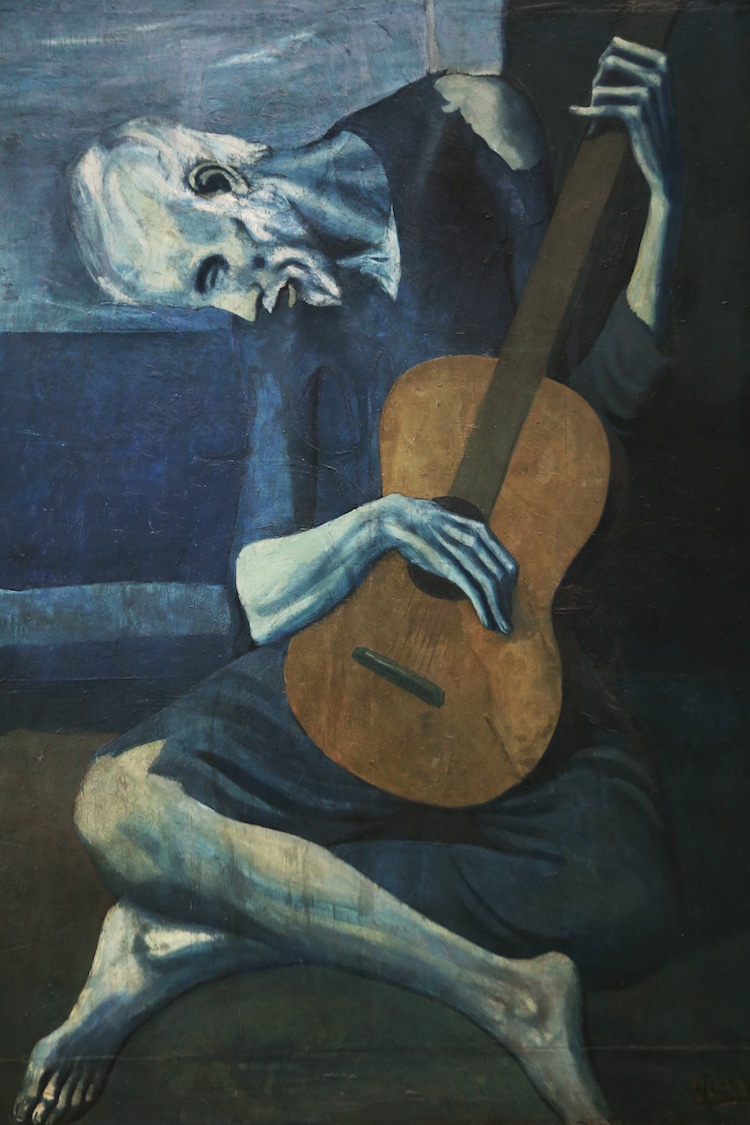
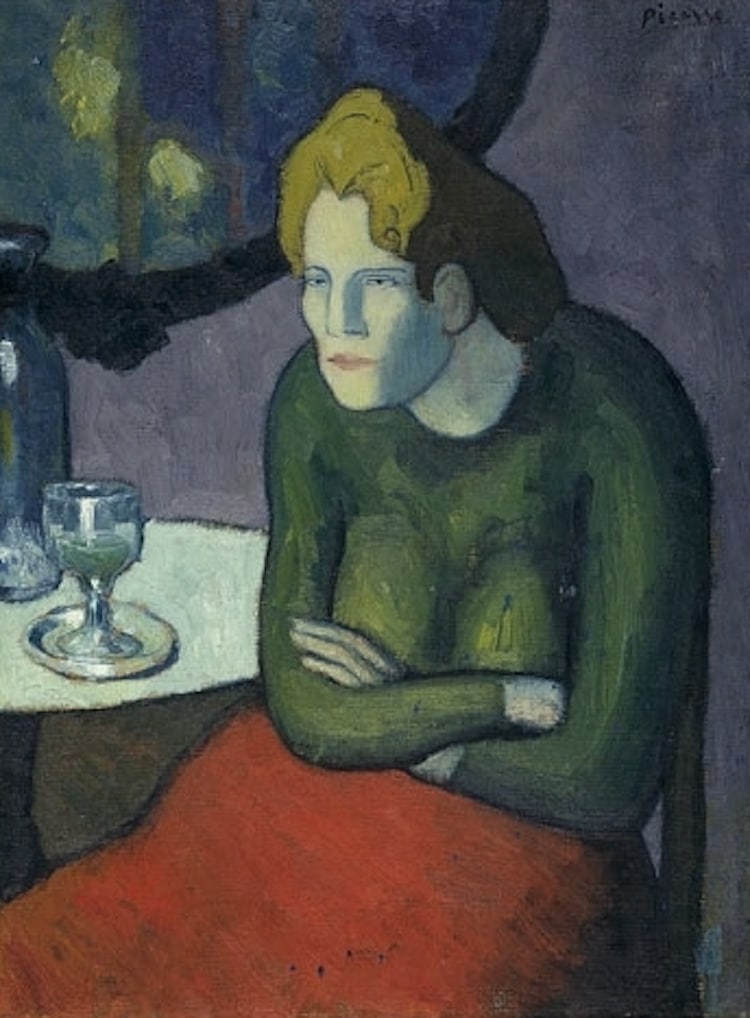
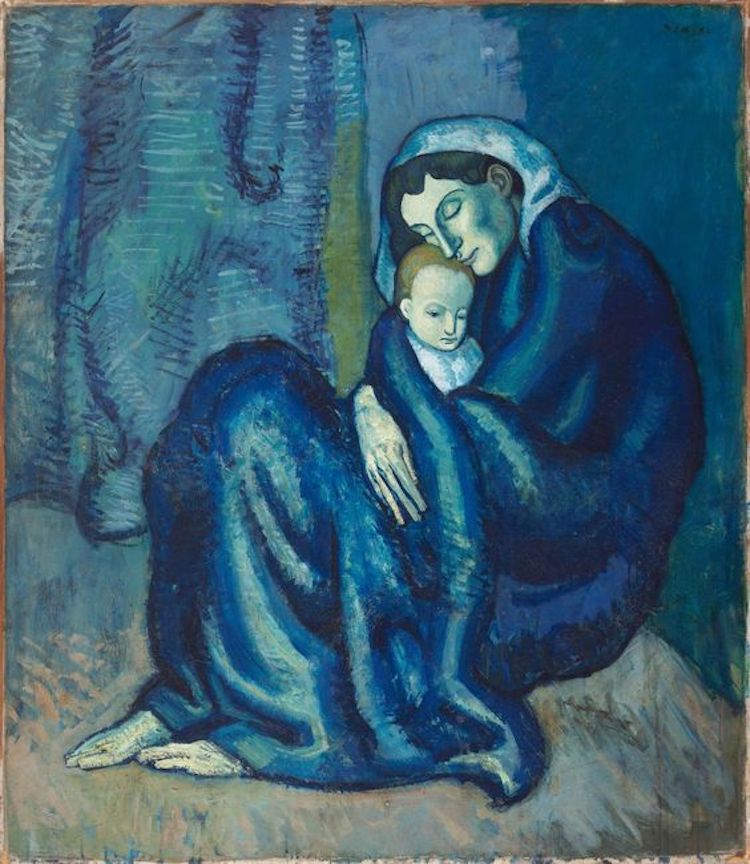
Art of this period is somber in both color and in subject matter—an approach likely caused by depression due to a close friend’s suicide. The monochromatic pieces often feature figures living in poverty or despair, like the gaunt guitar player in The Old Guitarist, the unhappy Absinthe Drinker who sits with her arms folded, and the embracing Mother and Child who actually live in a disease-ridden women’s prison.

Pablo Picasso Periods Picasso Famous Paintings Picasso Blue Period

‘The Old Guitarist’ (ca. 1903-1904) (Image: Coldcreation via Wikipedia)

Pablo Picasso Periods Picasso Famous Paintings Picasso Blue Period

‘The Absinthe Drinker’ (1901) (Image via The Athenaeum)

Pablo Picasso Periods Picasso Famous Paintings Picasso Blue Period

‘Mother and Child’ (1901) (Image via The Athenaeum)

Picasso’s Blue Period (and causal depression) lasted until 1904. At this time, less solemn subjects and a warmer color scheme began to pop up in his paintings.

Rose Period (1904-1906)

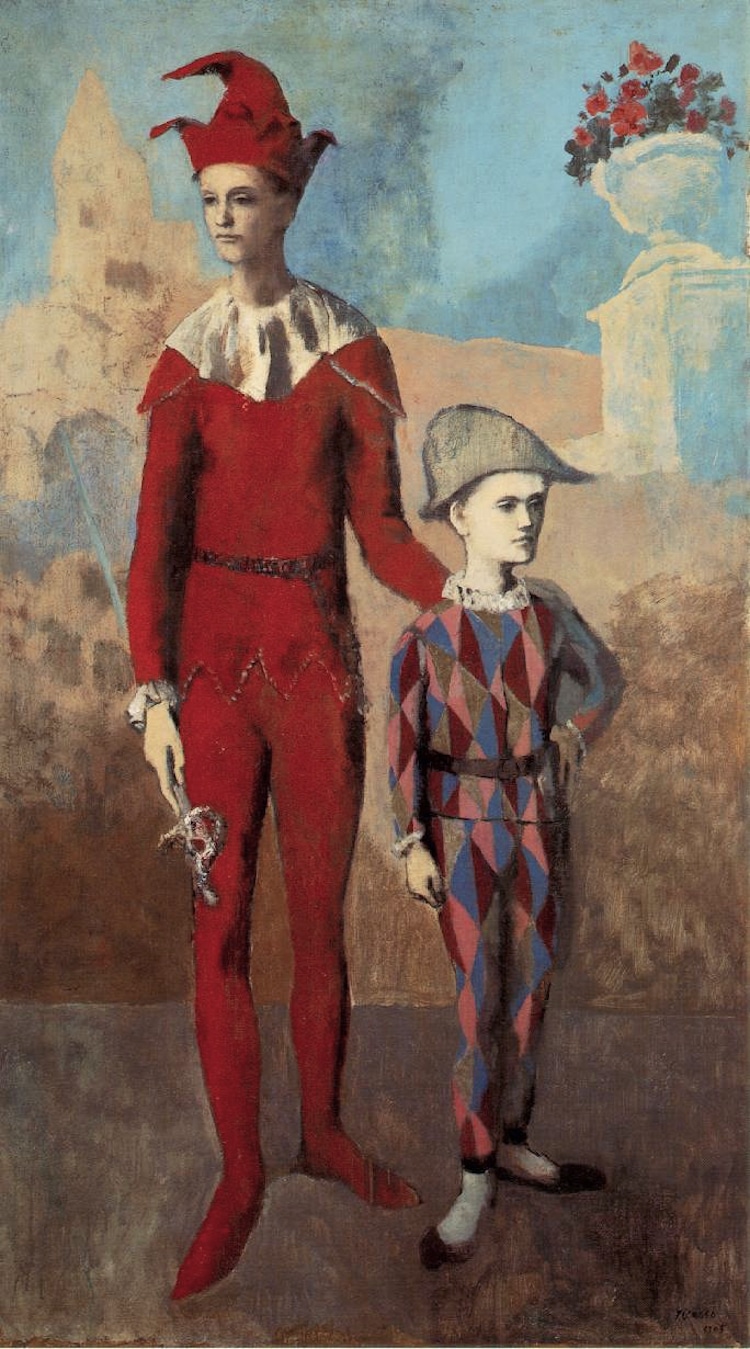
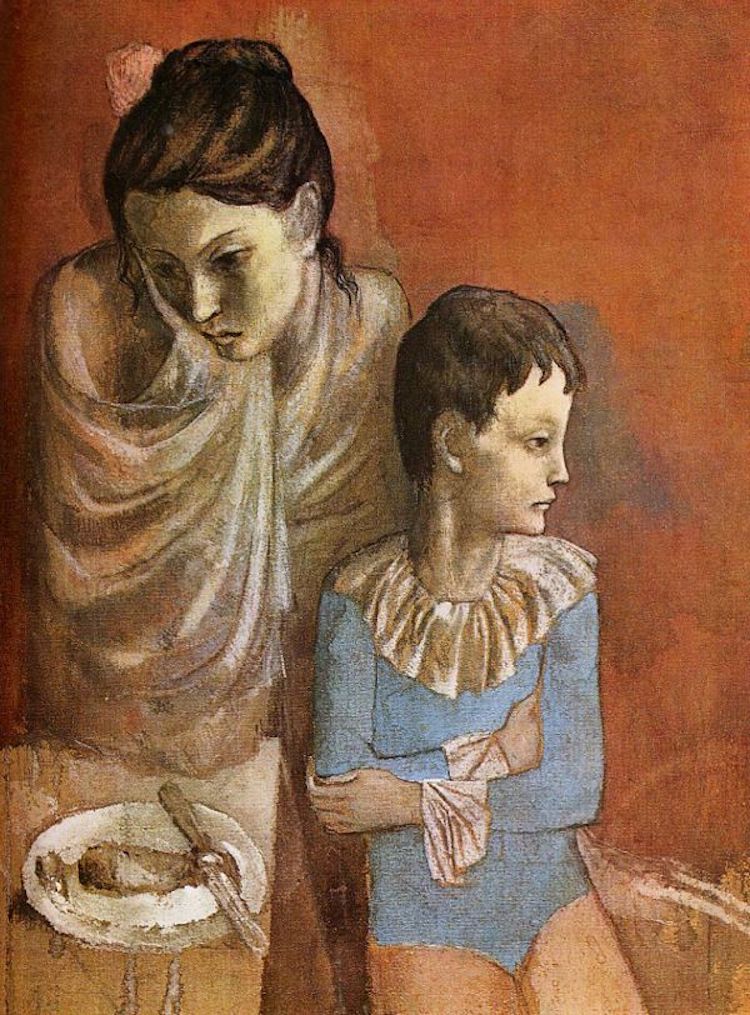
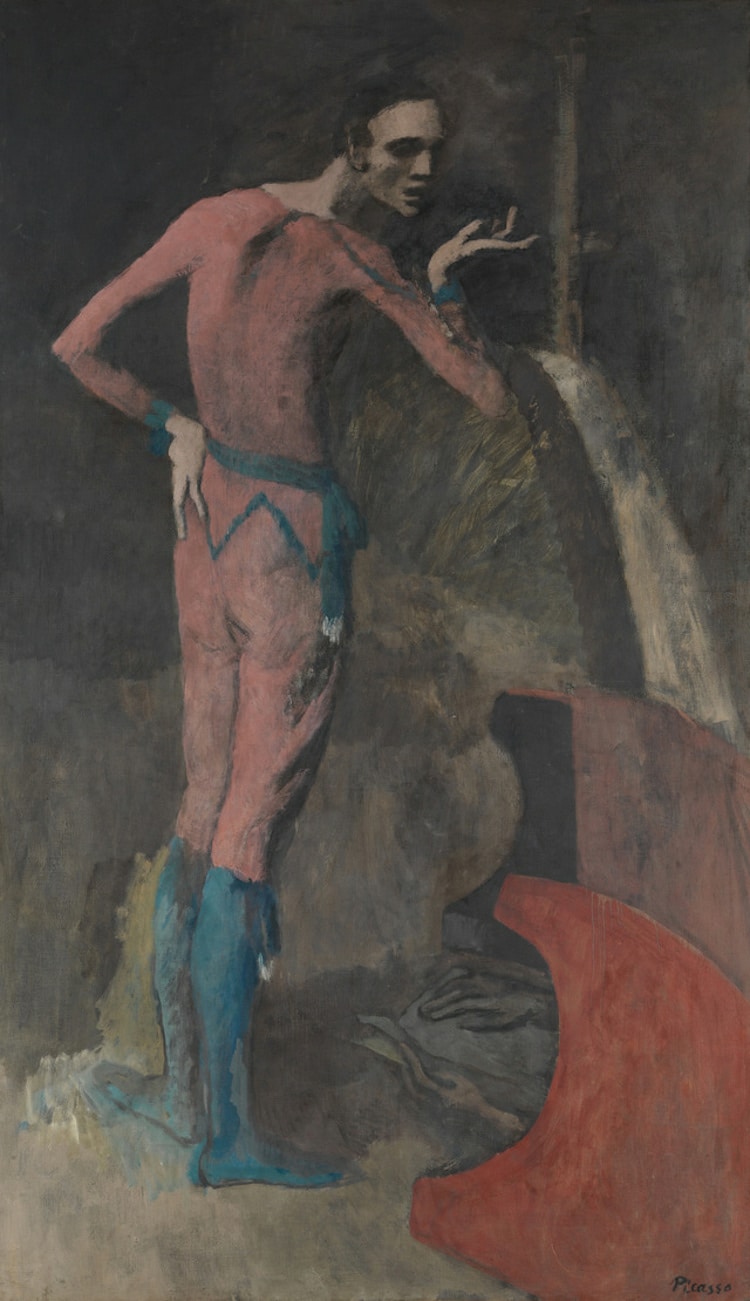
As Picasso transitioned to his Rose Period in 1904, he continued to depict figures in his characteristically painterly style. While blue tones are still present in these paintings, they are contrasted by warmer shades. Similarly, after moving to Montmartre, a Bohemian district in Paris, he shifted his focus from individuals living in despair to entertainers, including harlequins, acrobats, and other circus performers.

Pablo Picasso Periods Picasso Famous Paintings Picasso Rose Period

‘Acrobat and Young Harlequin’ (1905) (Image: UGA via Wikipedia)

Pablo Picasso Periods Picasso Famous Paintings Picasso Rose Period

‘Mother and Child, Acrobats’ (ca. 1904-1905) (Image: Pictify via Wikipedia)

Pablo Picasso Periods

‘The Actor’ (ca. 1904-1905) (Image via Wikipedia)

At this time, Picasso began to experiment with Primitivism, a style that he would eventually embrace in in 1906.

The post The Evolution of Picasso’s Painting Style and What Each Artistic Choice Represents appeared first on My Modern Met.

http://ift.tt/2DURD5R

Gnomon


Over the span of only ten years, with just three prior novels to his name, Nick Harkaway has emerged as one of the most daring and distinctive voices in modern speculative fiction. His books clothe the potent familiar tropes of SF in fresh and startling new attire — earnest without being sappy, engaged without being didactic, and intimate without being self-centered. At once humorous and tragic, his passionate worldview is the essence of an old soul, a blend of seasoned wisdom that has not throttled youthful enthusiasm. His first book, The Gone-Away World (2008), was a surreal, Phildicikian postapocalyptic jaunt. Angelmaker (2012) served up a Pynchonesque postmodern conspiracy tale. And Tigerman (2014) riffed on superheroes, imperialism, and ecology in the manner of a team-up between Joseph Heller and Kurt Busiek.

His newest, Gnomon, represents something of a departure. While Harkaway’s earlier books all blended tragedy with comedy in nearly equal measure, this one exhibits decidedly more gravitas and mournfulness, less game playing and ludic gonzo-ness. And while his first three novels were laid out in a more or less linear fashion, this one features a convoluted, looping, many-layered plot. (Our heroine likens her quest to peeling off layers of onionskin.) And the language in this book is accordingly more magisterial and formal — even at times, due to the subject matter of existential and ontological weirdness, arcane and recondite. But certainly once the Harkaway fan wraps his or her head around these novelties, the bones of the book, and its author’s consistent worldview, will emerge in familiar and highly enjoyable fashion.

The main arc of this multivalent, multiplex saga — in a way, functioning as a framing tale — is set in the last quarter of the twenty-first century. (“The engineering genius of 1870 did not anticipate the consequences of two-hundred-odd years of global warming.”) Our scene is the UK, a nation now totally run by the System, a network of omnipresent surveillance devices that extends down nearly to the metabolic level of the citizenry. Not only does the System make for a stable, almost crime-free environment, it encourages an egalitarian leveling among the power brokers and the powerless, and helps also to support a distributed wiki-democracy where constant polling ostensibly determines the true will of the people.

But even such a seamless cradle of a polity requires a police force, and our protagonist is an inspector therein who relies on a semi-sentient interface to the System called the Witness. In nigh-constant communication with the Witness, Inspector Mielikki Neith can summon up all the data, archived and real-time, that she needs to solve her cases, and she can commandeer the time and efforts of practically any other citizen. Utterly judicious, upright, loyal, and perspicacious, Neith is the living embodiment of the justice and rightness of the System.

Neith is assigned to parse the death of one Diana Hunter, an elderly author of cult novels who also happens to be an eccentric Luddite. But the authorities had reason to believe that Hunter was actually a dangerous dissident, so they took her in for interrogation. And in this future, interrogation is a cybertech matter. The subject’s very thoughts are unraveled and recorded, supposedly without any harm. These thoughts may later be played back, as a kind of virtual reality trip for the authorized perceptor. But in Hunter’s case, the interrogation has killed her. Neith must learn why and decide if the System is culpable. So the first thing she does is relive the interrogation session. And during that process she learns that Hunter was not the oddball writer she seemed to be but a highly trained agent for some larger, conspiratorial force. Hunter employed the technique of “narrative blockade” — an elaborate fiction mounted within one’s own consciousness — to thwart the interrogation process.

Neith discovers three narratives sustained by Hunter’s prodigious mental storytelling power. In the first, we inhabit the life of Constantine Kyriakos, who lives more or less in our era. Kyriakos is the essence of a Wall Street Master of the Universe, utterly self-centered and materialistic, a monster of ego and hedonism. The second narrative concerns a female philosopher and scholar named Athenais, who lives during the Classical period and is obsessed with recovering the soul of her dead son through magical means. The third track fashioned by Hunter as a distraction concerns the Bekele clan, transplants from Ethiopia living in a day-after-tomorrow London. Their lives are taken up with art and with the construction of a video game that bears a surprising resemblance to Neith’s own System.

Experiencing these three realities very intensely, in bits and pieces that interrupt her own reality, Neith nonetheless continues her physical investigations. She visits Hunter’s apartment and there encounters her seeming nemesis, an eerie figure calling himself Regno Lönnrot, who seems to know too many things about the case, including allusions to secretive figures called the Fire Judges. Unable to hold Lönnrot for further questioning, Neith embarks on other angles: talking to several of her expert consultants; interviewing Oliver Smith, the man who interrogated Hunter; and so on. Meanwhile, in her head the three narratives unspool in strange parallel to her case.

Then, midway through the book, Hunter’s sequential brain scan recording erupts with a fourth narrative, that of Gnomon, a mind from the far future who calls himself the Desperation Protocol and who seems intent on tampering with the very time stream itself. Is this merely another fiction, or the ultimate reality?

Gnomon increments all these scenarios in meticulous parallel, allowing all five tracks — and the number five is a dominant motif in the book — to interpenetrate and comment on each other until they all reach a simultaneous climax. The result forces Neith into a last-ditch position she only reluctantly accepts, ultimately sending her down one last rabbit hole where Lönnrot awaits.

Harkaway has set himself the task of writing five novels in one, since each venue and character demand appropriately different tone, voice, and delivery. He succeeds wonderfully. The Neith portions of the book attain the kind of dystopian or ideologically pure ambiance of estrangement found in Zamyatin or Orwell. Additionally, I was reminded of Rupert Thompson’s neglected Divided Kingdom, which, while utterly apart in theme, has some of the same feeling of high-minded precepts carried to extremes. There’s also a tinge of Neal Stephenson’s hard-nosed, clear-sighted exegesis of culture as in The Diamond Age or Anathem. The Kyriakos segments are probably the most humorous in parts, since our antihero is unrepentantly in love with himself. In the Athenais arc Harkaway delivers the kind of Rosicrucian mysticism found in Crowley’s Aegypt cycle, while the Bekele narrative probes issues such as the fate of refugees and the role of art in a consumerist society. Finally, the Gnomon riffs are full of over-the-top pulp SF vigor. All these constituents blend together as aesthetically as those in David Mitchell’s Cloud Atlas, with similar punch.

Abetting the ultimate unity of the individual pieces is a massive set of symbols and recurring character types interwoven throughout. As Harkaway says in his Afterword, Gnomon is “a book which contains layers of puzzles and references the author himself has largely forgotten as he moves on to the next and the next . . . ” The sensitive, alert reader will revel in assembling these carefully scattered fragments into a charged mosaic.

But naturally enough, given his past track record of propulsive suspense, Harkaway also delivers taut action scenes and gripping face-to-face interactions. The chase scene where Neith goes after Lönnrot after glimpsing him in public is worthy of being transferred to the big screen by a master director and cinematographer.

Intricate storylines aside, Gnomon offers the reader a great deal simply to ponder: the pluses and minuses of a surveillance society; the Heisenbergian limits of certainty; the possibility that tools may one day operate humanity instead of vice versa; the role of the individual versus the state; oligarchy versus democracy; the usefulness and objectivity of paranoia; and the propriety of “nudging” the populace into desired channels of behavior. All of these themes enjoy a long-running tradition in science fiction, and so the novel conjures up pleasant associations with a host of noble predecessors, from Philip K. Dick to J. G. Ballard, from Isaac Asimov to David Brin, from Robert Heinlein to Jeff Noon, from Umberto Eco to Poul Anderson.

Gnomon proves to be a highly accomplished philosophical adventure, an ethical novel of detection, one woman’s confrontation with the abyss, and a mind-blowing speculative marathon across a patchwork landscape that resolves itself finally into the corrugated cortical contours of the Harkaway brain — an awe-inspiring maze in which it is a great pleasure to get thoroughly lost.


The post Gnomon appeared first on The Barnes & Noble Review.

The Barnes & Noble Review http://ift.tt/2DThNll

God’s Own Music

The Anglican choral tradition is one of the great successes of English cultural diffusion, to rank with Association Football (soccer), cricket, and the works of William Shakespeare. It has a cultural heft way beyond its parochial and very specific origins, and it turns up in the oddest places. The most incongruous example must surely be the upmarket gloss that Thomas Tallis’s forty-part motet Spem in Alium lends to a down-and-dirty scene in the film Fifty Shades of Grey.


http://ift.tt/2rZCBGc

The 7 Biggest Mistakes That College Students Make

So many great things can happen in college. It’s essentially your launching pad.

This is the time and place where you meet people, have your ideas and perceptions challenged, and get prepared for your next steps in life. It’s also a time where you can make some pretty costly mistakes and miss out on some great opportunities.

Here’s a quick list of the 7 things not to do in college.

Going Out Too Often

For many students, college is where you can make spontaneous plans. You can make your own schedule without the need to ask for your parents’ approval.

That, however, isn’t always a great thing.

You may face pressure from friends and roommates to go out and enjoy yourself. They’ll encourage you to stop reviewing and just go out for a night of fun.

When students give into pressure and temptations to go out too often, they usually end up low on cash, sleep-deprived, and behind on their studies.

Fortunately, a solution is available.

Rather than randomly going out on half-baked nights with pals, pick a single night each week or month where you can truly enjoy. This will make it much easier to stay in.

Skipping Classes

Let’s be honest.

If you ever attempted it, you know that skipping class in high school is a real challenge. Now, what happens when you skip class in college?

Well, nothing. There are no phone calls, lectures, and warnings.

But, that doesn’t mean there are no consequences.

Missing lectures, labs, quizzes, or simply not being there to take notes can put you behind very quickly.

So, how do you avoid the temptation?

First, avoid getting overwhelmed and exhausted. Get enough sleep and give yourself plenty of time to do your homework. Try to find other ways to give yourself a mental break when you need it.

Finally, if you must, give yourself one day per semester to take the day off. Just be prepared to get your notes ahead of time and make up for any work.

Not Reaching Out For Help

No college experience is perfect. One of the only certainties is that, at some point, you’re going to struggle with something. For some, that struggle may be academic.

You may find yourself struggling in a particular class or just unsure of where you’re headed in terms of your major.

On the other hand, you may do wonderfully with academics but struggle with homesickness and depression.

Sadly, many students make the mistake of keeping their problems to themselves rather than asking for help.

Keep this in mind.

There are people who are willing to help you if you are having troubles. There are tutors in your student learning center that are waiting for people to come to them for academic help. Your academic adviser can help you stay on the right path and your instructors can help if you are behind. There are also counselors if you are struggling mentally or emotionally.

None of those people will be annoyed or bothered if you approach them. Instead, they will be happy to apply their talents to help you.

See Also: 4 Ways To Overcome Depression Naturally

Taking Classes That Contradict With Sleep/Awake Patterns

You know you aren’t a morning person but if you take that 8 A.M. class, you’ll have all of your basic credits in. That means you can take the summer semester off.

But should you sign up for that class?

You might want to think twice.

How tired will you be and how much sleep will you lose?

Too many students sign up for early classes and then have a really hard time. If you commit to an early class and coffee isn’t enough to keep you going, your grades can really suffer.

Know your sleep patterns and energy levels. Be honest with yourself. Getting in one more class won’t do you any good if you lower your overall GPA or fail a class.

Missing Out on Student Discounts

Your student ID card might just be your ticket to tons of discounts around the campus. Restaurants, movie theaters, clothing stores- there’s a good chance that you can receive a pretty nice discount from those places.

Pay attention to your local banks and credit unions as well. Many of them offer free or reduced price checking accounts and other perks just for college students. This is a great way to establish yourself as a local banking customer and get into the habit of saving.

Ignoring Your Health And Wellness

Poor health doesn’t happen overnight. It comes incrementally.

You go to school sick when you should be resting. Skipping breakfast becomes a habit. You eat too much junk food and you indulge in a few too many beers each week. You rarely visit the gym, too.

Before you know it, you’ve put on weight. You’re depressed and anxious and you feel awful.

Don’t procrastinate.

If you’re sick or experiencing pain, deal with it immediately. Commit to eating right most of the time and always include some form of exercise in your day.

See Also: 4 Habits That Will Improve Your Focus And Destroy Procrastination

Overspending Student Aid Checks

Your tuition is paid. Now, you’re waiting for that awesome check from the school bursar. It finally arrives and you have visions of a flat screen television and the latest gaming system in your eyes.

Before you go spending, be careful!

Remember that this money is supposed to cover your expenses for the term. Even if you’re sure you can make it and earn extra money, there are a lot of things you can do with your windfall.

You can consider:

  • Pay off or avoid credit card debt.
  • Get needed maintenance done on your vehicle.
  • Put money aside for savings.
  • Start an emergency fund.
  • Pay your student loan interest.

If you make it to the end of the semester, then spend the leftover money on something fun and frivolous.

Conclusion

Save money. Stay healthy. Get the most out of your education.

Isn’t that what most college students want? Avoid these seven screw-ups and you will accomplish those goals.

The post The 7 Biggest Mistakes That College Students Make appeared first on Dumb Little Man.

http://ift.tt/2BLyJIk

Remembering Paul Robeson

To the Editors: Simon Callow’s article on Paul Robeson, who was a childhood (and beyond) hero of mine, was a powerful reminder of what a great man Robeson was and how shamefully we all neglected him. It also brought back to me two memories of the only times I saw him in person, each of which may add a little to the list of his deeds.

http://ift.tt/2DV3gJZ

Happy 112th Birthday to our friends at the U.S. Forest Service….

Happy 112th Birthday to our friends at the U.S. Forest Service. Though forest reserves were first administered by Interior, the Forest Service was created in 1905 as part of the Department of Agriculture with Gifford Pinchot serving as Chief Forester and now manages almost 200 million acres of public land. Among these rich forests and grasslands are places of spectacular beauty, like Trillium Lake at Mt. Hood National Forest in Oregon. Photo by Daniel Rice (www.sharetheexperience.org).