5 Behaviors That Annoy Your Customers

Frequent calls and customer complaints are staples in every business. This, however, doesn’t mean that they are completely harmless. In fact, the increasing number of calls and customer complaints can mean that your business isn’t doing well.

Today, customers aren’t afraid of switching. If they are unhappy with your services and goods, they’ll just move on and find another company or brand that can meet their needs and expectations.

So, whether you are a startup or a big player in your niche, providing the best services and products for your clients is essential. After all, the more unhappy customers you have, the less chance you’ll succeed.

With that, we have jotted down 5 things customers find annoying and what you can do to avoid them.

Slow response

One of the most common things that customers find annoying is when they can’t find a quick and instant solution to their problems. If your business fails to impress with a quick response time, it creates a negative experience and forces customers to switch to a competitor.

Introducing a live chat solution can permanently fix the problem. Your customers can connect to a live chat agent in seconds and get their questions answered in real-time, creating a positive impression.

live chat

See Also: Know Your Customers In The Digital Age

Irrelevant Information

Most businesses today focus on acquiring customers through social media campaigns. Posting engaging content with appealing headlines is the most common way to do that.

But, are you false-trapping your buyers through click baits? If yes, then you need to reconsider your strategy as soon as possible.

Customers feel annoyed when they aren’t provided with the promised content. They are likely to leave and never return if they feel like they’ve been fooled.

As a way to solve this, make sure you live up to your promises. If you are offering a solution to your customers’ problem, ensure that your content has it. In addition to that, you should also consider the way you deliver your promise.

Most web users are short on time these days and they want solutions that they can consume in a matter of minutes. If you provide that, you are most likely a step ahead of your competition.

Insufficient Value

Valuing your customers is one of the best things you can do for your business. If your customers feel privileged, they will stay and ultimately become members of your loyal tribe. On the other hand, not offering what they expect can make them switch to a competitor product.

That said,  you must focus on getting regular feedback from your audience. You can use the information you get from them to improve the products and services you offer.

Introducing a live chat can be one option but it’s not the only thing you can do. You can also offer discount coupons, freebies and more to make them feel valued. Never miss an opportunity to show how your customers are important to you.

Uniform Treatment

happy customer


A business has both loyal and occasional customers.  While occasional customers expect discounts and better services, loyal customers may demand more.  They should be given some liberty points, coupons or schemes to make them feel more special. Customers observe each and every detail, so you should always keep these things in mind.

Not listening to your customers

Every business has problems that their customers also feel. If you are a smart business person, you will find a way to make sure that your customers are heard.

If your customers have no platform where they can put their thoughts, they may feel neglected, annoyed and angry. This can decrease customer retention and negatively affect your overall business. A live chat can help in this case as it allows your customers to speak their mind.

See Also: 4 Surprisingly Easy Tips To Improve Customer Engagement

The Solution

You obviously don’t want to continue making those mistakes. So, here are a few notable suggestions to avoid unhappy customers:

  • Provide 24/7 online support by integrating live chat for website
  • Improve the quality of your services and products
  • Take immediate actions on customer’s feedback and complaints
  • Keep refining the products

Conclusion

Businesses should aim to improve their relationship with their customers to increase retention. The more loyal customers you have, the better your business’ survival rate is.

Avoid having unhappy customers by giving them exactly what they want. Provide a solution to their problems and make that solution easy to achieve. Be consistent in your efforts in making them feel valued and they are highly likely to stick around for a long time.

The post 5 Behaviors That Annoy Your Customers appeared first on Dumb Little Man.

http://ift.tt/2iS1UlH

The Wine Lover’s Daughter: A Memoir

“Ours was a word-oriented family,” Anne Fadiman declares on the second page of her winning new memoir — an understatement if ever there was one. Fadiman, who has written delightful bibliophilic essays (collected in Ex Libris and At Large and At Small) about building castles at age four with her father’s pocket-size set of Trollope and being fed a rich diet of polysyllabic words — courtesy of his bedtime stories about a bookworm who satisfies an appetite for sesquipedalian nutrition by chomping through dictionaries — has at long last expanded on these charming glimpses of her bookish upbringing.

The Wine Lover’s Daughter introduces Fadiman’s father and kindred spirit, wordsmith and wit Clifton Fadiman (1904–99), to a new generation with a deliciously rich, well-balanced portrait. The book is centered as much on his passion for fine wine — and her own inability to develop a taste for it — as on his extraordinary “multihypenate” career as a longtime New Yorker book critic, emcee of the wildly popular NBC radio quiz show Information Please, Book-of-the-Month Club judge, and author of Wally the Wordworm and numerous literary anthologies, all sadly out of print.

Fadiman’s first line sets the tone: “My father was a lousy driver and a two-finger typist, but he could open a wine bottle as deftly as any swain ever undressed his lover.” That “swain” is pure Fadiman. So, too, are her astute comments about “Brief History of a Love Affair,” her father’s introduction to The Joys of Wine, the massive tome he co-authored with Sam Aaron, his friend and wine merchant (whom he jokingly called “the vintner of my discontent”): “The amorous vocabulary wasn’t a metaphor,” she writes. “Aside from books, he loved nothing — and no one — longer, more ardently, or more faithfully than he loved wine.”

But Fadiman’s memoir uncorks much more than a remembrance of drinks past or a daughter’s filial intoxication. By allowing her memories to ripen over the many years since her father’s death in 1999, the result is a superbly evolved, less tannic pour. Organized into what she does best — twenty-three short essays, just shy of two cases — Fadiman tackles some difficult aspects of her legacy. The bitterness she might have felt about, say, her father’s request after he’d gone blind at eighty-eight for her to call two women — who she quickly realized were his lovers — and tell them what had happened has been mellowed by time. The same goes for his “reflexively condescending” sexism. She somewhat evasively calls her parents’ marriage “imperfect but interesting.” One hopes she’ll profile her mother, Annalee Whitmore Jacoby Fadiman, who died in 2002, more thoroughly in another book. Like her daughter, Annalee preferred milkshakes to wine, but unlike her daughter, she gave up her writing career — which included early success as a Hollywood screenwriter and as a rare female reporter in China during WWII — after having children.

Fadiman delves more deeply into her father’s insecurities than into his relationships with women. She deftly traces the anti-Semitism he faced from both within and without, which fueled his social-climbing ambition and workaholism but also contributed to his sense of being an outsider. Born in Brooklyn in 1904 to parents from Minsk and Belarus, he strove early on to distance himself from his lower-middle-class Jewish origins after realizing “that things were run by people who spoke well and who were not Jewish, not poor, and not ugly.” By the time he reached Columbia University, he had developed a vast knowledge of literature, a sharp wit, a plummy “hypercultivated voice,” and an envy and passion for “all things fabricated with skill and effort” — including art, books, foods, and, eventually, wine. Yet, despite his brilliance, he was denied a teaching position, told by Columbia’s English Department head, “We have room for only one Jew, and we have chosen Mr. Trilling.” Fadiman writes that her father never got over it.

The Wine Lover’s Daughter also addresses what Fadiman calls the oakling dilemma — growing up in the shadow of a famous parent who “grabs the sunlight.” Her father, forty-nine when she was born, fortunately lived long enough to appreciate her early books, including her NBCC prizewinner, The Spirit Catches You and You Fall Down — though not long enough to see her join the faculty of an Ivy League college, his dream. (Fadiman has taught nonfiction writing at Yale since 2005.)

Underpinning Fadiman’s reckoning with her father’s legacy also involves gauging their shared sources of pleasure — including doggerel, word games, and cheese — as well as their differences, most pointedly her love of the outdoors and his love of wine. Despite many humorously recounted attempts, she just can’t — well, swallow it. So, as she’s done before in far-reaching essays about a few of her favorite things — ice cream, coffee, mail — she doggedly investigates further. She goes so far as to consult with scientists at Cornell and Yale who subject her recalcitrant taste buds to various tests. The hilarious quest encapsulates her strengths as a reporter and essayist: persistence, humor, clarity, and intelligence. The upshot: she discovers that her heavily papillated tongue is highly sensitive to sourness and bitterness, which is why mere alcohol doesn’t thrill her at all and radishes hit her “more like a bee-sting than a food.” Vindicated yet disappointed, she comments: “So there it was. I didn’t taste what my father tasted.”

Even Fadiman’s notes on her sources are fascinating. “This book contains no reconstructed or imagined quotations,” she states proudly. She has relied on letters, essays, transcribed interview tapes — plus notes she was taking all along, right down to her father’s last utterances. She says she changed her original title, The Oenophile’s Daughter, when she “discovered that hardly anyone knew how to spell, pronounce, or define ‘oenophile’ ” — and was consoled when she realized that similar problems killed Speak, Mnemosyne, Nabokov’s original title for Speak, Memory. Such are the trials of a highbrow, sesquipedalian vocabulary. But, like her father, Fadiman has that rare ability to wear her erudition lightly. And what he said about wine also applies to The Wine Lover’s Daughter: it is a delectable ode to cultivation and civilization.

The post The Wine Lover’s Daughter: A Memoir appeared first on The Barnes & Noble Review.

The Barnes & Noble Review http://ift.tt/2AFjyBt

Thanks to a recent donation, Sabinoso Wilderness in New Mexico…

Thanks to a recent donation, Sabinoso Wilderness in New Mexico is now publicly accessible for the first time since it was established. Hikers, hunters, photographers, horseback riders and outdoor enthusiasts can now marvel at the sandstone cliffs of Canyon Largo, gorgeous cottonwood and ponderosa forests, and ancient pueblo ruins. With very little evidence of humans, the wilderness is an excellent place to find solitude and recreation. Photo by Bob Wick, Bureau of Land Management.

How To Get Out Of A Career Rut

Career ruts are anything but pleasant. Unfortunately, they are all too common. Many professionals have felt unhappy and unfulfilled at work.

I once felt this way, too.

The good news is that you don’t have to stay in that rut forever. Like I did, you can make changes that can get you out of your funk.

If you’re unsure where to start, here are some steps I followed that may help you as well.

Assess Other Jobs That May Be Available to You

check career prospect

Getting out of a career rut doesn’t mean that you have to change fields entirely. I, for example, worked at an advertising agency in a big city. It felt stuffy and I felt completely uninspired and unmotivated. Once I moved to a smaller agency with young and motivated co-workers, I started enjoying my job.

If you are in a rut but like what you do for work, start by looking for available positions at other companies similar to yours. Look for one with a more vibrant culture.

If the problem lies in what you do and experience day to day, consider assessing your working environment. It could be that you have a boss who doesn’t appreciate you or you’re unhappy with your co-workers. Also, check your working space to see if it’s making you unproductive.

See Also: 7 Steps On How to Figure Out Your Career

Pursue a Pastime

Your dissatisfaction may not be totally related to your job or even your work environment. You may just assume it is. If you’re unhappy and feel like you’re in a rut, you might be unfulfilled in other areas of your life.

Maybe you don’t have any type of creative outlet or you feel like life is work and work alone. There are no opportunities for fun and excitement.

If that’s the case, you should think seriously about pursuing an activity that interests you. Pursuing a hobby that’s enriching could give you happiness in all other areas of your life. You can take a photography class at a local community college or you can start learning new culinary techniques. Your choices are actually unlimited.

Try to Move Ahead

If you feel stuck at your job, it’s probably because you have absolutely no room for growth. That’s why it’s a good idea to sign up for a leadership development program if one is available to you. It can help you learn about what makes a successful and strong leader.

The best leaders tend to possess strong communication abilities. They tend to be great listeners. They know how to get all of their team members excited and keep them feeling motivated and enthusiastic. If you want to get “unstuck” and change your career for good, learning how to become a skilled leader can be a terrific and productive first step.

Establish a Business on the Side

entrepreneur career

Your existing position doesn’t have to be the “be-all and end-all” in your career. If you want to get a brand new lease on life, you should consider establishing a side business you can call your own.

Think about the things that interest you the most in life. You may be a foodie who has a passion for fine dining. You may be a fashionista who loves thinking about creative and imaginative clothing designs.

If you want to find the fulfillment and satisfaction you crave, the concept of starting a business can ignite your passions.

See Also: Entrepreneurship: A Better Career Choice For Generation Z?

Remember to Be Patient

Patience is a great quality for anyone who wants to succeed career-wise. If you want to say goodbye to your career rut for good, you need to have a lot of patience and understand that career success doesn’t come overnight.

Knowing how to get out of a career rut isn’t easy. It requires a lot of effort, time and discipline. But if you push yourself hard, you should be able to get what you want in the end.

The post How To Get Out Of A Career Rut appeared first on Dumb Little Man.

http://ift.tt/2yxblhc

Year One: When Black Women Lead

It was in 1991—the year legal theorist Kimberlé Crenshaw who coined the term “intersectionality”—that Anita Hill came forward with sexual harassment allegations against a conservative nominee to the Supreme Court, Clarence Thomas. If Hill had been believed, it could have sunk his appointment. But such claims from a black woman were not taken seriously. Believing Hill decades ago could have changed access to the ballot and who occupies the White House. Americans should have listened to a black woman then. They should listen to black women now.

http://ift.tt/2yAeZGT

How To Boost Productivity By 50% In A Week

Do you ever feel like you are so busy that there is never enough time in your day?

If that’s the case, it’s likely that you aren’t as productive as you think you are. You’re busy but you are wasting time on a lot of unimportant things. So, to help you improve your efficiency and overall productivity, here are some tips you can use.

Start tracking the time you spend on a specific task

This will be a game changer for you.

If you’re like most people, you’re probably underestimating the amount of time you allocate for your tasks. What you think only needs an hour to finish can end up eating away 3 long hours from your day. As a result, you get a lot of unfinished tasks.

To solve this, you can use apps like Everhour to track the amount of time that you spend on a specific task. You only need to add it to your web browser and it will document the amount of time you spend on a task.

At the end of the day, week or month, you’ll receive a report that will detail how you spent your time.

Utilize the Pomodoro technique

The Pomodoro technique involves working on specific tasks for a certain number of minutes and taking a short break to reward yourself.

For example, you can work on completing a task for 25 minutes and then take a 5-minute break to recharge. After that 5 minutes, you can continue working on where you left, repeating the cycle until the task is completely done. After that, you can start working on the next task.

pomodoro technique
Via happyasannie


See Also: Hack the Pomodoro Technique to Boost Your Productivity

Eliminate administration tasks and meetings

Administrative work and meetings can drain your working hours. They can consume too much of your time that you won’t have enough hours left to finish your other tasks.

As a way to boost your productivity, eliminate as many administrative tasks and meetings from your work schedule as possible. The only exception should be if the administrative task or meeting will add value to what you are trying to achieve. You can use online collaboration tools to get the job done.

Plan your tasks in advance

By not planning ahead, you will find yourself wasting time jumping from one task to another. Instead of trying to finish everything at the same time, schedule your tasks for the whole day or even a week in advance. In addition to boosting your productivity, planning can also help you stay on track on your deadlines.

Work in isolation

Many people choose to work in co-working spaces. Although helpful, it’s not always the best choice. There will be people swinging by to have a chat, people asking you questions and noises that can easily distract you.

To boost your productivity, you should consider working in isolation. You can set up an isolated office or a working space at home.

Utilize a project management tool

Knowing how to use a project management tool can dramatically improve your productivity. There are tools like Asana and BaseCamp that can help you keep track of your projects. You’ll be able to see which tasks have been delivered, what is yet to be completed and what new tasks need to be delegated.

Keep a clean desk

work desk hacks

Having too much clutter on your desk can take away your focus. To minimize distractions, make sure that your desk is free from paper clutter, scattered pens and the like.

See Also: 12 Desk Hacks To Make You More Productive At Work

Learn processes that will improve your productivity

Commit to improving your efficiency by learning more processes that can scale your productivity. You can request to get better training or invest in tools that can boost your overall productivity.

Build a team of virtual assistants who can help complete the work

Investing in the right virtual assistants can help you finish your tasks quicker. However, before you actually outsource your tasks, make sure to identify first which of them can be delegated and to whom. This is to ensure that the tasks are completed properly and on time.

If you want to be productive, you have to know how to work smarter. By incorporating these tips into your daily routine, you’ll surely see an improvement in your productivity level soon. Your bosses will be proud and your working habits will be more efficient.

The post How To Boost Productivity By 50% In A Week appeared first on Dumb Little Man.

http://ift.tt/2zwXNpH

Should You Be An Artist And Follow Your Dreams? Here’s Something You Must Know

You’re reading Should You Be An Artist And Follow Your Dreams? Here’s Something You Must Know, originally posted on Pick the Brain | Motivation and Self Improvement. If you’re enjoying this, please visit our site for more inspirational articles.

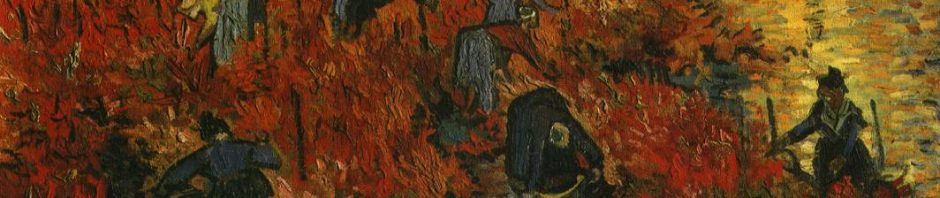
Van Gogh - Read Vineyard

Van Gogh - Read Vineyard

Do you often think whether you should follow your dream of becoming an artist? If you do, then read on.

Look at the painting above.

The painting you see is ‘The Red Vineyard’ by Vincent Van Gogh.

The only painting which Van Gogh ever succeeded in selling during his lifetime out of the 900 which he had painted.

He remained a failure for his lifetime, led a miserable life filled with mental illnesses and melancholy, until he finally shot himself and committed suicide.

“La tristesse durera toujours,” were his last words, which meant “The sadness will last forever”.

He never got to witness his success. He didn’t remain alive to see it. He couldn’t make a fortune out his art. Yet, he painted.

His art wasn’t respected in his time and pushed him towards the miseries he might not have imagined. Once he spent his money on paint rather than food, yet he painted.

Why did he paint?

If you could answer the question without a need to think, with a voice that comes straight from your soul, I doubt not that you’re an artist.

I believe you know why artists do what they do.

If you can feel how he might have felt and can’t help thinking with a sigh on your face for a while, then you’re an artist.

More than anything, if you could see your own reflection in what he did, you’re truly an artist.

Here’s a truth

Artists don’t always get what they’re known for. But neither have they always worked for those reasons.

Fame, money, attention, respect – are all cheaper than the reason which motivates an artist to create his art.

There’s nothing wrong if he expects some material outcomes. Yet, for all the blood, sweat and tears he puts in his art – these rewards are far less than compared to what he gives back to the world.

The fancy lie about being an artist

The world is often an ignorant place where people measure actions only in terms of outcomes.

If you can’t justify your work to them or fail to come up with a logical reason, they’ll build up their own assumption anyway.

As an artist, you’re selfless. You create because you love to. You share because you work brings smiles.

Sometimes, you create just because something kills you from within and you wish for nothing more than taking off that burden form your heart.

But world won’t ever get it. It will always think that you’re driven by some selfish motives and are a crazy maniac who has no regard for his life.

But you’re only misunderstood. Because even if money and fame might be among the reasons you create art for, they aren’t the only ones.

Why artists should be less attentive to the world

Artists owe nothing to the world. Nothing.

To the world, your art may be nothing less than a speck of dust.

Then why do you try so hard to make others care about our work?

It isn’t wrong to seek audience. After all, we create to be seen and appreciated. However, just because the world is blind to your art and disrespects it, doesn’t mean that you should quit.

Those who truly know and love you, understand the value of art in your life.

They’ll motivate you, not drag you. They’ll try to help you in all ways they can and try you to get your art the value it deserves.

As for the rest, how should react to those who wish to snatch the thing which is the reason behind the smile on your face?

Do what you always wanted to do for yourself. Give up your yearning for the attention of people.

Only then you can make the world restless and shake its ignorance. Soon it shall notice you, glare at you with wondering eyes, and give you the respect you deserve.

The moment you find some work that fills you with excitement or makes your heart pump faster, you feel an intense wish to do it.

You find yourself. Soon, you fear losing that feeling, and you wish to go on creating forever.

But then, you think what others might think of you.

You suppress the brightest part of yours by making yourself believe that you’re a fool to dream.

You think of the bread before your happiness, and of the world before your soul.

After that, you become a loser for life and are left to bear a regret forever.

No one ever knows what your dream was, your life remains normal, yet in your heart you know that you had lost something in life.

It doesn’t matter what you become to the world, in your heart you know that once you feared, and then remained a coward – forever.

If you don’t wish to be that coward, give up your fear of the world and start somewhere. Be what you want to be.

You wanted a chance? You already have it

Dare to dream. To be what you want to be. To create, not just for the world but yourself.

Step out of your safe zone, feel your vulnerability and surrender yourself to the work which scares you. The work which makes you love your life and vanishes your fear of death.

This is the moment you’ve got. Either you become the next faceless person who lived according to the conventions of the world, or die a rebel with a satisfaction that at least you had tried.

“Of all that is written, I love only what a person hath written with his blood.”

― Friedrich Nietzsche

A real artist doesn’t give up art

Being an artist can be painful and miserable. But you don’t let anything prevent you from becoming one. You go ahead, you play your part.

This world doesn’t owe you anything, but not giving it what you can would be a sin. More than that, it would only bring you misery and break you, for you fail to contribute your part in this world.

Don’t create art for gains, but yourself and for the happiness of the ones who appreciate it. The world is an ignorant place – so if you judge your art in the amount of attention you get – you might be forced to quit.

People are often conservative in their appreciation and won’t help you grow even when they can. Doesn’t matter. Create for the kind ones who care.

Above all, create for yourself.

Art can change you, the world, and everyone else. You have a price to pay too. Sufferings and pains always exist, but you don’t let them break you.

You are an artist only if you create. So create. Sometimes there aren’t any reasons to create, not many successes to celebrate, but the keep pushing yourself to create more.

“What would life be if we had no courage to attempt anything?” – Vincent Van Gogh

When you’re an artist, you feel like a loser when you stop. You feel good when you create.

So create art, no matter what. Die with a bunch of admirable creations by the side of your deathbed, that’s the only worthy satisfaction you must have.

How long are you planning to think? How long will you stay a loser? How long can you quash the gift you’re born with?

Hope you decide soon.

I just wanted to tell you something.

If you ever wanted to be an artist, be one.

You can be everything else that you want to be, and also an artist. You don’t have to choose being one.

It’s always beautiful to create art and it’s great to be an artist.

About Author:

I’m Vishal Ostwal. A writer, blogger, and the kind of person whose name rhymes with his surname.

Apart from that, I’m a dreamer, and a storyteller who can talk about life tirelessly. Visit my blog to find my online home,or connect with me on facebook and twitter.

You’ve read Should You Be An Artist And Follow Your Dreams? Here’s Something You Must Know, originally posted on Pick the Brain | Motivation and Self Improvement. If you’ve enjoyed this, please visit our site for more inspirational articles.

>

The Art of Saying NO!

You’re reading The Art of Saying NO!, originally posted on Pick the Brain | Motivation and Self Improvement. If you’re enjoying this, please visit our site for more inspirational articles.

When is it ok to say NO? It is always ok to say no, and that’s regardless of what is being asked and by whom. I don’t mean saying NO, and then give an explanation as to why your answer was NO. Just saying NO as your response is more than enough. Explaining yourself as an adult is just too much when giving NO for an answer. I would rather a person just go mute, instead of lying about why you can’t accommodate the person’s request. I know, the world is sensitive and being raw and straightforward is frowned upon, but it’s needed to get answer understood. These lies that are being given as explanations as to why you can’t grant their request, are considered “little white lies”. These “little white lies” eventually turn into “HUGE white lies” that are hard to keep up with. Even if your explanation is truth, don’t use it as an excuse if your answer would have been no without the explanation. Those little white lies are detrimental to your growth. “The truth shall set you free.”

Lying is Comfortable.

Person 1. “Do you think you can help me move out of my current apartment into my new apartment this Saturday?”.

Person 2. “No, I’m sorry, but I have to work that day, but I wish I could give you a helping hand.”

The dialogue between person 1 and 2 is an example of person 2 lying about working on Saturday. Person 2 does not have to work Saturday, and in fact has no plans for that day except one, and that’s not helping person 2 move into their new apartment. Why is lying the first result and so comforting? It’s the first result because person 2 cares more about persons 1 perception of him/her instead of just telling the truth. “The truth hurts”, is a very true statement but in fact it not only hurts the receiver but also the giver. Most people don’t want to be labeled mean, an asshole, or selfish. Reputation has always been of greater societal value than character. Character is self-perception and reputation, is society’s perception of you, and of course society wins every time.

Character

Lying is a character killer that was given to us by our parents/guardians. We are lying to protect our reputation, even if our intentions aren’t to hurt the person asking. Our brains are made to protect us from harm, hurt, and pain always. Pain is inevitable for growth, and I mean good pain. Good pain is disappointment, heartbreak, failing, and working out. You don’t want good pain to be a constant occurrence, but if it’s out of your hands then you must accept it and keep going. Telling the truth to a friend or family member will have some pain involved mentally. All fear comes from others and our reputation being damaged is at the top of the fear pyramid. Caring how others feel and what they think has become priority over our feelings and thoughts.

Establishing the NO

You are the most important person in your life, and that’s the case if you have children or a spouse. Always tell the truth and be honest with yourself first and never lie. Telling the truth is liberating and should be a staple in your character. Just try and say NO to something that you don’t want to be part of. If there is an explanation that you choose to give for saying no, make sure it’s “because I said no”. I know I know, how can a person be so mean. This is just honesty, and honesty has been coupled with being mean or selfish. Lying has become so prominent that it’s accepted over honesty. Lying is always the first thought and choice when facing an uncomfortable topic.

Liberation

You can break this terrible habit by adopting a great tool in life. This tool is called “Not giving a f#*k”. This tool is amazing and will grant great liberation to your value of life. Now scream FREEDOM loudly as if you were William Wallace strapped to a table awaiting your decapitation, like the scene from the movie “Braveheart”. Your “not giving a f#*k” tool is now activated. You will have to practice saying no, with total disregard for the feelings of the person asking. You will place your character on a pedestal and not give a f#*k about your reputation. This tool will cause some damage and you may lose some people from using it, but that comes with growth. The people lost are not your concern and shouldn’t deter you from using your tool for the betterment of yourself. People that respect and genuinely love you will not stray from your honesty. You will feel guilty, but your job isn’t to please everyone, but it’s to please yourself. If you aren’t in great shape mentally and physically, how can you be of any assistance to anyone else. Saying NO is only for things that you don’t want to do, and not to be used maliciously to hurt others purposely.

Written By: Ronald Anthony Wilson

You’ve read The Art of Saying NO!, originally posted on Pick the Brain | Motivation and Self Improvement. If you’ve enjoyed this, please visit our site for more inspirational articles.

>

Poems from the Abyss

Czesław Miłosz, the Polish poet, writer, diplomat, exile, and Nobel laureate, was a figure whose own life seemed to embody the turmoil of the twentieth century. He lived through both world wars and the Russian Revolution, experienced fascism, communism, and democracy, lived in Eastern and Western Europe and, later, the United States, and he returned again and again to these events in his writing. “To me Miłosz is one of those authors whose personal life dictates his work…. Except for his poems, all of his writing is tied to his…personal history or to the history of his times,” Witold Gombrowicz, the other great Polish writer in exile, said of him. I agree, but would not exclude Miłosz’s poems and don’t believe he would either, since he regarded his highest achievement as a poet to be his ability to fuse history and his personal experience.

http://ift.tt/2ywaw8r

Pictured Rocks National Lakeshore is an autumn paradise. 🍂🍁 With…

Pictured Rocks National Lakeshore is an autumn paradise. 🍂🍁 With some 90 miles of trails at this Michigan destination that is  located along Lake Superior’s south shore, there is a hike for you. As you stroll through the woods, take in the quiet sounds of the forest and the warm sunlight filtering through the golden leaves – it’ll renew your mind and body. Photo by Anna Day (http://ift.tt/18oFfjl).