
Photo: Ryan Stefan
For most emerging artists, seeing their work hung in a gallery for the first time is a major milestone. Even though the art market is shifting, there is something about the intangible prestige of working with a gallery. The best gallerists not only know how to make collectors fall in love with their artist’s work, they can also serve a fundamental role in helping an artist grow and reach their potential.
These long-term relationships—with the gallerist often acting as an artist’s mentor, critic, and biggest champion—can help bring an artist’s creativity to new heights, and new countries. One need only think of historic gallerists, such as Ileana Sonnabend. Her gallery Paris was paramount in introducing American art into Europe throughout the 1960s, and when it relocated to New York, it helped make SoHo one of the hottest art districts in the United States. By helping unearth hidden talent or making underground trends go mainstream, gallerists have an undeniable influence on the art world.
But for all these lofty dreams, entering into a relationship with a gallery can be obtuse. If, as a creative, you are trying to work with galleries that support their artists, how do you get yourself on their radar? As with many things in the art world, it’s not straightforward. If you think that simply emailing a portfolio or some links will get you an exhibition—think again. Well-established galleries are inundated with these messages, most of which find their way into the trash.
So where to begin?
Finding the proper gallery—and gallerist—takes careful consideration. Understanding your niche and who you are as an artist will be fundamental in ensuring you know who to approach.
We chatted with three different gallery owners, each with their own specialty, to see what they look for when scouting for new talent. Remember, here we are speaking about galleries who do not rent their spaces to artists for exhibitions, but gallerists who invest their time, money, and energy in helping artists bring their art into homes and institutions, as well as help them push their creative vision. In the end, no matter what the gallery specialty or location, some clear trends emerged that can help you before you approach a gallery with your work.
Photo: Ian Williams
What’s the key to getting gallery representation?
Do Your Homework
Just as understanding who you are as an artist will help you identify your artistic niche and allow you to properly market your artwork, it will also naturally lead you to understand what type of gallery might best suit your needs. Why waste their time, and yours, if the artists they represent are completely off target with what you create?
In order to properly network and approach galleries, you need to be prepared—just like you would be for a job interview.
“The biggest mistake many artists/photographers make is not understanding the focus and purpose of galleries,” Sid Monroe of the Monroe Gallery of Photography in Santa Fe, New Mexico tells My Modern Met. “Each gallery is different, each has a point of view and a focus for what the gallery exhibits. Way too may photographers take a shotgun approach and do little or no investigation as to what a particular gallery’s concentration is.”
A good starting point is to think about artists in your niche, both at your same career level and at a slightly higher level. What galleries are they working with? Once you know this, investigate the gallery’s website to see the other artists they work with and what type of exhibitions they are putting together. This will help you understand if it’s a gallery you’d want to eventually approach—as well as give you something to reach for—and help you understand what the gallerist might be looking for.
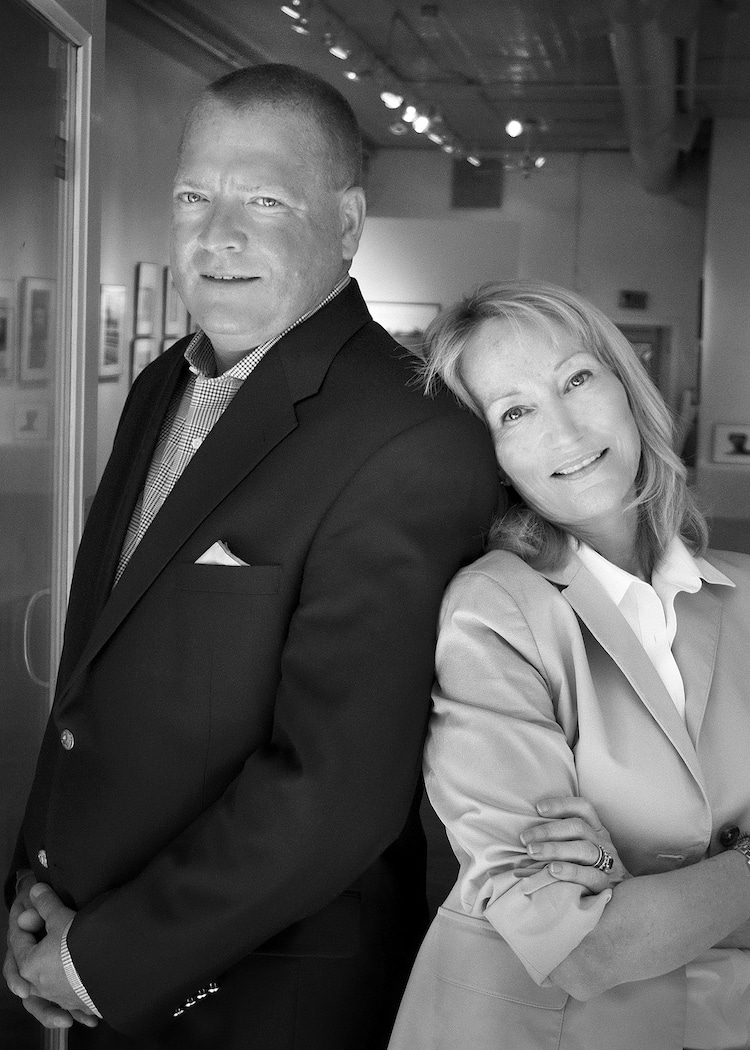
Sid and Michelle Monroe, owners of the Monroe Gallery of Photography, which specializes in photojournalism and historical documentary photography. (Photo: R. David Marks)
Photo: Samuel Zeller
Get Out and Network
If you have a grand dream of waltzing into a major gallery, portfolio in hand, and waltzing out with a solo show, you may be in for grave disappointment. Some overeager artists feel that if they knock on enough doors and show up unannounced to abruptly display their work, they’ll get an in. Unfortunately, this is far from the truth.
Most gallery relationships begin by networking and getting an introduction at the right time. This is why good communication and networking skills are key for an artist, as often times it might be a collector, journalist, or curator to first mention an artist’s work to a gallerist. In fact, gallerists often consider who an artist’s collectors are or if they’ve worked with public institutions in the past when looking at how a new relationship may fit into the gallery’s existing roster.
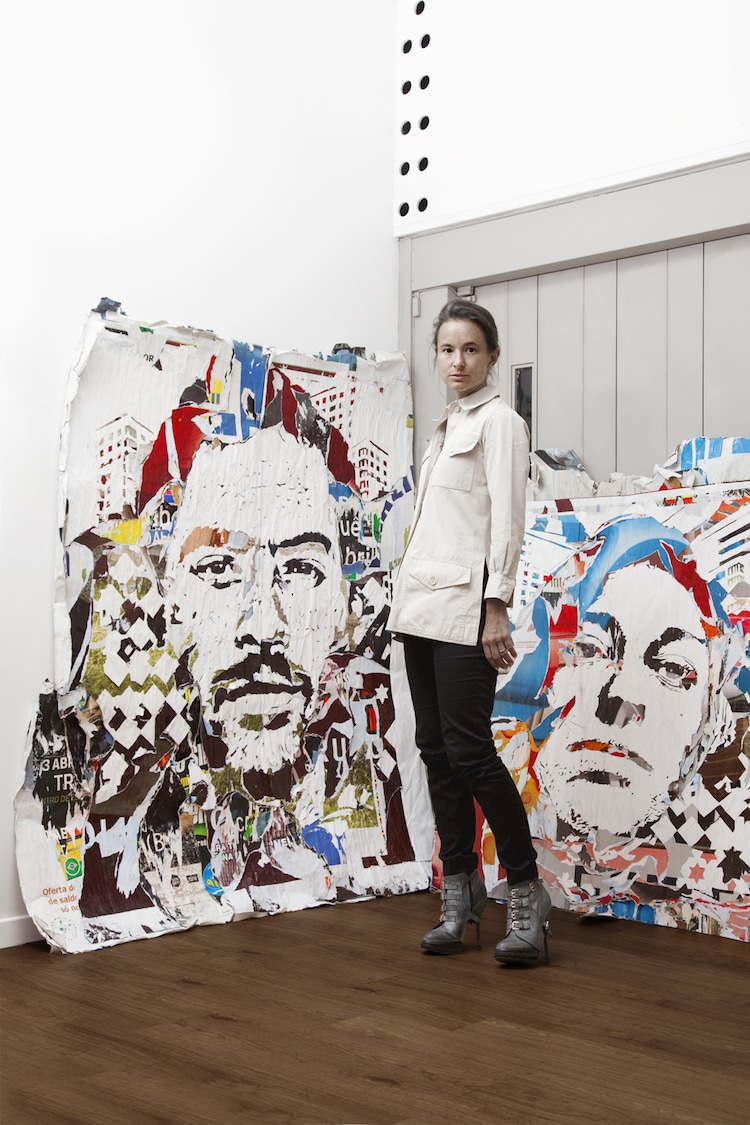
Magda Danysz, owner of the Magda Danysz Gallery in Shanghai, Paris, and London, in front of artwork by Vhils. (Photo: Céline Barrere)
Magda Danysz, of the Magda Danysz Gallery in London, Shanghai, and Paris has worked with some of the top contemporary urban artists today, such as Vhils, JR, and Liu Bolin. For her, the gallerist-artist relationship is an important coming together of a team, and as such, she is sure to observe an artist from afar well before they may ever work together.
“The gallery and the artist are supposed to be a team, so the most important is to be able to find right introductions and the right moment on how to meet. A gallery and an artist can only do wonderful things if they work together.”
And remember, many galleries also have group shows, where they may test out new talent before making a commitment to a larger working relationship. These are opportunities for both parties to put their best efforts forward and use the situation to test if you and the gallery are compatible for future projects.
Keep reading to find out what else gallerists look for when seeking out emerging talent.
The post How to Successfully Find Gallery Representation as an Artist appeared first on My Modern Met.


 On this black Monday, congressional Republicans undermined generations of legislative history and precedent to help a president who then, before the sun had set, undermined the will of Congress in its battle to rein in the Russians. Some will call this treason. Others, obstruction of justice. I’d rather call it giving aid and comfort to the enemy. The really bad news of the day was the inescapable conclusion that the real enemy America faces is not foreign, but domestic.
 Millennials have gotten a bad rap as lazy, entitled, and under-ambitious workers. In reality, however, most of them are just interested in finding a better way to do things. They like utilizing the latest technology and processes to make their efforts more efficient. In fact,
  Company culture is a huge deal to millennials. The majority of them are even willing to take a $7,600 pay cut for a job with a better workplace environment. While running a remote workplace makes it difficult to achieve that, it is still quite possible. Prioritize in-person meetings as often as possible, along with phone calls and Skype meetings, to create a more concrete connection between team members. Celebrate milestones or accomplishments by acknowledging these things during virtual meetings. Encourage each team member to participate in large meetings and share their inputs and suggestions. Millennials need to feel connected with their co-workers and business, so focus on creating a culture that they can participate in and enjoy.
 California legislators, and progressive lawmakers in other states, may be acting from the best of motives, but this swath of new legislation rests on a dangerous mistake. I say this as a nonbinary person, one who identifies as genderqueer and uses the gender-neutral pronouns they and them. Adding “nonbinary” to the list of legal gender options does not address the core problem: any legal system that requires a person to record their gender perpetuates government control over our bodies and identities.
 Before you actually become a skilled worker in Canada, you need to fit the following requirements:
 For skilled workers, Canada indeed has many opportunities. However, there are specific guidelines which you must adhere to for a successful immigration process. Hopefully, this article helped you understand a bit about the immigration process and how you can get started.
 “You are what you eat.” You’ve probably heard this saying before. In the context of professional productivity, it carries a great weight. How? Replace “what you eat” with “who you hang out with.” When you
  Your network of like-minded people won’t only help you meet your goals, but they can also help you make them. If you’re wondering if you should take a new job or make another career move, your peers will be able to offer some advice. Since they work in the same industry as you do, they’ve probably encountered a similar situation already. And if not, they, at least, have a better understanding of the job than you do.


 Sig Nordal